Propulsion Systems in Aerospace
Introduction
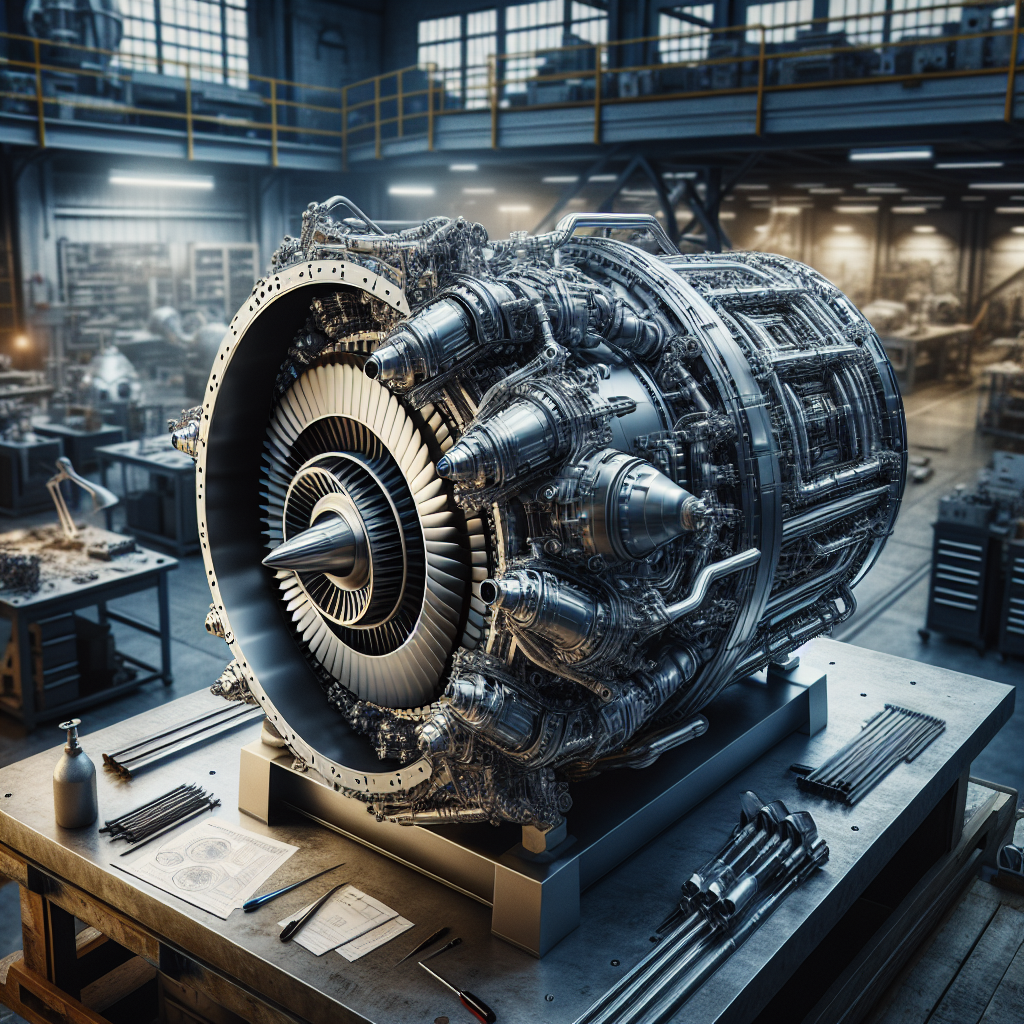
Propulsion systems are the heart of aerospace engineering, driving the innovation and advancement of aircraft and spacecraft. These systems are responsible for generating the thrust necessary to propel vehicles through the atmosphere and beyond, making them a critical component in the design and operation of aerospace vehicles. The importance of propulsion systems cannot be overstated, as they directly impact the performance, efficiency, and capabilities of aerospace vehicles. This article delves into the various aspects of propulsion systems in aerospace, exploring their fundamentals, historical development, applications, advanced topics, challenges, and future trends.
Fundamentals
Basic Principles and Concepts
At its core, a propulsion system is designed to produce thrust, which is the force that moves an aircraft or spacecraft forward. The fundamental principle behind propulsion is Newton’s Third Law of Motion: for every action, there is an equal and opposite reaction. In the context of propulsion, this means that expelling mass (such as exhaust gases) in one direction results in a thrust force in the opposite direction.
Key Terms and Definitions
- Thrust: The force generated by a propulsion system to move an aircraft or spacecraft forward.
- Specific Impulse (Isp): A measure of the efficiency of a propulsion system, defined as the thrust produced per unit of propellant consumed per second.
- Propellant: The chemical substance used to produce thrust in a propulsion system.
- Combustion Chamber: The part of a propulsion system where the propellant is burned to produce high-pressure and high-temperature gases.
- Nozzle: A device that accelerates the exhaust gases to produce thrust.
Historical Development
Early Innovations
The history of propulsion systems dates back to ancient times when humans first experimented with basic forms of propulsion, such as sails and oars. However, the modern era of propulsion began with the development of the steam engine in the 18th century. The steam engine revolutionized transportation, leading to the creation of steam-powered ships and locomotives.
Key Milestones
- 1903: The Wright brothers achieved the first powered flight using a gasoline engine, marking the birth of modern aviation.
- 1930s: The development of the jet engine by Frank Whittle and Hans von Ohain revolutionized air travel, enabling faster and more efficient flight.
- 1940s: The V-2 rocket, developed by Wernher von Braun, became the world’s first long-range guided ballistic missile, laying the groundwork for modern rocketry.
- 1960s: The Saturn V rocket, used in the Apollo program, enabled humans to land on the moon, showcasing the potential of powerful rocket propulsion systems.
Applications
Aerospace Industry
Propulsion systems are integral to the aerospace industry, enabling the development and operation of various types of aircraft and spacecraft. In commercial aviation, jet engines power most modern airliners, providing the thrust needed for long-distance travel at high speeds. In military aviation, advanced jet engines power fighter jets, enabling them to achieve supersonic speeds and perform complex maneuvers.
Space Exploration
In the realm of space exploration, rocket propulsion systems are essential for launching spacecraft into orbit and beyond. The development of powerful rocket engines has enabled missions to the moon, Mars, and other celestial bodies. For example, the SpaceX Falcon 9 rocket uses a combination of liquid oxygen and rocket-grade kerosene to produce the thrust needed for space missions.
Case Studies
- Commercial Aviation: The Boeing 787 Dreamliner uses advanced turbofan engines, such as the Rolls-Royce Trent 1000, to achieve greater fuel efficiency and reduced emissions.
- Space Exploration: NASA’s Mars Perseverance Rover was launched using the Atlas V rocket, which employs a combination of solid and liquid propulsion systems to achieve the necessary thrust for interplanetary travel.
Advanced Topics
Electric Propulsion
Electric propulsion systems, such as ion thrusters and Hall effect thrusters, are becoming increasingly important in space exploration. These systems use electric fields to accelerate ions, producing thrust with high efficiency and low propellant consumption. Recent advancements in electric propulsion have enabled longer-duration missions and more precise maneuvering in space.
Hybrid Propulsion
Hybrid propulsion systems combine elements of both chemical and electric propulsion, offering a balance between high thrust and efficiency. These systems are being explored for applications in both atmospheric flight and space exploration. For example, the Reaction Engines’ SABRE engine is a hybrid air-breathing rocket engine that can operate in both jet and rocket modes.
Recent Innovations
- Reusable Rockets: Companies like SpaceX and Blue Origin are developing reusable rocket systems, significantly reducing the cost of space travel and enabling more frequent missions.
- Advanced Materials: The use of advanced materials, such as carbon composites and ceramic matrix composites, is enhancing the performance and durability of propulsion systems.
- 3D Printing: Additive manufacturing techniques are being used to produce complex propulsion system components with reduced weight and improved performance.
Challenges and Considerations
Technical Challenges
Developing and operating propulsion systems involves several technical challenges, including managing high temperatures and pressures, ensuring reliable ignition and combustion, and minimizing wear and tear on components. Additionally, achieving the desired balance between thrust, efficiency, and weight is a constant challenge for engineers.
Environmental Considerations
The environmental impact of propulsion systems is a growing concern, particularly in the context of commercial aviation. Jet engines produce emissions that contribute to air pollution and climate change. Efforts are being made to develop more fuel-efficient engines and explore alternative fuels, such as biofuels and hydrogen, to reduce the environmental footprint of aviation.
Potential Solutions
- Advanced Cooling Techniques: Developing advanced cooling techniques, such as regenerative cooling and transpiration cooling, can help manage the high temperatures in propulsion systems.
- Alternative Fuels: Research into alternative fuels, such as biofuels and hydrogen, can reduce the environmental impact of propulsion systems.
- Improved Materials: The use of advanced materials with higher temperature resistance and durability can enhance the performance and lifespan of propulsion systems.
Conclusion
Propulsion systems are a cornerstone of aerospace engineering, enabling the development and operation of aircraft and spacecraft. From the early innovations of steam engines to the advanced electric and hybrid propulsion systems of today, the field has seen significant advancements that have revolutionized transportation and space exploration. Despite the challenges and considerations associated with propulsion systems, ongoing research and innovation continue to push the boundaries of what is possible. As we look to the future, the development of more efficient, sustainable, and powerful propulsion systems will play a crucial role in advancing aerospace technology and expanding our reach into the cosmos.