Multiphase Flow Dynamics
Introduction
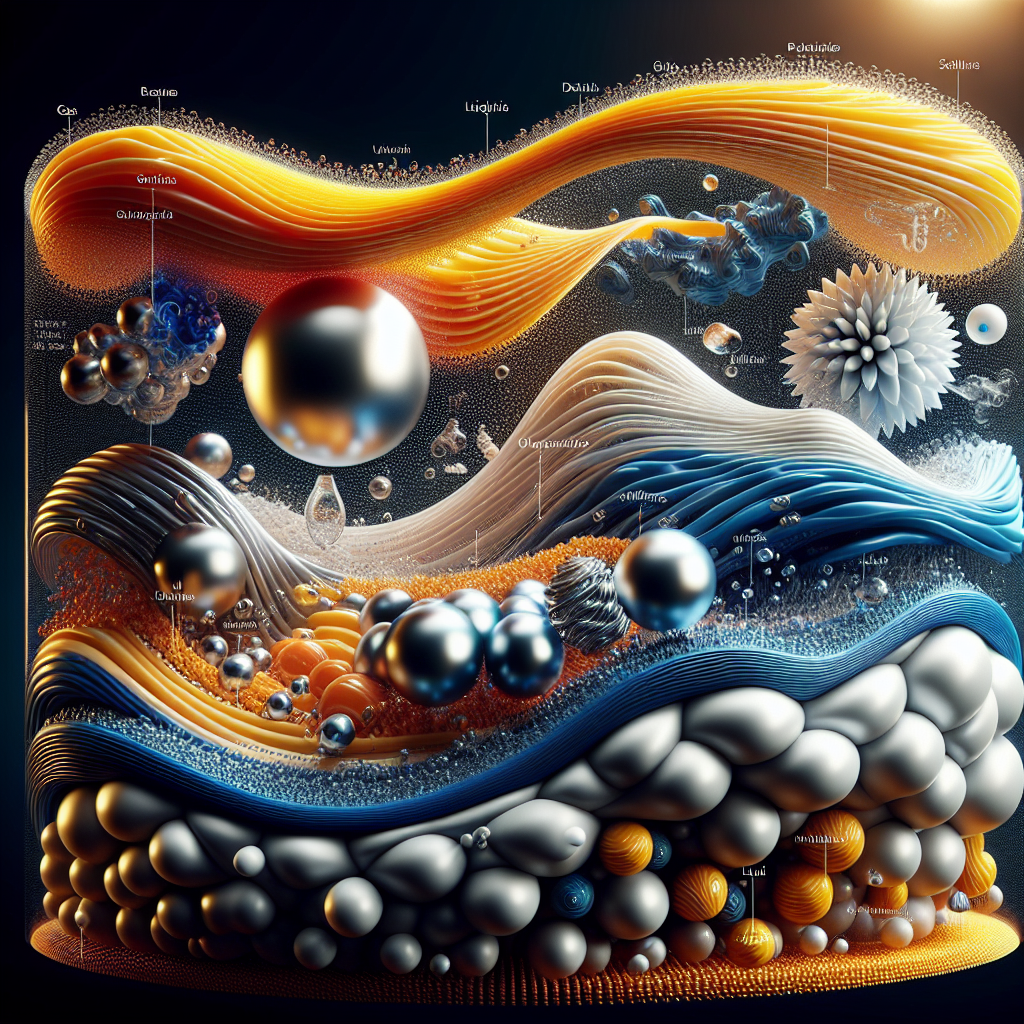
Multiphase flow dynamics is a critical area of study within fluid dynamics in engineering, focusing on the behavior of mixtures of different phases of matter—such as gas, liquid, and solid—flowing together. This field is essential for understanding and optimizing processes in various industries, including oil and gas, chemical processing, power generation, and environmental engineering. The complexity of multiphase flows arises from the interactions between the different phases, which can lead to unique flow patterns, pressure drops, and heat transfer characteristics. Understanding these dynamics is crucial for designing efficient and safe engineering systems.
Fundamentals
Basic Principles and Concepts
Multiphase flow dynamics involves the study of fluid flow where more than one phase is present. The primary phases include:
- Gas-Liquid Flows: Common in pipelines and reactors, where gas bubbles are dispersed in a liquid.
- Liquid-Liquid Flows: Occur in emulsions, where droplets of one liquid are dispersed in another immiscible liquid.
- Gas-Solid Flows: Found in pneumatic conveying systems, where solid particles are transported by a gas stream.
- Liquid-Solid Flows: Seen in slurry transport, where solid particles are suspended in a liquid.
Key terms and concepts in multiphase flow dynamics include:
- Volume Fraction: The ratio of the volume of one phase to the total volume of the mixture.
- Slip Velocity: The relative velocity between different phases.
- Flow Regimes: Different patterns of flow, such as bubbly flow, slug flow, and annular flow, depending on the distribution and interaction of phases.
- Interfacial Area: The surface area where different phases interact, affecting mass, momentum, and heat transfer.
Theories and Models
Several theoretical models are used to describe multiphase flows:
- Homogeneous Flow Model: Assumes that all phases move at the same velocity and are uniformly mixed.
- Separated Flow Model: Considers different phases as separate but interacting continua, each with its own velocity field.
- Eulerian-Eulerian Model: Treats each phase as an interpenetrating continuum, solving separate sets of conservation equations for each phase.
- Eulerian-Lagrangian Model: Tracks individual particles or droplets within a continuous phase, providing detailed information on particle dynamics.
Historical Development
The study of multiphase flow dynamics has evolved significantly over the past century. Early research focused on understanding basic flow patterns and pressure drops in pipelines. Notable milestones include:
- 1930s: Initial studies on gas-liquid flows in pipelines, leading to the development of empirical correlations for pressure drop and flow regimes.
- 1950s-1960s: Advances in nuclear reactor technology spurred research on two-phase flows, particularly in boiling and condensation processes.
- 1970s: The oil and gas industry drove significant research on multiphase flow in pipelines, leading to the development of more sophisticated models and simulation tools.
- 1980s-1990s: Computational Fluid Dynamics (CFD) emerged as a powerful tool for simulating multiphase flows, enabling more detailed and accurate predictions.
- 2000s-Present: Ongoing research focuses on improving the accuracy of models, understanding complex flow phenomena, and developing new applications in emerging fields such as renewable energy and biotechnology.
Applications
Multiphase flow dynamics has a wide range of practical applications across various industries:
Oil and Gas Industry
In the oil and gas industry, multiphase flow dynamics is crucial for the design and operation of pipelines, separators, and production facilities. Understanding the behavior of oil, gas, and water mixtures helps optimize production rates, minimize pressure drops, and prevent issues such as hydrate formation and pipeline corrosion.
Chemical Processing
Chemical reactors often involve multiphase flows, such as gas-liquid reactions in bubble columns or liquid-liquid extractions. Accurate modeling of these flows is essential for optimizing reaction rates, heat transfer, and mass transfer, leading to more efficient and cost-effective processes.
Power Generation
In nuclear and thermal power plants, multiphase flow dynamics play a critical role in the design and operation of boilers, condensers, and cooling systems. Understanding boiling and condensation processes is essential for ensuring safe and efficient heat transfer.
Environmental Engineering
Multiphase flows are encountered in various environmental engineering applications, such as wastewater treatment, air pollution control, and soil remediation. For example, understanding the behavior of gas bubbles in aeration tanks helps optimize oxygen transfer rates in biological treatment processes.
Case Studies
One notable case study involves the Deepwater Horizon oil spill in 2010. Understanding the multiphase flow dynamics of oil, gas, and water was crucial for developing strategies to cap the well and mitigate the environmental impact. Advanced simulation tools were used to predict the behavior of the oil plume and guide response efforts.
Advanced Topics
Recent Research and Innovations
Recent research in multiphase flow dynamics focuses on several advanced topics:
- Microfluidics: The study of multiphase flows in micro-scale channels, with applications in lab-on-a-chip devices and biomedical diagnostics.
- Non-Newtonian Fluids: Investigating the behavior of complex fluids, such as polymers and suspensions, which exhibit non-Newtonian flow characteristics.
- Multiphase Flow in Porous Media: Understanding the flow of fluids through porous materials, with applications in enhanced oil recovery and carbon capture and storage.
- Machine Learning: Leveraging machine learning techniques to improve the accuracy of multiphase flow models and develop new predictive tools.
Future Trends
Future trends in multiphase flow dynamics research include:
- Integration with Digital Twins: Developing digital twins of multiphase flow systems for real-time monitoring and optimization.
- Advanced Materials: Exploring the use of advanced materials, such as nanofluids and smart fluids, to enhance multiphase flow performance.
- Sustainable Technologies: Applying multiphase flow principles to develop sustainable technologies, such as renewable energy systems and green chemical processes.
Challenges and Considerations
Despite significant advancements, several challenges and considerations remain in the study of multiphase flow dynamics:
Complexity and Uncertainty
The inherent complexity of multiphase flows, with interactions between different phases and varying flow regimes, makes accurate modeling and prediction challenging. Uncertainties in phase properties, flow conditions, and interfacial phenomena can lead to discrepancies between simulations and real-world behavior.
Computational Resources
Simulating multiphase flows requires significant computational resources, particularly for high-fidelity models and large-scale systems. Advances in computational power and algorithms are needed to make detailed simulations more accessible and practical for engineering applications.
Experimental Validation
Experimental validation is essential for verifying and improving multiphase flow models. However, obtaining accurate and reliable experimental data can be challenging due to the complexity of multiphase systems and the limitations of measurement techniques.
Potential Solutions
Potential solutions to these challenges include:
- Hybrid Modeling Approaches: Combining different modeling techniques, such as CFD and machine learning, to improve accuracy and reduce computational requirements.
- Advanced Measurement Techniques: Developing new experimental techniques, such as high-speed imaging and advanced sensors, to obtain more accurate data on multiphase flows.
- Collaborative Research: Promoting collaboration between academia, industry, and government agencies to address complex challenges and drive innovation in multiphase flow dynamics.
Conclusion
Multiphase flow dynamics is a vital area of study within fluid dynamics in engineering, with significant implications for various industries and applications. Understanding the behavior of multiphase flows is essential for designing efficient and safe engineering systems, optimizing industrial processes, and developing new technologies. Despite the challenges and complexities associated with multiphase flows, ongoing research and innovations continue to advance our knowledge and capabilities in this field. As we look to the future, the integration of advanced modeling techniques, experimental validation, and collaborative research will be key to unlocking new opportunities and addressing emerging challenges in multiphase flow dynamics.