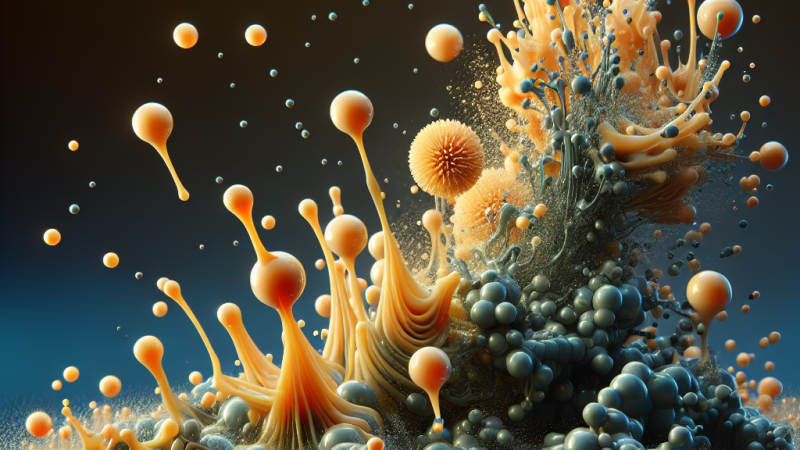
Bio-inspired Fluid Mechanics
Introduction

Bio-inspired fluid mechanics is an emerging field within fluid dynamics that draws inspiration from biological systems to solve complex engineering problems. This interdisciplinary approach leverages the principles and mechanisms found in nature to design more efficient, sustainable, and innovative solutions in various engineering applications. The importance of bio-inspired fluid mechanics lies in its potential to revolutionize industries such as aerospace, automotive, marine, and biomedical engineering by offering novel insights and techniques that traditional engineering methods may not provide.
In this article, we will delve into the fundamentals of bio-inspired fluid mechanics, explore its historical development, discuss its practical applications, and examine advanced topics and challenges associated with this fascinating field. By the end, readers will have a comprehensive understanding of the significance and potential of bio-inspired fluid mechanics in engineering.
Fundamentals
Basic Principles and Concepts
Bio-inspired fluid mechanics involves studying the fluid dynamics of biological systems and applying these principles to engineering problems. Key concepts include:
- Biomimicry: The practice of emulating nature’s designs and processes to solve human problems.
- Fluid-structure interaction: The interaction between a fluid (liquid or gas) and a solid structure, which is a critical aspect of many biological systems.
- Reynolds number: A dimensionless quantity used to predict flow patterns in different fluid flow situations. It is essential in understanding the flow regimes in both biological and engineered systems.
- Drag reduction: Techniques inspired by biological systems to minimize resistance and improve efficiency in fluid flow.
Theories and Key Terms
Several theories and key terms are fundamental to bio-inspired fluid mechanics:
- Boundary layer theory: Describes the layer of fluid in the immediate vicinity of a bounding surface where the effects of viscosity are significant.
- Vortex dynamics: The study of vortices, which are rotating regions of fluid that play a crucial role in the fluid dynamics of many biological systems.
- Flow separation: The phenomenon where the flow of fluid detaches from the surface of an object, often leading to increased drag and turbulence.
- Hydrodynamic efficiency: The measure of how effectively a system converts energy into fluid motion, often inspired by the efficient movement of aquatic animals.
Historical Development
Early Observations and Milestones
The concept of drawing inspiration from nature is not new. Early observations of birds in flight and fish swimming have long fascinated scientists and engineers. However, the formal study of bio-inspired fluid mechanics began to take shape in the 20th century.
- Leonardo da Vinci: One of the earliest figures to study the flight of birds and design flying machines based on their anatomy.
- Otto Lilienthal: A pioneer in aviation who studied bird flight and built gliders that mimicked their wing structures.
- Sir George Cayley: Known as the “father of aerodynamics,” Cayley made significant contributions to understanding the principles of flight by studying birds.
Modern Developments
In recent decades, advancements in technology and computational methods have accelerated the development of bio-inspired fluid mechanics:
- 1970s-1980s: The advent of computational fluid dynamics (CFD) allowed for more detailed simulations of biological fluid dynamics.
- 1990s: Increased interest in biomimicry led to the development of bio-inspired designs in various engineering fields.
- 2000s-Present: Ongoing research and innovations continue to push the boundaries of bio-inspired fluid mechanics, with significant contributions from interdisciplinary collaborations.
Applications
Aerospace Engineering
Bio-inspired fluid mechanics has led to several innovations in aerospace engineering:
- Wing design: The study of bird wings has inspired the development of more efficient and maneuverable aircraft wings.
- Drag reduction: Shark skin-inspired surfaces have been used to reduce drag on aircraft, leading to improved fuel efficiency.
- Micro air vehicles (MAVs): Insect flight mechanics have inspired the design of small, agile drones for various applications.
Automotive Engineering
In the automotive industry, bio-inspired fluid mechanics has contributed to:
- Aerodynamic design: The streamlined shapes of fish and birds have influenced the design of more aerodynamic vehicles.
- Cooling systems: The efficient heat exchange mechanisms in biological systems have inspired advanced cooling systems for engines.
Marine Engineering
Marine engineering has benefited from bio-inspired fluid mechanics in several ways:
- Propulsion systems: The study of fish and marine mammals has led to the development of more efficient propulsion systems for ships and submarines.
- Hull design: The hydrodynamic shapes of aquatic animals have inspired the design of more efficient and stable hulls.
Biomedical Engineering
In biomedical engineering, bio-inspired fluid mechanics has applications in:
- Blood flow analysis: Understanding the fluid dynamics of blood flow can lead to better medical devices and treatments for cardiovascular diseases.
- Drug delivery systems: The mechanisms of fluid transport in biological systems can inspire more effective drug delivery methods.
Advanced Topics
Recent Research and Innovations
Recent research in bio-inspired fluid mechanics has focused on several advanced topics:
- Soft robotics: The study of soft-bodied organisms has inspired the development of flexible, adaptive robots that can navigate complex environments.
- Swarm intelligence: The collective behavior of fish schools and bird flocks has inspired algorithms for coordinating multiple autonomous vehicles.
- Microfluidics: The study of fluid flow in small-scale biological systems has led to innovations in lab-on-a-chip devices for medical diagnostics.
Future Trends
The future of bio-inspired fluid mechanics holds exciting possibilities:
- Advanced materials: The development of materials that mimic the properties of biological tissues could lead to more efficient and durable engineering solutions.
- Interdisciplinary research: Continued collaboration between biologists, engineers, and computer scientists will drive further innovations in the field.
- Sustainability: Bio-inspired designs that promote energy efficiency and environmental sustainability will become increasingly important.
Challenges and Considerations
Technical Challenges
Despite its potential, bio-inspired fluid mechanics faces several technical challenges:
- Complexity of biological systems: Biological systems are often highly complex and difficult to replicate accurately in engineering designs.
- Scalability: Scaling up bio-inspired designs from small biological systems to large engineering applications can be challenging.
- Interdisciplinary knowledge: Effective bio-inspired design requires a deep understanding of both biology and engineering, which can be difficult to achieve.
Potential Solutions
Addressing these challenges will require:
- Advanced modeling techniques: Improved computational models and simulations can help bridge the gap between biological systems and engineering applications.
- Experimental validation: Rigorous experimental testing is essential to validate bio-inspired designs and ensure their effectiveness.
- Interdisciplinary education: Promoting interdisciplinary education and collaboration will help develop the necessary expertise for bio-inspired engineering.
Conclusion
Bio-inspired fluid mechanics represents a promising frontier in the field of fluid dynamics in engineering. By drawing inspiration from the natural world, engineers can develop innovative solutions that are more efficient, sustainable, and effective. From aerospace and automotive engineering to marine and biomedical applications, the potential of bio-inspired fluid mechanics is vast and varied.
As research and technology continue to advance, the field will undoubtedly face challenges, but the potential rewards make it a worthwhile endeavor. By embracing the principles of biomimicry and fostering interdisciplinary collaboration, engineers can unlock new possibilities and drive the future of fluid dynamics in engineering.