Microfluidics and Nanofluidics
Introduction
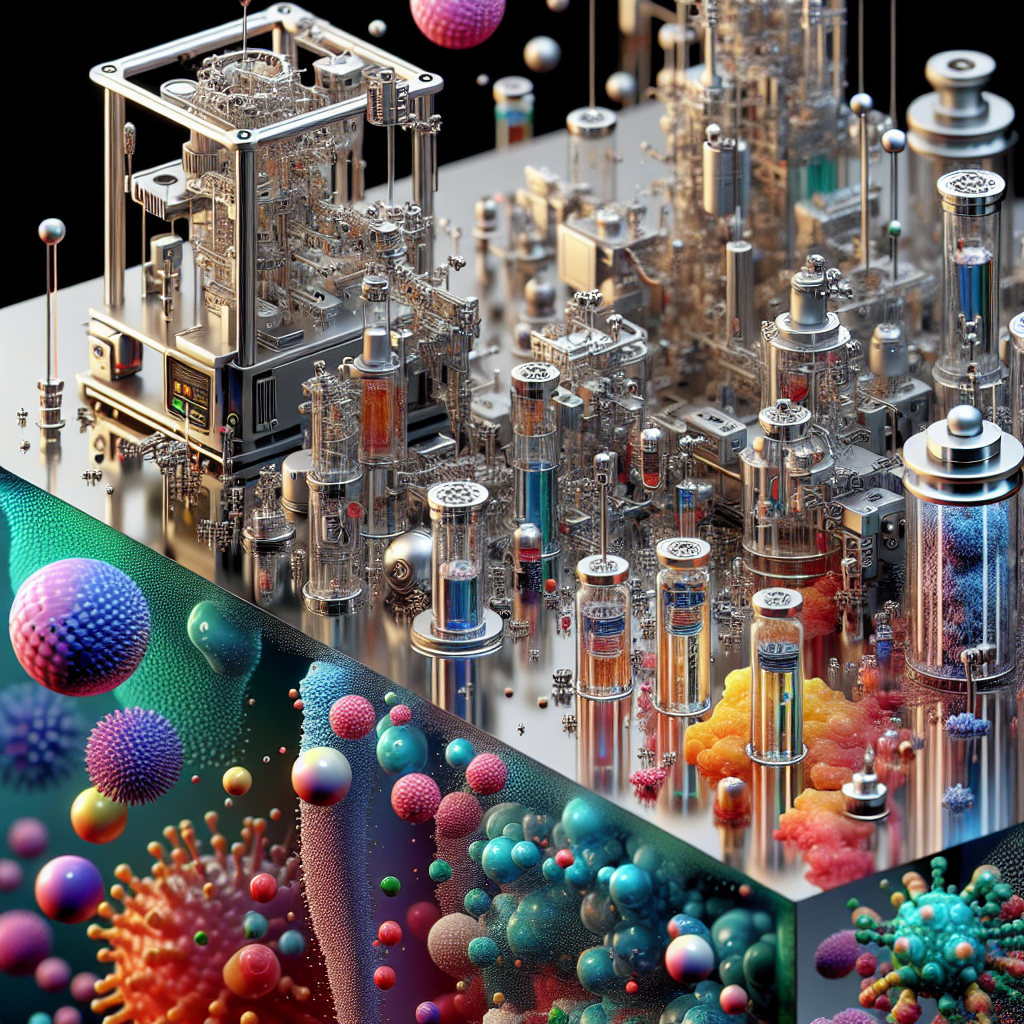
Microfluidics and nanofluidics are subfields of fluid dynamics that deal with the behavior, control, and manipulation of fluids at the microscale and nanoscale, respectively. These fields have gained significant importance in engineering due to their potential to revolutionize various industries, including biomedical engineering, chemical processing, and environmental monitoring. The ability to precisely control fluid flow at such small scales opens up new possibilities for innovation and efficiency in numerous applications.
In the realm of engineering, microfluidics and nanofluidics offer unique advantages such as reduced reagent consumption, faster reaction times, and the ability to integrate multiple processes on a single chip. These benefits make them highly relevant for developing advanced technologies and systems that require precise fluid control and manipulation.
Fundamentals
Basic Principles and Concepts
Microfluidics involves the study and application of fluid flow in channels with dimensions typically ranging from tens to hundreds of micrometers. Nanofluidics, on the other hand, deals with fluid flow in channels with dimensions on the order of nanometers. Both fields rely on the principles of fluid dynamics but require special considerations due to the small scales involved.
Key Terms and Definitions
- Microchannel: A channel with dimensions in the micrometer range used to transport fluids in microfluidic systems.
- Nanopore: A nanoscale hole or channel that allows the passage of fluids or particles in nanofluidic systems.
- Laminar Flow: A type of fluid flow characterized by smooth, parallel layers of fluid with minimal mixing, commonly observed in microfluidic systems.
- Reynolds Number: A dimensionless number used to predict flow patterns in different fluid flow situations. In microfluidics, low Reynolds numbers indicate laminar flow.
- Electroosmotic Flow: The motion of liquid induced by an applied electric field across a microchannel or nanopore.
Theories and Models
Microfluidics and nanofluidics are governed by the Navier-Stokes equations, which describe the motion of fluid substances. However, at small scales, additional factors such as surface tension, capillary forces, and electrokinetic effects become significant. The Hagen-Poiseuille equation is often used to describe laminar flow in microchannels, while the Boltzmann equation can be applied to model fluid behavior at the nanoscale.
Historical Development
Early Beginnings
The concept of manipulating fluids at small scales dates back to the early 20th century, with the development of techniques for studying capillary action and surface tension. However, the field of microfluidics began to take shape in the 1980s with the advent of microfabrication technologies, which allowed for the creation of precise microchannels and structures.
Key Milestones
- 1980s: The development of microfabrication techniques such as photolithography enabled the creation of microfluidic devices.
- 1990s: The introduction of soft lithography techniques, such as PDMS (polydimethylsiloxane) molding, revolutionized the fabrication of microfluidic devices.
- 2000s: The emergence of lab-on-a-chip technologies, which integrated multiple laboratory functions on a single microfluidic chip.
- 2010s: Advances in nanofabrication techniques led to the development of nanofluidic devices and systems.
Notable Figures
Several researchers have made significant contributions to the fields of microfluidics and nanofluidics. Notable figures include George Whitesides, who pioneered soft lithography techniques, and Harold Craighead, who made significant advancements in nanofluidic device fabrication.
Applications
Biomedical Engineering
Microfluidics and nanofluidics have numerous applications in biomedical engineering, including the development of point-of-care diagnostic devices, drug delivery systems, and tissue engineering. For example, microfluidic chips can be used to perform rapid and accurate diagnostic tests for diseases such as COVID-19, while nanofluidic devices can be used to deliver drugs directly to targeted cells or tissues.
Chemical Processing
In the chemical industry, microfluidics and nanofluidics enable precise control over chemical reactions and processes. Microreactors, which are small-scale reactors that use microfluidic channels, offer advantages such as improved reaction efficiency, reduced waste, and enhanced safety. These technologies are particularly useful for synthesizing fine chemicals and pharmaceuticals.
Environmental Monitoring
Microfluidic and nanofluidic devices are also used for environmental monitoring and analysis. For example, microfluidic sensors can detect pollutants in water or air with high sensitivity and specificity. These devices can be deployed in remote or harsh environments to provide real-time monitoring and data collection.
Case Studies
- Lab-on-a-Chip for Disease Diagnosis: Researchers have developed lab-on-a-chip devices that integrate multiple diagnostic tests on a single microfluidic chip. These devices can rapidly detect biomarkers for diseases such as cancer, HIV, and COVID-19, enabling early diagnosis and treatment.
- Microreactors for Chemical Synthesis: Microreactors have been used to synthesize complex organic molecules with high efficiency and yield. These reactors offer precise control over reaction conditions, leading to improved product quality and reduced waste.
- Nanofluidic Drug Delivery Systems: Nanofluidic devices have been developed to deliver drugs directly to cancer cells, minimizing side effects and improving treatment efficacy. These systems use nanoscale channels to control the release and targeting of therapeutic agents.
Advanced Topics
Recent Research and Innovations
Recent research in microfluidics and nanofluidics has focused on developing new materials, fabrication techniques, and applications. For example, researchers are exploring the use of 3D printing to create complex microfluidic structures with high precision. Additionally, advances in nanofabrication techniques, such as electron beam lithography, are enabling the creation of nanoscale devices with unprecedented accuracy.
Future Trends
The future of microfluidics and nanofluidics is likely to be shaped by several key trends, including the integration of artificial intelligence (AI) and machine learning (ML) for data analysis and device optimization. Additionally, the development of new materials, such as biocompatible polymers and nanocomposites, will enable the creation of more advanced and versatile devices. The continued miniaturization of fluidic systems will also open up new possibilities for applications in areas such as personalized medicine and wearable technology.
Challenges and Considerations
Technical Challenges
Despite the significant advancements in microfluidics and nanofluidics, several technical challenges remain. These include issues related to fabrication precision, fluid control, and device integration. For example, creating nanoscale channels with consistent dimensions and properties can be challenging, and controlling fluid flow at such small scales requires precise manipulation techniques.
Limitations
Microfluidic and nanofluidic devices also have limitations related to scalability and cost. While these devices offer numerous advantages, scaling up production for commercial applications can be expensive and time-consuming. Additionally, the small volumes of fluids used in these systems may not be suitable for all applications, particularly those requiring large-scale processing.
Potential Solutions
To address these challenges, researchers are exploring new fabrication techniques, such as 3D printing and self-assembly, which offer the potential for more efficient and cost-effective production. Additionally, advances in materials science are enabling the development of new materials with improved properties for microfluidic and nanofluidic applications. Collaborative efforts between academia, industry, and government agencies will also be essential for overcoming these challenges and advancing the field.
Conclusion
Microfluidics and nanofluidics represent exciting and rapidly evolving fields within fluid dynamics in engineering. These technologies offer unique advantages for a wide range of applications, from biomedical diagnostics to chemical processing and environmental monitoring. Despite the challenges and limitations, ongoing research and innovation continue to drive the development of new materials, techniques, and applications.
The ability to precisely control and manipulate fluids at the microscale and nanoscale has the potential to revolutionize numerous industries and improve the quality of life for people around the world. As such, microfluidics and nanofluidics will remain important areas of focus for researchers, engineers, and industry professionals in the coming years.