Industrial Robots
Introduction
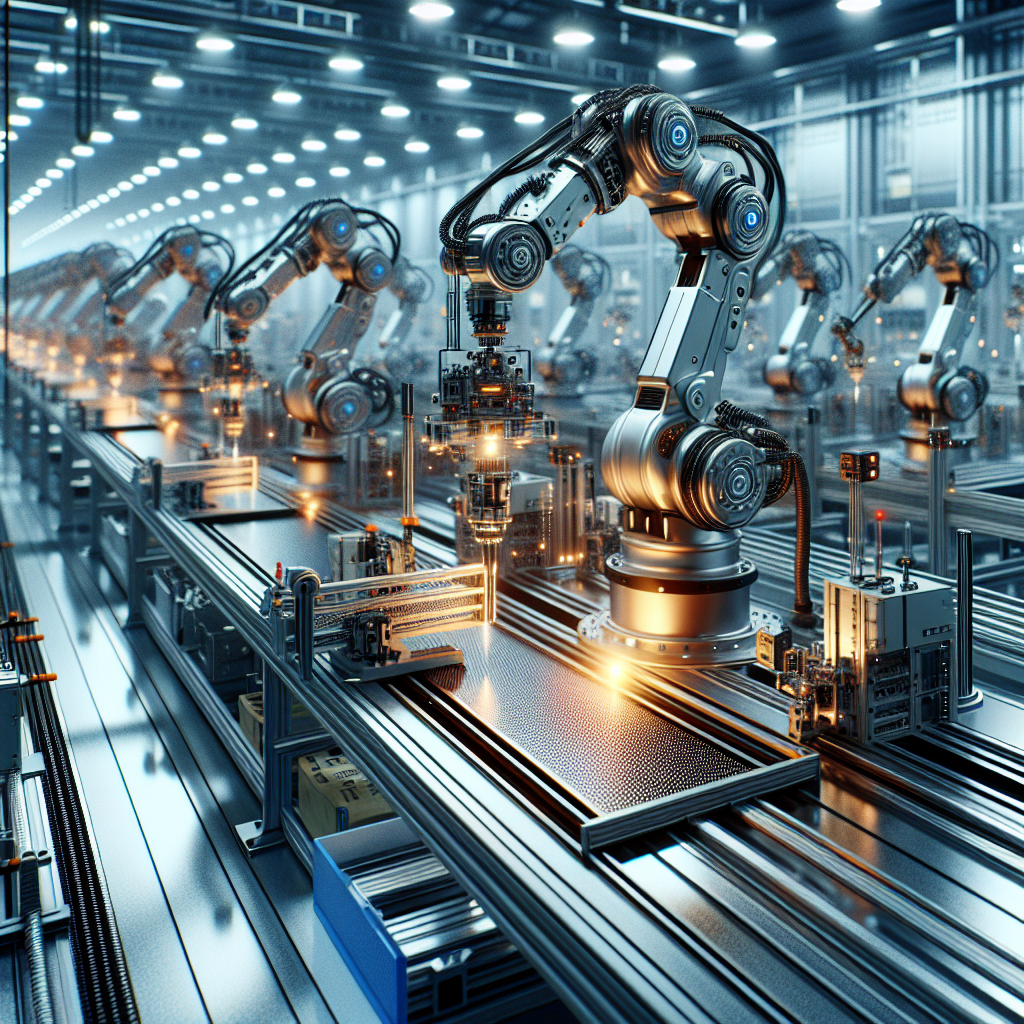
Industrial robots have become a cornerstone in the field of engineering, revolutionizing manufacturing processes and enhancing productivity across various industries. These automated machines are designed to perform a wide range of tasks with high precision, speed, and efficiency, making them indispensable in modern industrial settings. The importance of industrial robots lies in their ability to perform repetitive, hazardous, or complex tasks that would be challenging or unsafe for human workers. As technology continues to advance, the role of industrial robots in engineering is expected to grow, driving innovation and shaping the future of manufacturing and production.
Fundamentals
Basic Principles and Concepts
Industrial robots are programmable mechanical devices that can perform tasks autonomously or semi-autonomously. They are typically equipped with sensors, actuators, and control systems that enable them to interact with their environment and execute specific functions. The key components of an industrial robot include:
- Manipulator: The arm of the robot, which consists of joints and links that provide movement and flexibility.
- End-Effector: The tool or device attached to the end of the manipulator, designed to interact with objects (e.g., grippers, welding torches, or painting nozzles).
- Controller: The computer system that processes input from sensors and sends commands to the actuators to control the robot’s movements.
- Sensors: Devices that provide feedback on the robot’s position, orientation, and environment (e.g., cameras, force sensors, and proximity sensors).
- Actuators: Motors or other mechanisms that drive the robot’s movements.
Key Terms
- Degrees of Freedom (DOF): The number of independent movements a robot can perform. A higher DOF indicates greater flexibility and capability.
- Payload: The maximum weight a robot can handle.
- Repeatability: The robot’s ability to return to a specific position consistently.
- Accuracy: The precision with which a robot can reach a desired position.
Historical Development
The development of industrial robots can be traced back to the mid-20th century, with several key milestones marking their evolution:
- 1954: George Devol invents the first programmable robot, called “Unimate.” This robot was designed for material handling and was later sold to General Motors.
- 1961: General Motors installs the first Unimate robot in its production line, marking the beginning of industrial robot use in manufacturing.
- 1970s: The development of microprocessors and advancements in computer technology lead to more sophisticated and versatile robots.
- 1980s: The introduction of vision systems and sensors enhances the capabilities of industrial robots, allowing them to perform more complex tasks.
- 2000s: Collaborative robots (cobots) are introduced, designed to work alongside human workers safely and efficiently.
Notable figures in the field of industrial robotics include Joseph Engelberger, often referred to as the “father of robotics,” who played a significant role in commercializing robotic technology and promoting its adoption in various industries.
Applications
Industrial robots are used in a wide range of applications across various industries, including:
Automotive Industry
The automotive industry was one of the first to adopt industrial robots, using them for tasks such as welding, painting, assembly, and material handling. Robots have significantly improved production efficiency, quality, and safety in automotive manufacturing.
Electronics Industry
In the electronics industry, robots are used for tasks such as assembling circuit boards, soldering components, and inspecting finished products. The precision and speed of robots are crucial for meeting the high demands of electronics production.
Food and Beverage Industry
Robots are employed in the food and beverage industry for packaging, palletizing, and quality control. They help ensure consistent product quality and reduce the risk of contamination.
Pharmaceutical Industry
In the pharmaceutical industry, robots are used for tasks such as drug dispensing, packaging, and laboratory automation. They help maintain high standards of hygiene and accuracy in drug production.
Case Studies
One notable case study is the use of industrial robots by Tesla in its Gigafactory. Tesla employs a large number of robots for tasks such as welding, painting, and assembly, enabling the company to achieve high production rates and maintain quality standards.
Advanced Topics
Collaborative Robots (Cobots)
Collaborative robots, or cobots, are designed to work alongside human workers safely. They are equipped with advanced sensors and control systems that allow them to detect and respond to human presence, reducing the risk of accidents. Cobots are increasingly being used in industries such as manufacturing, healthcare, and logistics.
Artificial Intelligence and Machine Learning
The integration of artificial intelligence (AI) and machine learning (ML) with industrial robots is a rapidly growing area of research. AI and ML enable robots to learn from their experiences, adapt to new tasks, and improve their performance over time. This has the potential to significantly enhance the capabilities and versatility of industrial robots.
Internet of Things (IoT)
The Internet of Things (IoT) is another advanced concept that is transforming industrial robotics. IoT enables robots to connect and communicate with other devices and systems, allowing for real-time monitoring, data analysis, and predictive maintenance. This can lead to improved efficiency, reduced downtime, and optimized production processes.
Future Trends
Future trends in industrial robotics include the development of more advanced and versatile robots, increased use of AI and ML, and greater integration with IoT. Additionally, there is a growing focus on developing robots that are more user-friendly and accessible to small and medium-sized enterprises (SMEs).
Challenges and Considerations
Technical Challenges
One of the main technical challenges associated with industrial robots is ensuring their reliability and accuracy. Robots must be able to perform tasks consistently and precisely, which requires advanced control systems and high-quality components. Additionally, integrating robots with existing production systems can be complex and costly.
Safety Considerations
Safety is a critical consideration when deploying industrial robots. Robots must be designed and programmed to operate safely in environments where they interact with human workers. This includes implementing safety features such as emergency stop buttons, safety sensors, and protective barriers.
Economic Considerations
The cost of industrial robots can be a significant barrier to adoption, particularly for SMEs. While the long-term benefits of increased productivity and efficiency can outweigh the initial investment, the upfront costs can be prohibitive for some businesses. Additionally, there are concerns about the impact of automation on employment, as robots can potentially replace human workers in certain tasks.
Potential Solutions
To address these challenges, ongoing research and development are focused on improving the reliability, safety, and affordability of industrial robots. This includes developing more advanced control systems, enhancing safety features, and creating cost-effective solutions for SMEs. Additionally, there is a growing emphasis on reskilling and upskilling workers to enable them to work alongside robots and take on new roles in an increasingly automated workforce.
Conclusion
Industrial robots have become an integral part of modern engineering, transforming manufacturing processes and driving innovation across various industries. From their early beginnings with the Unimate robot to the advanced AI-powered cobots of today, industrial robots have continually evolved to meet the demands of an ever-changing industrial landscape. While there are challenges and considerations associated with their adoption, the benefits of increased productivity, efficiency, and safety make them indispensable in today’s industrial settings. As technology continues to advance, the role of industrial robots in engineering is expected to grow, shaping the future of manufacturing and production and paving the way for new possibilities and innovations.