Humanoid Robots
Introduction
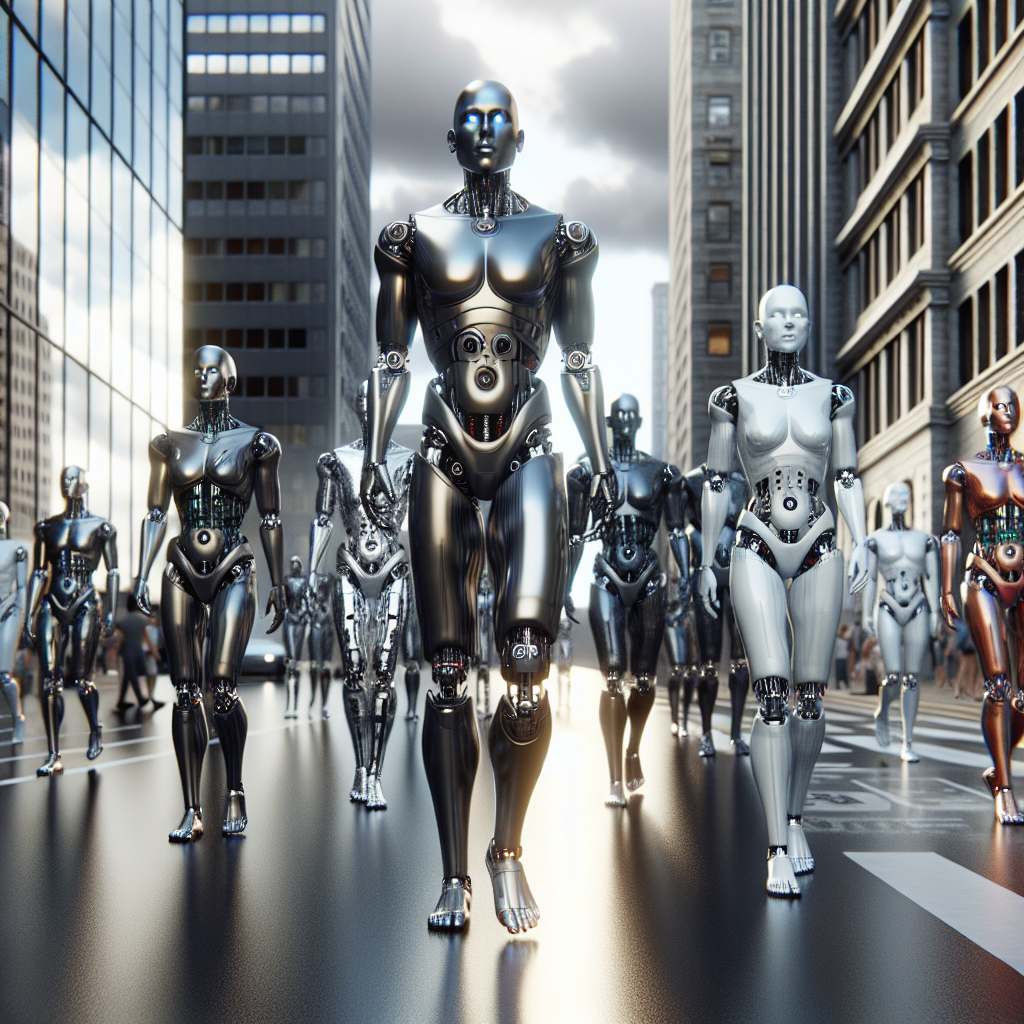
Humanoid robots, a fascinating subset of robotics, are designed to mimic the human form and behavior. These robots are engineered to perform tasks that typically require human intelligence and dexterity, making them highly relevant in various fields of engineering. The importance of humanoid robots lies in their potential to revolutionize industries such as healthcare, manufacturing, and service sectors by enhancing efficiency, safety, and productivity. This article delves into the fundamentals, historical development, applications, advanced topics, challenges, and future trends of humanoid robots in the field of robotics in engineering.
Fundamentals
Basic Principles and Concepts
Humanoid robots are designed to replicate human anatomy and movements. They typically have a head, torso, arms, and legs, and are equipped with sensors, actuators, and control systems to enable interaction with their environment. The key principles and concepts in humanoid robotics include:
- Anthropomorphism: The design philosophy of making robots resemble humans in appearance and behavior.
- Degrees of Freedom (DoF): The number of independent movements a robot can perform. Humanoid robots often have multiple DoFs to replicate human motion.
- Actuators: Devices that convert energy into motion. Common types include electric motors, hydraulic systems, and pneumatic systems.
- Sensors: Devices that collect data from the environment. Examples include cameras, microphones, and tactile sensors.
- Artificial Intelligence (AI): The use of algorithms and machine learning to enable robots to make decisions and learn from their environment.
Key Terms
- Bipedal Locomotion: The ability of a robot to walk on two legs.
- Manipulation: The capability of a robot to interact with objects using its arms and hands.
- Perception: The process of acquiring, interpreting, and understanding sensory information.
- Autonomy: The ability of a robot to perform tasks without human intervention.
Historical Development
The development of humanoid robots has a rich history, marked by significant milestones and contributions from notable figures in the field.
Early Concepts and Prototypes
The concept of humanoid robots dates back to ancient times, with myths and legends featuring mechanical beings. However, the modern era of humanoid robotics began in the 20th century. In the 1920s, Czech writer Karel Čapek introduced the term “robot” in his play “R.U.R.” (Rossum’s Universal Robots).
Key Milestones
- 1960s: The first humanoid robot, WABOT-1, was developed by Waseda University in Japan. It could walk, grasp objects, and communicate in Japanese.
- 1980s: Honda began developing the P series of humanoid robots, leading to the creation of ASIMO in 2000, which became one of the most advanced humanoid robots of its time.
- 2000s: The development of NAO by Aldebaran Robotics (now SoftBank Robotics) marked a significant advancement in educational and research robots.
- 2010s: Boston Dynamics introduced Atlas, a highly agile and capable humanoid robot designed for search and rescue missions.
Applications
Humanoid robots have a wide range of practical applications across various industries and fields.
Healthcare
In healthcare, humanoid robots assist in patient care, rehabilitation, and surgery. For example, the robot “Pepper” by SoftBank Robotics is used in hospitals to interact with patients, provide information, and offer companionship. Additionally, robotic exoskeletons like those developed by Ekso Bionics help patients with mobility impairments regain movement.
Manufacturing
In manufacturing, humanoid robots are employed to perform repetitive and hazardous tasks, improving efficiency and safety. Robots like “Baxter” by Rethink Robotics can work alongside human workers, handling tasks such as assembly, packaging, and quality control.
Service Industry
Humanoid robots are increasingly used in the service industry for customer interaction, information dissemination, and entertainment. For instance, robots like “Sophia” by Hanson Robotics are designed to engage in conversations and provide customer service in retail environments.
Education and Research
In educational settings, humanoid robots serve as teaching aids and research platforms. The NAO robot is widely used in schools and universities to teach programming, robotics, and AI concepts. Researchers also use humanoid robots to study human-robot interaction and develop new technologies.
Advanced Topics
Recent Research and Innovations
Recent advancements in AI, machine learning, and robotics have led to significant innovations in humanoid robots. Researchers are developing robots with improved perception, decision-making, and learning capabilities. For example, the “iCub” robot, developed by the Italian Institute of Technology, is designed to learn and adapt to its environment through exploration and interaction.
Future Trends
The future of humanoid robots is promising, with ongoing research focused on enhancing their capabilities and expanding their applications. Key trends include:
- Improved Autonomy: Developing robots that can operate independently in complex environments.
- Enhanced Human-Robot Interaction: Creating robots that can understand and respond to human emotions and social cues.
- Collaborative Robots (Cobots): Designing robots that can work alongside humans in various settings.
- Soft Robotics: Developing robots with flexible and adaptive materials for safer and more versatile interactions.
Challenges and Considerations
Despite the advancements, there are several challenges and considerations associated with humanoid robots.
Technical Challenges
Developing humanoid robots that can perform complex tasks with human-like dexterity and precision is technically challenging. Issues such as balance, coordination, and energy efficiency need to be addressed. Additionally, creating robots that can understand and interpret human emotions and social cues remains a significant hurdle.
Ethical and Social Considerations
The integration of humanoid robots into society raises ethical and social concerns. Issues such as job displacement, privacy, and the potential for misuse need to be carefully considered. Ensuring that robots are designed and used in ways that benefit society while minimizing negative impacts is crucial.
Potential Solutions
Addressing these challenges requires a multidisciplinary approach, involving collaboration between engineers, researchers, policymakers, and ethicists. Potential solutions include:
- Advancing Research: Investing in research to overcome technical challenges and improve robot capabilities.
- Developing Regulations: Establishing guidelines and regulations to ensure the ethical use of humanoid robots.
- Promoting Education: Educating the public about the benefits and limitations of humanoid robots to foster acceptance and understanding.
Conclusion
Humanoid robots represent a significant advancement in the field of robotics in engineering. Their ability to mimic human form and behavior opens up a wide range of applications across various industries, from healthcare and manufacturing to education and service sectors. While there are challenges and considerations to address, ongoing research and innovation continue to push the boundaries of what humanoid robots can achieve. As technology advances, humanoid robots are poised to play an increasingly important role in enhancing efficiency, safety, and productivity in numerous fields, making them a vital area of focus in the future of engineering.