Experimental Methods in Engineering Design
Introduction
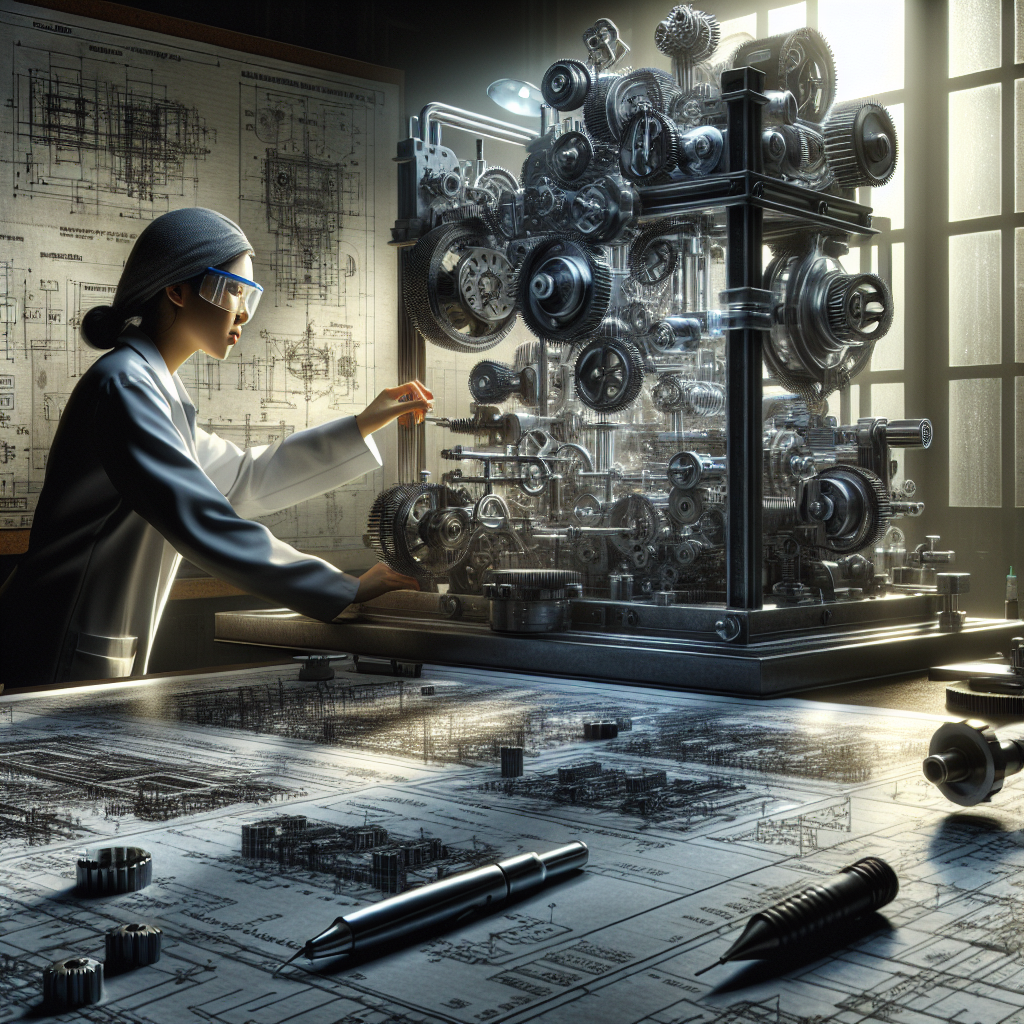
Experimental methods in engineering design are crucial for the development, validation, and optimization of engineering solutions. These methods involve systematic procedures to test hypotheses, validate models, and refine designs through empirical data. The importance of experimental methods in engineering design cannot be overstated, as they provide the foundation for innovation, safety, and efficiency in engineering projects. By leveraging experimental techniques, engineers can predict the performance of their designs under various conditions, identify potential issues early in the development process, and ensure that the final product meets the required specifications and standards.
Fundamentals
Basic Principles and Concepts
Experimental methods in engineering design are grounded in the scientific method, which involves observation, hypothesis formulation, experimentation, and analysis. The primary goal is to gather empirical data that can be used to validate or refute theoretical models and design assumptions. Key principles include:
- Reproducibility: Experiments should be designed so that they can be repeated with consistent results.
- Control: Variables should be controlled to isolate the effects of the factor being tested.
- Randomization: Random assignment of experimental conditions helps to eliminate bias.
- Replication: Multiple trials or samples increase the reliability of the results.
Key Terms
- Hypothesis: A proposed explanation for a phenomenon, which can be tested through experimentation.
- Variable: Any factor that can be changed or controlled in an experiment.
- Control Group: A group in an experiment that does not receive the experimental treatment, used for comparison.
- Experimental Group: The group that receives the treatment or condition being tested.
- Data Analysis: The process of examining, cleaning, and modeling data to draw conclusions.
Historical Development
The use of experimental methods in engineering design has evolved significantly over time. Early engineering practices relied heavily on trial and error, with limited scientific basis. However, the Industrial Revolution marked a turning point, as the need for more reliable and efficient designs led to the adoption of systematic experimental approaches.
Key Milestones
- 19th Century: The development of thermodynamics and material science provided a scientific foundation for experimental methods in engineering.
- Early 20th Century: The introduction of statistical methods, such as Design of Experiments (DOE), revolutionized the way engineers approached experimentation.
- Mid-20th Century: The advent of computer technology enabled more complex simulations and data analysis, enhancing experimental capabilities.
- Late 20th Century: The integration of finite element analysis (FEA) and computational fluid dynamics (CFD) allowed for more precise modeling and validation of designs.
Notable Figures
- Francis Bacon: Often credited with developing the scientific method, which laid the groundwork for experimental approaches in engineering.
- Ronald A. Fisher: A pioneer in the field of statistics, Fisher’s work on experimental design has had a lasting impact on engineering experimentation.
- John von Neumann: His contributions to computer science and numerical methods have been instrumental in advancing experimental techniques in engineering.
Applications
Experimental methods in engineering design have a wide range of applications across various industries. These methods are used to test and validate designs, optimize processes, and ensure product quality and safety.
Automotive Industry
In the automotive industry, experimental methods are used to test the performance, safety, and durability of vehicles. Crash tests, wind tunnel tests, and material fatigue tests are common examples. For instance, crash tests provide critical data on how vehicles behave in collisions, leading to safer car designs.
Aerospace Industry
The aerospace industry relies heavily on experimental methods to validate the performance of aircraft and spacecraft. Wind tunnel testing, vibration testing, and thermal testing are essential for ensuring that designs can withstand the harsh conditions of flight and space travel. The development of the Boeing 787 Dreamliner, for example, involved extensive wind tunnel testing to optimize its aerodynamic performance.
Manufacturing Industry
In manufacturing, experimental methods are used to optimize production processes and improve product quality. Techniques such as Six Sigma and Lean Manufacturing incorporate experimental approaches to identify and eliminate defects, reduce variability, and enhance efficiency. Case studies from companies like Toyota and General Electric demonstrate the effectiveness of these methods in achieving operational excellence.
Advanced Topics
Recent Research and Innovations
Recent advancements in experimental methods in engineering design have been driven by developments in technology and computational power. Some of the cutting-edge areas include:
- Machine Learning and AI: These technologies are being integrated into experimental methods to analyze large datasets, identify patterns, and make predictions. For example, AI algorithms can optimize design parameters based on experimental data, leading to more efficient and innovative solutions.
- Digital Twins: A digital twin is a virtual replica of a physical system that can be used for experimentation and analysis. By simulating real-world conditions, digital twins enable engineers to test and refine designs without the need for physical prototypes.
- Advanced Materials Testing: New materials, such as composites and nanomaterials, require specialized experimental methods to understand their properties and behavior. Techniques like atomic force microscopy (AFM) and X-ray diffraction (XRD) are used to study these materials at the molecular level.
Future Trends
The future of experimental methods in engineering design is likely to be shaped by several emerging trends:
- Increased Automation: Automation of experimental procedures will enhance efficiency and reduce human error. Robotic systems and automated testing rigs are already being used in some industries.
- Integration with IoT: The Internet of Things (IoT) will enable real-time data collection and analysis from connected devices, providing valuable insights for experimental methods.
- Sustainability Focus: Experimental methods will increasingly focus on sustainability, with an emphasis on developing eco-friendly materials and processes.
Challenges and Considerations
While experimental methods in engineering design offer numerous benefits, they also come with challenges and limitations.
Challenges
- Cost: Experimental setups can be expensive, particularly for large-scale or high-precision experiments.
- Time-Consuming: Conducting experiments and analyzing data can be time-consuming, potentially delaying project timelines.
- Complexity: Some experimental methods require specialized knowledge and expertise, making them difficult to implement.
Considerations
- Ethical Considerations: Experiments should be conducted ethically, with consideration for safety, environmental impact, and societal implications.
- Data Integrity: Ensuring the accuracy and reliability of experimental data is crucial for valid conclusions.
- Scalability: Experimental methods should be scalable to accommodate different project sizes and complexities.
Potential Solutions
- Collaboration: Collaborating with academic institutions, research organizations, and industry partners can help share resources and expertise.
- Standardization: Developing standardized protocols and guidelines can streamline experimental processes and improve consistency.
- Continuous Learning: Investing in training and professional development can help engineers stay updated with the latest experimental techniques and technologies.
Conclusion
Experimental methods in engineering design are indispensable for the development, validation, and optimization of engineering solutions. By adhering to the principles of the scientific method, engineers can gather empirical data to inform their designs, ensuring that they meet performance, safety, and quality standards. The historical development of these methods has been marked by significant milestones and contributions from notable figures, leading to their widespread application across various industries.
Recent advancements in technology, such as machine learning, digital twins, and advanced materials testing, are pushing the boundaries of what is possible with experimental methods. However, challenges such as cost, time, and complexity must be addressed to fully realize their potential. By fostering collaboration, standardization, and continuous learning, the engineering community can overcome these challenges and continue to innovate.
In conclusion, experimental methods in engineering design play a vital role in advancing the field of engineering. They provide the tools and techniques necessary to test hypotheses, validate models, and refine designs, ultimately leading to safer, more efficient, and more innovative engineering solutions.