Automotive Suspension Systems
Introduction
Automotive suspension systems are a critical component in the field of automotive engineering, playing a pivotal role in vehicle performance, safety, and comfort. These systems are designed to manage the dynamic forces exerted on a vehicle’s structure, ensuring stability, handling, and ride quality. The importance of suspension systems cannot be overstated, as they directly impact the driving experience and the longevity of the vehicle. This article delves into the various aspects of automotive suspension systems, exploring their fundamentals, historical development, applications, advanced topics, and the challenges they present.
Fundamentals
Basic Principles and Concepts
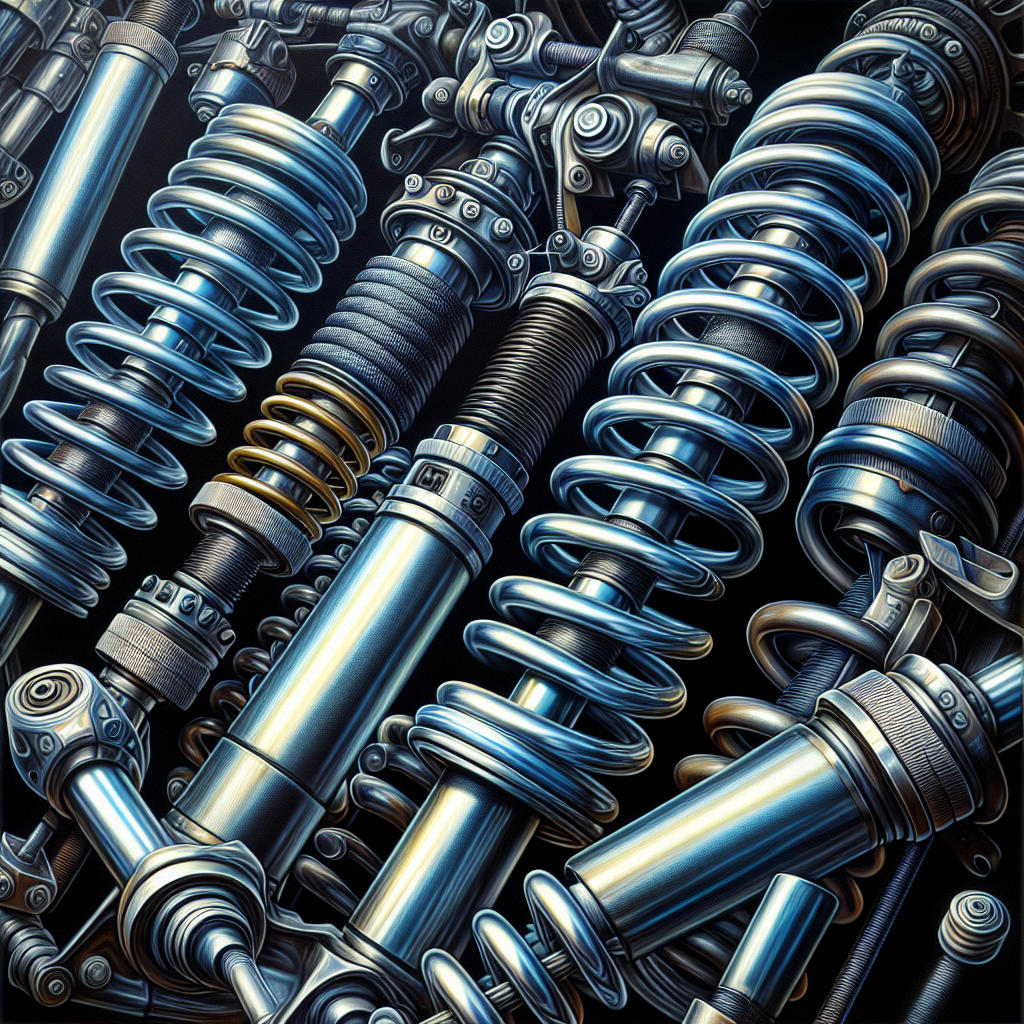
At its core, an automotive suspension system is designed to absorb and dissipate energy from road irregularities, maintaining tire contact with the road surface and ensuring vehicle stability. The primary components of a suspension system include:
- Springs: These components store and release energy, helping to absorb shocks from road surfaces. Common types include coil springs, leaf springs, and torsion bars.
- Shock Absorbers (Dampers): These devices control the motion of the springs, preventing excessive oscillation and ensuring a smooth ride.
- Control Arms: These link the vehicle’s frame to the wheels, allowing for controlled movement and alignment.
- Stabilizer Bars (Anti-Roll Bars): These components reduce body roll during cornering, enhancing vehicle stability.
Key Terms
- Ride Height: The distance between the vehicle’s chassis and the ground.
- Camber: The angle of the wheels relative to the vertical axis of the vehicle.
- Caster: The angle of the steering axis relative to the vertical axis of the vehicle.
- Toe: The angle of the wheels relative to the longitudinal axis of the vehicle.
Historical Development
Early Innovations
The development of automotive suspension systems dates back to the early days of the automobile. In the late 19th and early 20th centuries, vehicles were equipped with rudimentary leaf spring systems, similar to those used in horse-drawn carriages. These early systems provided basic shock absorption but lacked the sophistication needed for modern vehicles.
Key Milestones
- 1920s: The introduction of independent front suspension systems, which allowed each wheel to move independently, improving ride quality and handling.
- 1930s: The development of hydraulic shock absorbers, which provided better damping control compared to earlier friction-based systems.
- 1950s: The advent of coil spring suspension systems, which offered improved ride comfort and handling characteristics.
- 1980s: The introduction of electronic suspension systems, which allowed for real-time adjustments to damping and ride height.
Notable Figures
Several individuals have made significant contributions to the development of automotive suspension systems. Notable figures include:
- William Bushnell Stout: An early pioneer in automotive engineering, Stout developed the first independent front suspension system in the 1920s.
- Earle S. MacPherson: Known for the MacPherson strut, a widely used suspension design that combines a shock absorber and a coil spring into a single unit.
Applications
Passenger Vehicles
In passenger vehicles, suspension systems are designed to provide a balance between comfort and handling. Modern cars often use a combination of MacPherson struts in the front and multi-link or torsion beam suspensions in the rear. These systems are optimized for a smooth ride, responsive handling, and safety.
Commercial Vehicles
Commercial vehicles, such as trucks and buses, require robust suspension systems capable of handling heavy loads and varying road conditions. Leaf springs and air suspension systems are commonly used in these applications to provide durability and load-carrying capacity.
Motorsports
In motorsports, suspension systems are critical for achieving optimal performance. Racing vehicles often use advanced suspension setups, such as double wishbone or pushrod suspensions, which allow for precise control over wheel movement and alignment. These systems are fine-tuned to maximize grip, stability, and cornering performance.
Case Studies
One notable example of advanced suspension technology in action is the use of active suspension systems in Formula 1 racing. These systems use sensors and actuators to continuously adjust the suspension settings in real-time, providing optimal performance under varying track conditions. Another example is the use of adaptive air suspension in luxury vehicles, which allows drivers to adjust ride height and stiffness for different driving scenarios.
Advanced Topics
Active and Adaptive Suspension Systems
Active and adaptive suspension systems represent the cutting edge of suspension technology. These systems use electronic sensors and actuators to continuously monitor and adjust the suspension settings in real-time. This allows for optimal performance under varying driving conditions, improving ride comfort, handling, and safety.
Recent Innovations
Recent innovations in suspension technology include:
- Magnetic Ride Control: This system uses magnetorheological fluid in the shock absorbers, allowing for rapid adjustments to damping characteristics based on road conditions.
- Hydraulic Interconnected Suspension: This system uses hydraulic fluid to connect the suspension components, providing improved stability and control.
- Predictive Suspension Systems: These systems use cameras and sensors to detect road conditions ahead and adjust the suspension settings preemptively.
Future Trends
The future of automotive suspension systems is likely to be shaped by advancements in autonomous driving technology and the increasing demand for electric vehicles. Autonomous vehicles will require sophisticated suspension systems capable of providing a smooth and stable ride without human intervention. Electric vehicles, with their unique weight distribution and performance characteristics, will also drive the development of new suspension technologies.
Challenges and Considerations
Challenges
Despite the advancements in suspension technology, several challenges remain:
- Cost: Advanced suspension systems can be expensive to develop and manufacture, making them less accessible for budget-conscious consumers.
- Complexity: The increasing complexity of suspension systems can lead to higher maintenance costs and potential reliability issues.
- Integration: Integrating advanced suspension systems with other vehicle systems, such as braking and steering, can be challenging.
Considerations
When designing and implementing suspension systems, engineers must consider several factors:
- Vehicle Type: The suspension requirements for a sports car will differ significantly from those of a commercial truck.
- Driving Conditions: Suspension systems must be designed to handle a variety of road conditions, from smooth highways to rough off-road terrain.
- Regulations: Compliance with safety and environmental regulations is essential in the design and implementation of suspension systems.
Potential Solutions
To address these challenges, ongoing research and development efforts are focused on:
- Cost Reduction: Developing more cost-effective manufacturing processes and materials to make advanced suspension systems more affordable.
- Reliability: Improving the reliability and durability of suspension components through better design and testing.
- Integration: Enhancing the integration of suspension systems with other vehicle systems through advanced software and control algorithms.
Conclusion
In conclusion, automotive suspension systems are a vital aspect of vehicle design and performance. From their early beginnings with simple leaf springs to the sophisticated active and adaptive systems of today, suspension technology has come a long way. These systems play a crucial role in ensuring vehicle stability, handling, and ride comfort, making them indispensable in the field of automotive engineering. As technology continues to advance, we can expect further innovations that will enhance the driving experience and meet the evolving demands of modern vehicles. The ongoing research and development in this field promise exciting possibilities for the future of automotive suspension systems.