Automotive HVAC Systems
Introduction
Automotive HVAC (Heating, Ventilation, and Air Conditioning) systems are integral components of modern vehicles, ensuring passenger comfort and safety by regulating the interior climate. These systems are crucial in maintaining a pleasant environment within the vehicle, regardless of external weather conditions. In the field of Automotive Engineering, HVAC systems represent a complex interplay of mechanical, electrical, and thermodynamic principles. Their importance extends beyond comfort, as they also play a role in defogging windows, thus enhancing visibility and safety. This article delves into the various aspects of automotive HVAC systems, exploring their fundamentals, historical development, applications, advanced topics, challenges, and considerations.
Fundamentals
Basic Principles and Concepts
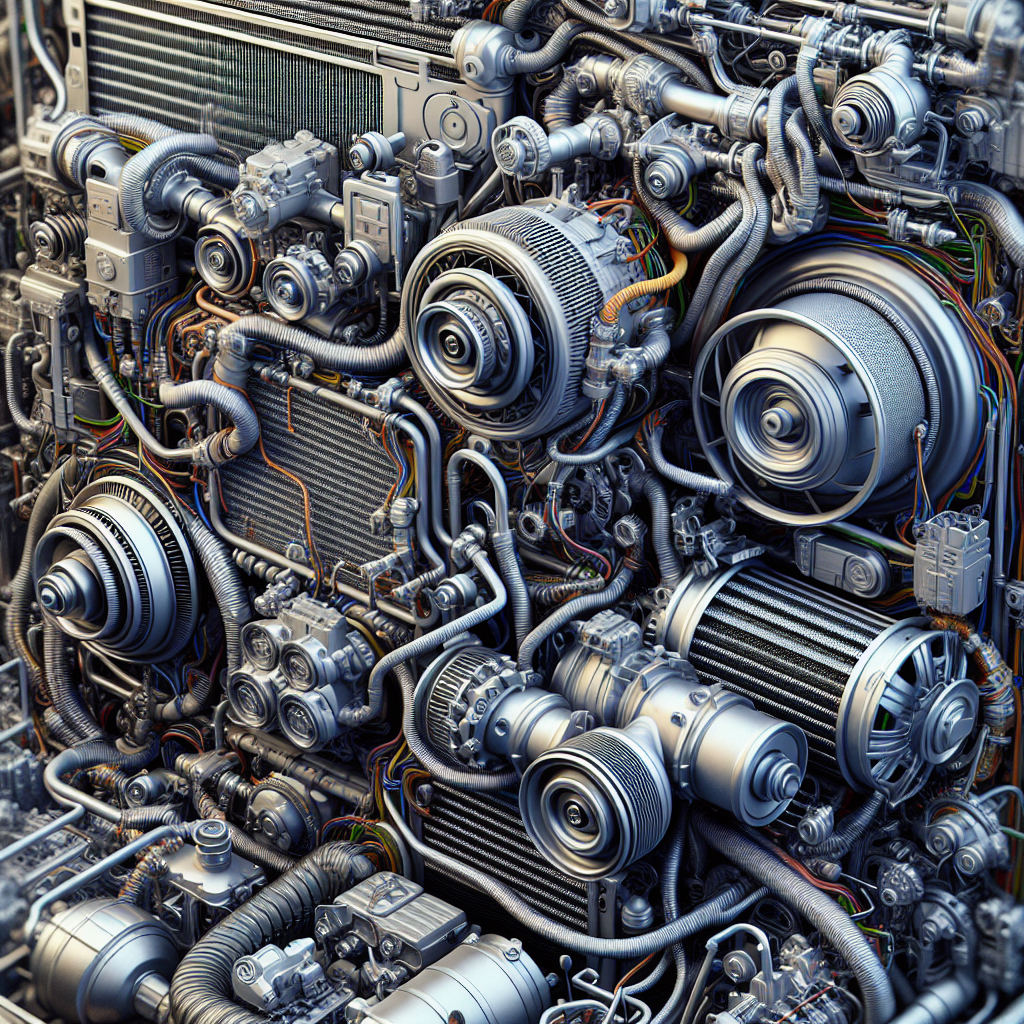
Automotive HVAC systems are designed to control the temperature, humidity, and air quality within a vehicle’s cabin. The primary components of these systems include the compressor, condenser, evaporator, expansion valve, and blower motor. These components work together to perform the following functions:
- Heating: The system uses the engine’s coolant to transfer heat to the cabin air via a heat exchanger known as the heater core.
- Cooling: The air conditioning system removes heat from the cabin air using a refrigerant cycle, which involves the compressor, condenser, evaporator, and expansion valve.
- Ventilation: Fresh air is drawn into the cabin and circulated to maintain air quality and remove stale air.
- Air Filtration: Filters are used to remove dust, pollen, and other contaminants from the incoming air.
Key Terms
- Refrigerant: A fluid used in the air conditioning system to absorb and release heat.
- Compressor: A device that compresses the refrigerant, increasing its pressure and temperature.
- Condenser: A heat exchanger that cools the compressed refrigerant, causing it to condense into a liquid.
- Evaporator: A heat exchanger that absorbs heat from the cabin air, causing the refrigerant to evaporate into a gas.
- Expansion Valve: A device that regulates the flow of refrigerant into the evaporator, reducing its pressure and temperature.
Historical Development
The development of automotive HVAC systems has evolved significantly since the early 20th century. The first car with an integrated heating system was introduced in the 1920s, using the engine’s heat to warm the cabin. In the 1930s, Packard became the first automaker to offer air conditioning as an option in their vehicles. However, these early systems were bulky and expensive, limiting their adoption.
Significant advancements occurred in the 1950s and 1960s, with the introduction of more compact and efficient HVAC systems. The development of the refrigerant R-12 (Freon) by DuPont in the 1930s played a crucial role in the widespread adoption of air conditioning in vehicles. By the 1970s, HVAC systems had become standard in many cars, offering both heating and cooling capabilities.
In recent decades, the focus has shifted towards improving energy efficiency, reducing environmental impact, and enhancing passenger comfort. The introduction of electronic controls, variable-speed compressors, and advanced climate control systems has revolutionized automotive HVAC technology.
Applications
Automotive HVAC systems are used in a wide range of vehicles, including passenger cars, trucks, buses, and specialty vehicles such as ambulances and recreational vehicles. Their applications extend beyond passenger comfort, playing a critical role in various industries and fields:
- Public Transportation: HVAC systems in buses and trains ensure passenger comfort during transit, regardless of external weather conditions.
- Emergency Vehicles: Ambulances and fire trucks rely on HVAC systems to maintain a controlled environment for patients and emergency responders.
- Commercial Vehicles: Trucks and delivery vehicles use HVAC systems to provide a comfortable working environment for drivers, enhancing safety and productivity.
- Military Vehicles: HVAC systems in military vehicles ensure the comfort and operational efficiency of personnel in extreme conditions.
Case Studies
Case Study 1: Electric Vehicles (EVs)
Electric vehicles (EVs) present unique challenges for HVAC systems due to their reliance on battery power. Traditional HVAC systems can significantly reduce the driving range of EVs. To address this, manufacturers have developed heat pump systems that are more energy-efficient than conventional electric heaters. For example, the Nissan Leaf uses a heat pump system to provide heating and cooling, reducing the impact on the vehicle’s range.
Case Study 2: Autonomous Vehicles
As autonomous vehicles become more prevalent, HVAC systems will play a crucial role in ensuring passenger comfort and safety. Advanced climate control systems with individual zone controls and air quality monitoring will be essential in these vehicles. Companies like Tesla are already incorporating advanced HVAC features, such as bioweapon defense mode, which uses HEPA filters to remove contaminants from the cabin air.
Advanced Topics
Recent Research and Innovations
Recent research in automotive HVAC systems focuses on improving energy efficiency, reducing environmental impact, and enhancing passenger comfort. Some notable innovations include:
- Heat Pump Systems: These systems use the principles of thermodynamics to transfer heat more efficiently, reducing the energy consumption of HVAC systems in electric and hybrid vehicles.
- Variable-Speed Compressors: Unlike traditional compressors that operate at a fixed speed, variable-speed compressors can adjust their speed based on the cooling demand, improving efficiency and reducing energy consumption.
- Advanced Climate Control Systems: Modern vehicles are equipped with sophisticated climate control systems that use sensors and electronic controls to maintain a consistent cabin temperature. These systems can also provide individual zone controls, allowing passengers to set their preferred temperature.
- Eco-Friendly Refrigerants: The automotive industry is transitioning to more environmentally friendly refrigerants, such as R-1234yf, which have a lower global warming potential (GWP) compared to traditional refrigerants like R-134a.
Future Trends
The future of automotive HVAC systems is likely to be shaped by several key trends:
- Integration with Autonomous Vehicles: As autonomous vehicles become more common, HVAC systems will need to adapt to new requirements, such as providing personalized climate control for each passenger and integrating with advanced sensor systems.
- Energy Efficiency: With the increasing adoption of electric vehicles, there will be a continued focus on developing more energy-efficient HVAC systems to minimize their impact on driving range.
- Smart HVAC Systems: The integration of IoT (Internet of Things) technology will enable smart HVAC systems that can learn passenger preferences, adjust settings automatically, and provide real-time diagnostics and maintenance alerts.
- Environmental Sustainability: The industry will continue to prioritize the use of eco-friendly refrigerants and materials, as well as the development of systems that minimize energy consumption and reduce greenhouse gas emissions.
Challenges and Considerations
Despite the advancements in automotive HVAC technology, several challenges and considerations remain:
Energy Consumption
HVAC systems can be significant energy consumers, particularly in electric vehicles. Developing more energy-efficient systems is crucial to minimize their impact on vehicle range and overall energy consumption.
Environmental Impact
The use of refrigerants with high global warming potential (GWP) has raised environmental concerns. The industry is transitioning to more eco-friendly refrigerants, but this requires significant investment in new technologies and infrastructure.
Complexity and Cost
Modern HVAC systems are complex and require advanced electronic controls and sensors. This complexity can increase the cost of the system and make maintenance and repairs more challenging.
Passenger Comfort
Ensuring consistent passenger comfort in varying weather conditions and accommodating individual preferences can be challenging. Advanced climate control systems with individual zone controls and smart features can help address this issue.
Potential Solutions
To address these challenges, ongoing research and development efforts are focused on:
- Improving the efficiency of HVAC components, such as compressors and heat exchangers.
- Developing advanced control algorithms that optimize system performance based on real-time conditions.
- Exploring new materials and technologies for eco-friendly refrigerants and components.
- Enhancing diagnostic and maintenance capabilities to reduce downtime and repair costs.
Conclusion
Automotive HVAC systems are essential components of modern vehicles, providing comfort and safety for passengers. Their development has evolved significantly over the past century, driven by advancements in technology and a growing focus on energy efficiency and environmental sustainability. As the automotive industry continues to innovate, HVAC systems will play a crucial role in shaping the future of transportation, particularly in the context of electric and autonomous vehicles. Despite the challenges and considerations, ongoing research and development efforts are paving the way for more efficient, eco-friendly, and advanced HVAC systems that will enhance the driving experience for years to come.