Automotive Cooling Systems
Introduction
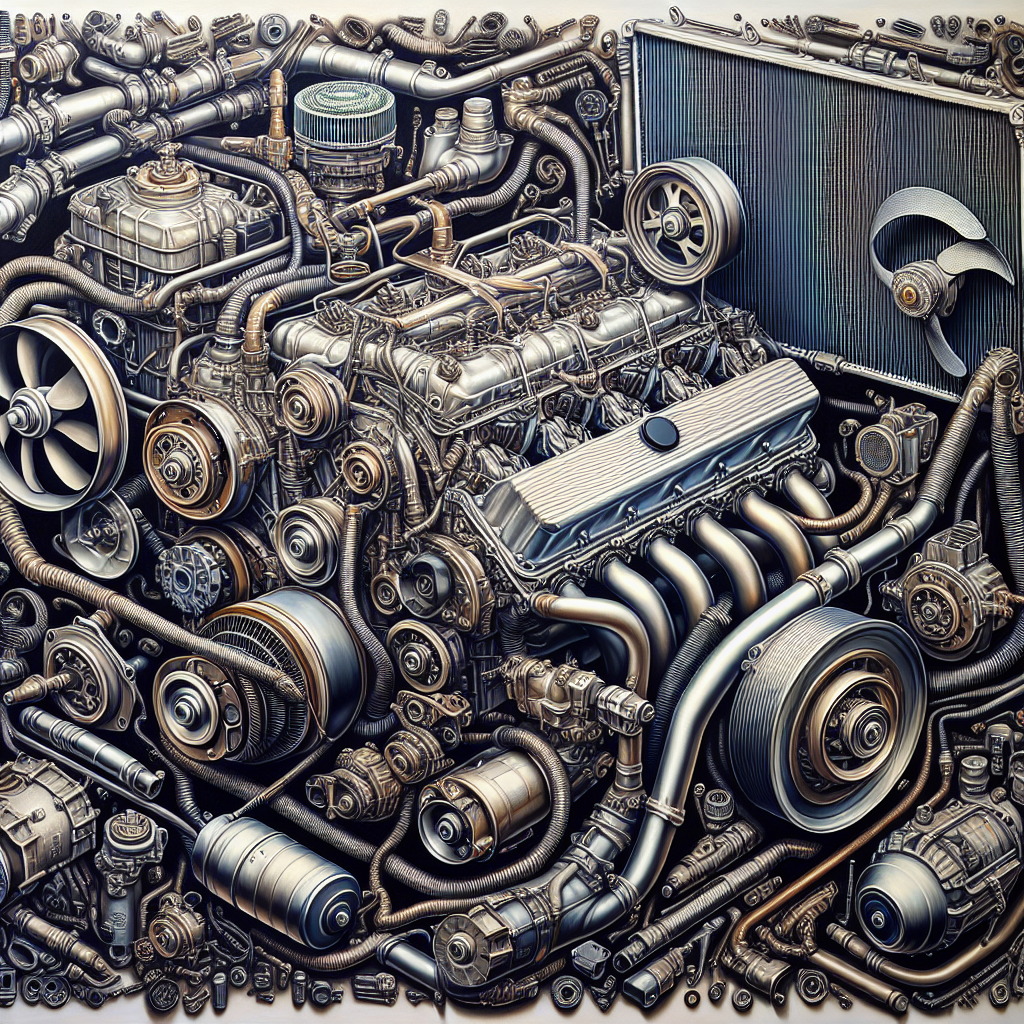
Automotive cooling systems are a critical component in the field of automotive engineering. These systems are designed to manage the temperature of a vehicle’s engine, ensuring it operates within an optimal temperature range. The importance of automotive cooling systems cannot be overstated, as they play a vital role in maintaining engine performance, efficiency, and longevity. Without an effective cooling system, engines would overheat, leading to severe damage and potential failure. This article delves into the fundamentals, historical development, applications, advanced topics, challenges, and considerations associated with automotive cooling systems.
Fundamentals
Basic Principles and Concepts
Automotive cooling systems are designed to remove excess heat from the engine to prevent overheating. The primary components of a cooling system include the radiator, water pump, thermostat, cooling fan, and coolant. The system operates on the principle of heat transfer, where heat is transferred from the engine to the coolant, which then dissipates the heat through the radiator.
Key Terms
- Radiator: A heat exchanger that dissipates heat from the coolant to the outside air.
- Water Pump: A device that circulates coolant through the engine and radiator.
- Thermostat: A valve that regulates the flow of coolant based on the engine’s temperature.
- Cooling Fan: A fan that increases airflow through the radiator to enhance cooling.
- Coolant: A fluid that absorbs and transfers heat from the engine to the radiator.
Theories
The operation of automotive cooling systems is based on thermodynamic principles, particularly the laws of heat transfer. The first law of thermodynamics, which states that energy cannot be created or destroyed but only transferred, is fundamental to understanding how heat is managed within the system. Additionally, the principles of conduction, convection, and radiation are essential in explaining how heat is transferred from the engine to the coolant and then to the air.
Historical Development
Early Innovations
The development of automotive cooling systems dates back to the early 20th century when internal combustion engines became prevalent. Early engines were air-cooled, relying on airflow to dissipate heat. However, as engines became more powerful, air cooling proved insufficient, leading to the development of liquid-cooled systems.
Key Milestones
- 1920s: Introduction of the first water-cooled engines, which used water as a coolant.
- 1930s: Development of the first thermostats to regulate coolant flow.
- 1950s: Introduction of ethylene glycol-based coolants, which provided better heat transfer and antifreeze properties.
- 1980s: Adoption of aluminum radiators, which offered improved heat dissipation and reduced weight.
- 2000s: Development of advanced cooling technologies, such as electric water pumps and variable-speed cooling fans.
Notable Figures
Several notable figures have contributed to the development of automotive cooling systems. Karl Benz, the inventor of the first automobile, played a crucial role in early engine cooling innovations. Additionally, engineers like Charles Kettering and Alfred Sloan made significant contributions to the development of modern cooling technologies.
Applications
Automotive Industry
In the automotive industry, cooling systems are essential for maintaining engine performance and reliability. Modern vehicles use sophisticated cooling systems that incorporate advanced materials and technologies to manage heat effectively. For example, high-performance sports cars often use dual cooling systems to handle the increased heat generated by powerful engines.
Heavy Machinery
Cooling systems are also critical in heavy machinery, such as construction equipment and agricultural vehicles. These machines operate under extreme conditions and generate significant amounts of heat, making efficient cooling systems essential for their operation.
Electric and Hybrid Vehicles
With the rise of electric and hybrid vehicles, cooling systems have evolved to manage the heat generated by batteries and electric motors. These systems use specialized coolants and advanced heat exchangers to ensure optimal performance and safety.
Case Studies
One notable case study is the development of the cooling system for the Tesla Model S. This electric vehicle uses a sophisticated liquid cooling system to manage the temperature of its battery pack, ensuring optimal performance and longevity. The system incorporates multiple heat exchangers and a variable-speed cooling fan to maintain the battery within a safe temperature range.
Advanced Topics
Recent Research and Innovations
Recent research in automotive cooling systems has focused on improving efficiency and reducing environmental impact. Innovations such as electric water pumps, which provide variable flow rates based on engine demand, have improved fuel efficiency and reduced emissions. Additionally, researchers are exploring the use of nanofluids, which contain nanoparticles that enhance heat transfer properties, as advanced coolants.
Future Trends
The future of automotive cooling systems is likely to be shaped by the increasing adoption of electric and hybrid vehicles. As these vehicles become more prevalent, cooling systems will need to evolve to manage the unique thermal challenges associated with batteries and electric motors. Additionally, advancements in materials science and nanotechnology are expected to lead to the development of more efficient and environmentally friendly cooling solutions.
Challenges and Considerations
Challenges
One of the primary challenges in automotive cooling systems is managing the trade-off between cooling efficiency and fuel economy. While more efficient cooling systems can improve engine performance, they can also increase fuel consumption. Additionally, the use of advanced materials and technologies can increase the cost and complexity of cooling systems.
Limitations
Current cooling systems also have limitations in terms of their ability to manage extreme temperatures. For example, in high-performance vehicles, the cooling system may struggle to dissipate the heat generated during prolonged periods of high-speed driving. Similarly, in electric vehicles, managing the heat generated by fast charging can be challenging.
Potential Solutions
To address these challenges, researchers are exploring several potential solutions. One approach is the development of adaptive cooling systems that can adjust their performance based on real-time conditions. Another potential solution is the use of advanced materials, such as phase-change materials, which can absorb and release large amounts of heat.
Conclusion
In conclusion, automotive cooling systems are a vital component of modern vehicles, playing a crucial role in maintaining engine performance, efficiency, and longevity. The development of these systems has been shaped by significant innovations and advancements over the past century. As the automotive industry continues to evolve, particularly with the rise of electric and hybrid vehicles, cooling systems will need to adapt to meet new thermal management challenges. Despite the challenges and limitations, ongoing research and innovation hold promise for the future of automotive cooling systems, ensuring they remain a critical area of focus in the field of automotive engineering.