Rocket Propulsion
Introduction
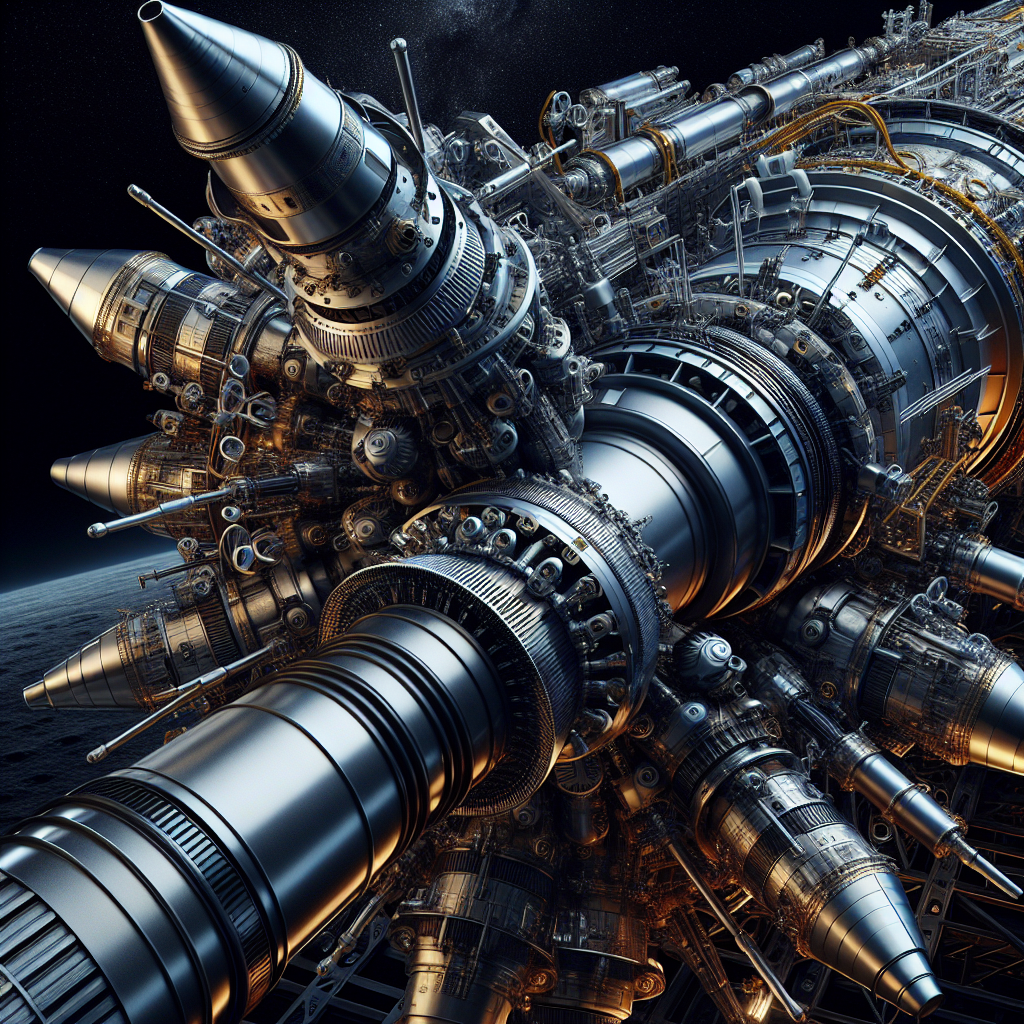
Rocket propulsion is a cornerstone of aerospace engineering, enabling the exploration of space and the advancement of various scientific and commercial endeavors. This technology is crucial for launching satellites, conducting space missions, and even exploring other planets. The principles of rocket propulsion are not only fundamental to aerospace engineering but also have significant implications for national defense, global communications, and scientific research. This article delves into the multifaceted world of rocket propulsion, exploring its basic principles, historical development, practical applications, advanced topics, and the challenges it faces.
Fundamentals
Basic Principles and Concepts
Rocket propulsion operates on the principle of Newton’s Third Law of Motion: “For every action, there is an equal and opposite reaction.” In the context of rockets, this means that the expulsion of mass (propellant) at high speed from the rocket’s engine generates a thrust force that propels the rocket in the opposite direction.
Key Terms and Definitions
- Thrust: The force exerted by the rocket engine to propel the vehicle forward.
- Specific Impulse (Isp): A measure of the efficiency of rocket engines, defined as the thrust produced per unit of propellant flow rate.
- Propellant: The chemical substance that is burned or decomposed to produce thrust. It can be in solid, liquid, or hybrid form.
- Oxidizer: A chemical that provides the oxygen needed for the combustion of the fuel in the rocket engine.
- Nozzle: A device that accelerates the exhaust gases to produce thrust.
Theories
The Tsiolkovsky rocket equation, formulated by Russian scientist Konstantin Tsiolkovsky, is a fundamental equation in rocket propulsion. It relates the velocity of a rocket to the velocity of the exhaust gases and the initial and final mass of the rocket:
Δv = ve ln(m0/mf)
Where:
- Δv is the change in velocity of the rocket.
- ve is the effective exhaust velocity.
- m0 is the initial mass of the rocket.
- mf is the final mass of the rocket.
Historical Development
Early Innovations
The history of rocket propulsion dates back to ancient China, where gunpowder-propelled rockets were used for military purposes as early as the 13th century. However, significant advancements in rocket technology began in the 20th century.
Key Milestones
- 1926: Robert H. Goddard, an American physicist, successfully launched the world’s first liquid-fueled rocket.
- 1942: The German V-2 rocket, developed by Wernher von Braun, became the first rocket to reach the edge of space.
- 1957: The Soviet Union launched Sputnik 1, the first artificial satellite, marking the beginning of the space age.
- 1969: NASA’s Apollo 11 mission successfully landed humans on the Moon, powered by the Saturn V rocket.
Notable Figures
- Konstantin Tsiolkovsky: Often referred to as the “father of astronautics,” he developed the theoretical foundations of rocketry.
- Robert H. Goddard: Pioneered liquid-fueled rocket technology and conducted numerous successful launches.
- Wernher von Braun: Played a crucial role in the development of the V-2 rocket and later contributed to NASA’s space programs.
Applications
Space Exploration
Rocket propulsion is indispensable for space exploration missions. It enables the launch of spacecraft, satellites, and probes to explore outer space. Notable missions include:
- Apollo Program: Enabled human lunar exploration.
- Voyager Probes: Sent to explore the outer planets and beyond.
- Mars Rovers: Such as Curiosity and Perseverance, which explore the Martian surface.
Commercial Applications
In the commercial sector, rocket propulsion is used for launching communication satellites, weather satellites, and Earth observation satellites. Companies like SpaceX and Blue Origin are also developing reusable rockets to reduce the cost of space travel.
Military Applications
Rocket propulsion technology is used in various military applications, including ballistic missiles, cruise missiles, and anti-satellite weapons. These technologies play a crucial role in national defense and strategic deterrence.
Advanced Topics
Electric Propulsion
Electric propulsion systems, such as ion thrusters and Hall effect thrusters, use electric fields to accelerate ions and produce thrust. These systems are highly efficient and are used for long-duration space missions.
Nuclear Thermal Propulsion
Nuclear thermal propulsion (NTP) uses a nuclear reactor to heat a propellant, typically hydrogen, to produce thrust. NTP offers higher efficiency and thrust compared to chemical propulsion, making it a promising technology for deep space missions.
Recent Innovations
Recent advancements in rocket propulsion include the development of reusable rockets by companies like SpaceX. The Falcon 9 rocket, for example, can be launched, landed, and reused multiple times, significantly reducing the cost of space missions.
Future Trends
The future of rocket propulsion may involve advanced concepts like fusion propulsion, antimatter propulsion, and even warp drives. These technologies, while still theoretical, have the potential to revolutionize space travel and enable interstellar exploration.
Challenges and Considerations
Technical Challenges
Rocket propulsion faces several technical challenges, including:
- Heat Management: Managing the extreme temperatures generated during combustion.
- Structural Integrity: Ensuring the rocket can withstand the stresses of launch and space travel.
- Propellant Efficiency: Developing more efficient propellants to maximize thrust and minimize weight.
Environmental Considerations
Rocket launches can have significant environmental impacts, including the release of greenhouse gases and other pollutants. Efforts are being made to develop more environmentally friendly propellants and launch systems.
Economic Factors
The high cost of rocket development and launches is a significant barrier. Reusable rockets and advancements in manufacturing technologies aim to reduce these costs and make space travel more accessible.
Potential Solutions
To address these challenges, ongoing research focuses on:
- Developing advanced materials for better heat resistance and structural integrity.
- Improving propellant formulations for higher efficiency and lower environmental impact.
- Innovating in reusable rocket technology to reduce costs.
Conclusion
Rocket propulsion is a vital aspect of aerospace engineering, enabling humanity to explore space, enhance global communications, and ensure national security. From its historical roots to its modern advancements, rocket propulsion continues to evolve, driven by scientific curiosity and technological innovation. While challenges remain, ongoing research and development promise to overcome these hurdles and pave the way for a future where space travel is more efficient, sustainable, and accessible. The importance of rocket propulsion in aerospace engineering cannot be overstated, as it holds the key to unlocking the mysteries of the universe and advancing human civilization.