Robotics in Mining
Introduction
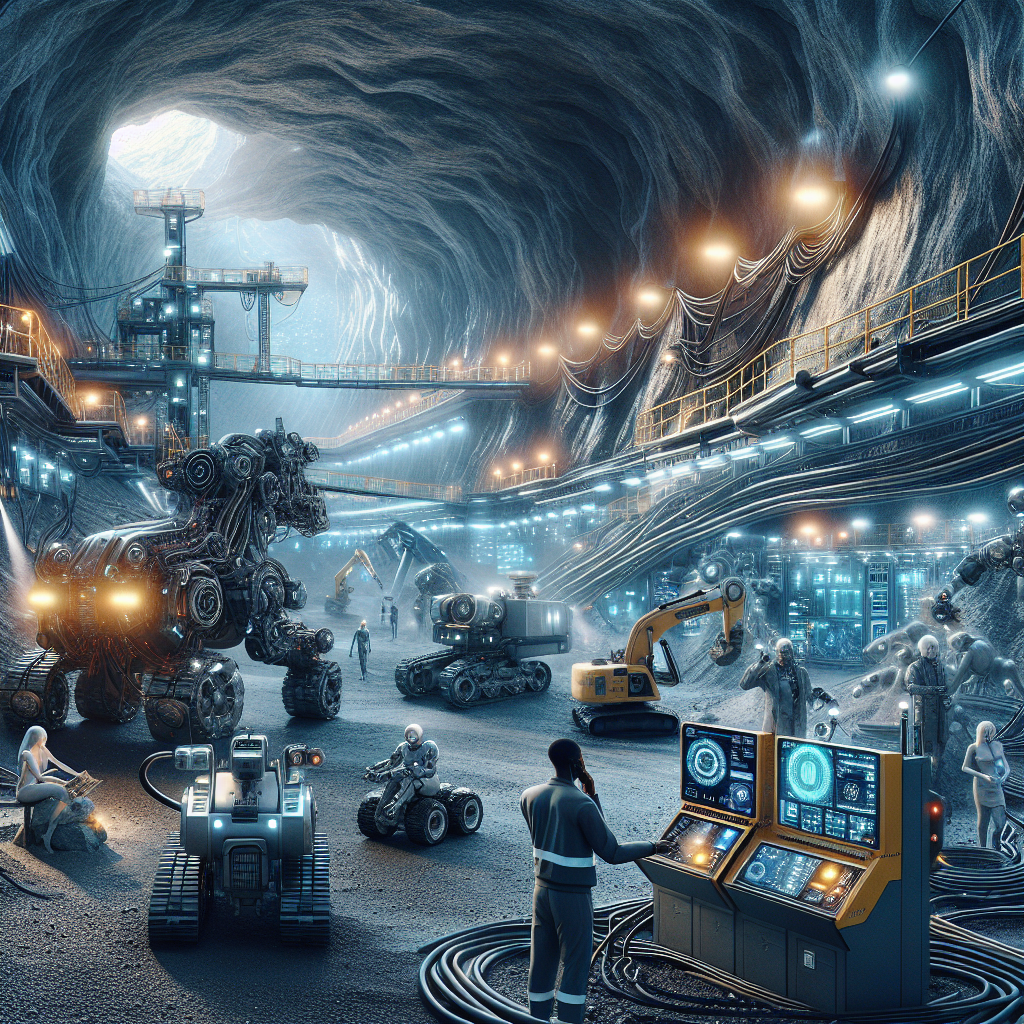
Robotics in mining represents a significant advancement in the field of engineering, offering transformative solutions to some of the industry’s most pressing challenges. The integration of robotics into mining operations enhances safety, efficiency, and productivity, making it a critical area of focus for engineers and industry professionals. This article delves into the various aspects of robotics in mining, exploring its fundamentals, historical development, applications, advanced topics, challenges, and future prospects.
Fundamentals
Basic Principles and Concepts
Robotics in mining involves the use of automated machines and systems to perform tasks traditionally carried out by human workers. These tasks range from drilling and blasting to ore transportation and mineral processing. The primary goal is to improve operational efficiency while minimizing human exposure to hazardous environments.
Key Terms
- Autonomous Vehicles: Self-driving trucks and loaders used for transporting materials within the mine.
- Teleoperation: Remote control of mining equipment, allowing operators to manage machinery from a safe distance.
- Artificial Intelligence (AI): Algorithms and machine learning techniques used to optimize mining operations and predict equipment failures.
- Robotic Drilling Systems: Automated drilling rigs that enhance precision and reduce downtime.
Historical Development
Early Innovations
The concept of automation in mining dates back to the early 20th century, with the introduction of mechanized equipment such as electric shovels and conveyor belts. However, it wasn’t until the late 20th century that significant strides were made in robotics.
Key Milestones
- 1980s: Introduction of the first remotely operated mining vehicles.
- 1990s: Development of autonomous haul trucks by companies like Caterpillar and Komatsu.
- 2000s: Implementation of AI and machine learning in predictive maintenance and ore sorting.
- 2010s: Advancements in teleoperation and the use of drones for mine surveying and inspection.
Notable Figures
Several pioneers have contributed to the development of robotics in mining. Notable figures include:
- Joseph Engelberger: Often referred to as the “Father of Robotics,” his work laid the foundation for industrial automation.
- Hans Moravec: A robotics researcher whose theories on AI and automation have influenced mining technologies.
- Elon Musk: Through his company, Tesla, Musk has pushed the boundaries of autonomous vehicle technology, which has applications in mining.
Applications
Practical Applications in Mining
Robotics has found numerous applications in the mining industry, revolutionizing various aspects of the operation. Some of the key applications include:
Autonomous Haul Trucks
Autonomous haul trucks are used to transport ore and waste material within the mine. These trucks are equipped with sensors, GPS, and AI algorithms that enable them to navigate complex terrains without human intervention. Companies like Rio Tinto and BHP have successfully implemented autonomous haulage systems, resulting in increased productivity and reduced operational costs.
Robotic Drilling Systems
Robotic drilling systems enhance precision and efficiency in the drilling process. These systems use advanced sensors and control algorithms to optimize drilling parameters, reducing downtime and improving the quality of the drilled holes. For example, Epiroc’s autonomous drilling rigs have been deployed in various mines, significantly improving drilling performance.
Teleoperated Mining Equipment
Teleoperation allows operators to control mining equipment from a remote location, reducing the risk of accidents and exposure to hazardous environments. This technology is particularly useful in underground mining, where conditions can be extremely dangerous. Companies like Sandvik and Caterpillar offer teleoperated loaders and excavators that enhance safety and productivity.
Drones for Mine Surveying and Inspection
Drones equipped with high-resolution cameras and LiDAR sensors are used for mine surveying and inspection. These drones can quickly and accurately map the mine site, monitor stockpiles, and inspect infrastructure, providing valuable data for decision-making. For instance, Barrick Gold has successfully integrated drone technology into its operations, improving efficiency and safety.
Advanced Topics
Recent Research and Innovations
The field of robotics in mining is continuously evolving, with ongoing research and innovations driving advancements. Some of the recent developments include:
AI and Machine Learning
AI and machine learning are being used to optimize various aspects of mining operations. Predictive maintenance algorithms analyze data from sensors to predict equipment failures, reducing downtime and maintenance costs. Machine learning models are also used for ore sorting, improving the efficiency of mineral processing.
Swarm Robotics
Swarm robotics involves the use of multiple robots that work together to perform tasks. In mining, swarm robotics can be used for tasks such as ore extraction and transportation. These robots communicate and coordinate with each other, improving efficiency and reducing the need for human intervention.
Advanced Sensing Technologies
Advanced sensors, such as LiDAR and hyperspectral imaging, are being integrated into mining robots to enhance their capabilities. These sensors provide detailed information about the mine environment, enabling robots to navigate complex terrains and identify valuable minerals more accurately.
Future Trends
The future of robotics in mining looks promising, with several trends expected to shape the industry:
- Increased Automation: The trend towards increased automation will continue, with more mining operations adopting autonomous vehicles and robotic systems.
- Integration of IoT: The Internet of Things (IoT) will play a significant role in mining, with connected devices providing real-time data for decision-making.
- Development of Smart Mines: The concept of smart mines, where all aspects of the operation are interconnected and optimized using advanced technologies, will become more prevalent.
Challenges and Considerations
Technical Challenges
Despite the numerous benefits, the integration of robotics in mining also presents several challenges:
- Complex Environments: Mining environments are often harsh and unpredictable, making it difficult for robots to operate effectively.
- High Initial Costs: The implementation of robotic systems requires significant investment, which can be a barrier for smaller mining companies.
- Data Management: The large amounts of data generated by sensors and robots need to be effectively managed and analyzed.
Potential Solutions
To address these challenges, several solutions can be considered:
- Robust Design: Developing robots with robust designs that can withstand harsh mining conditions.
- Cost-Effective Solutions: Exploring cost-effective solutions and financing options to make robotic systems more accessible.
- Advanced Data Analytics: Implementing advanced data analytics tools to manage and analyze the data generated by mining robots.
Ethical and Social Considerations
The adoption of robotics in mining also raises ethical and social considerations:
- Job Displacement: The increased use of robots may lead to job displacement for human workers. It is essential to consider retraining and upskilling programs to mitigate this impact.
- Safety Concerns: While robots can enhance safety, there is also a need to ensure that they do not introduce new risks or hazards.
Conclusion
Robotics in mining represents a significant advancement in the field of engineering, offering numerous benefits in terms of safety, efficiency, and productivity. From autonomous haul trucks and robotic drilling systems to teleoperated equipment and drones, the applications of robotics in mining are vast and varied. While there are challenges and considerations to address, ongoing research and innovations continue to drive the field forward. As the industry moves towards increased automation and the development of smart mines, the role of robotics in mining will become even more critical, shaping the future of the industry and the field of engineering as a whole.