Robotics in Education
Introduction
Robotics in education is an emerging and transformative field within engineering that integrates the principles of robotics with educational methodologies. This interdisciplinary approach aims to enhance learning experiences, foster innovation, and prepare students for the technological demands of the future. The importance of robotics in education cannot be overstated, as it not only equips students with essential technical skills but also promotes critical thinking, problem-solving, and creativity. In the context of engineering, robotics education serves as a bridge between theoretical knowledge and practical application, making it a vital component of modern engineering curricula.
Fundamentals
Basic Principles and Concepts
Robotics in education revolves around the design, construction, operation, and use of robots to facilitate learning. Key principles include:
- Automation: The use of technology to perform tasks without human intervention.
- Programming: Writing code to control the behavior and functions of robots.
- Mechanics: The study of motion and the forces that produce motion, crucial for understanding how robots move and interact with their environment.
- Sensors and Actuators: Devices that allow robots to perceive their surroundings and perform actions, respectively.
Key Terms
- Robot: A machine capable of carrying out complex actions automatically, especially one programmable by a computer.
- Artificial Intelligence (AI): The simulation of human intelligence in machines that are programmed to think and learn.
- STEM Education: An interdisciplinary approach to learning that integrates science, technology, engineering, and mathematics.
- Mechatronics: A multidisciplinary field that combines mechanical engineering, electronics, computer science, and control engineering.
Historical Development
The integration of robotics in education has a rich history, marked by several key milestones and contributions from notable figures:
- 1960s: The concept of educational robots began to take shape with the development of early programmable machines like the LOGO Turtle, designed by Seymour Papert and his colleagues at MIT. This robot was used to teach children basic programming and geometry.
- 1980s: The introduction of LEGO Mindstorms, a line of programmable robotics kits, revolutionized educational robotics by making it accessible to a broader audience. These kits allowed students to build and program their own robots, fostering hands-on learning.
- 2000s: The rise of open-source platforms like Arduino and Raspberry Pi further democratized robotics education, enabling students and educators to create custom robotic projects with relative ease.
- 2010s: The proliferation of online resources, coding bootcamps, and educational platforms like Khan Academy and Coursera made robotics education more accessible than ever before.
Notable figures in the field include Seymour Papert, who pioneered the use of computers in education, and Dean Kamen, the inventor of the FIRST Robotics Competition, which has inspired countless students to pursue careers in engineering and technology.
Applications
Robotics in education has a wide range of practical applications across various industries and fields:
Primary and Secondary Education
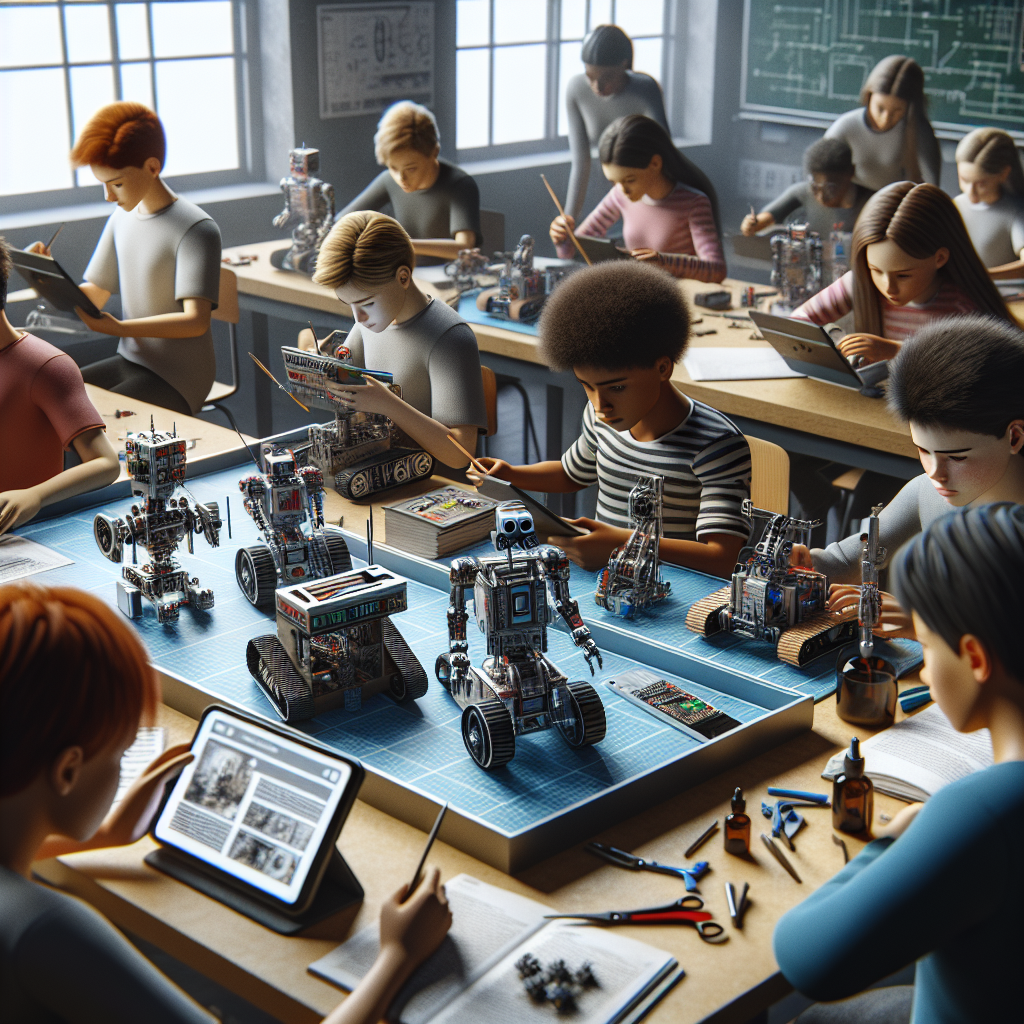
In primary and secondary education, robotics is used to introduce students to STEM concepts in an engaging and interactive manner. For example, programs like FIRST LEGO League and VEX Robotics Competitions provide students with hands-on experience in building and programming robots, fostering teamwork and problem-solving skills.
Higher Education
In higher education, robotics is integrated into engineering curricula to provide students with practical experience in designing, building, and programming robots. Universities often have dedicated robotics labs and research centers where students can work on advanced projects, such as autonomous vehicles, robotic arms, and drones.
Industry and Research
Robotics education also has significant applications in industry and research. For instance, companies like Amazon and Tesla use robotics to automate their manufacturing and logistics processes. In research, robotics is used to explore new frontiers in fields like artificial intelligence, human-robot interaction, and biomedical engineering.
Case Studies
- Case Study 1: The use of robotics in special education to assist children with autism in developing social and communication skills. Robots like NAO and Milo are designed to interact with children in a way that is engaging and non-threatening.
- Case Study 2: The implementation of robotics programs in underprivileged schools to bridge the digital divide and provide students with access to cutting-edge technology. Programs like Code.org and Girls Who Code have made significant strides in this area.
Advanced Topics
Recent Research and Innovations
Recent research in robotics education has focused on several advanced topics:
- Artificial Intelligence: The integration of AI in educational robots to create more adaptive and personalized learning experiences. For example, AI-powered robots can assess a student’s progress and adjust their teaching methods accordingly.
- Human-Robot Interaction: The study of how humans and robots interact, with the goal of making robots more intuitive and user-friendly. This includes research on natural language processing, gesture recognition, and emotional intelligence.
- Collaborative Robots (Cobots): The development of robots designed to work alongside humans in a collaborative manner. Cobots are being used in educational settings to assist teachers and provide additional support to students.
Future Trends
The future of robotics in education is likely to be shaped by several key trends:
- Increased Accessibility: As the cost of robotics technology continues to decrease, it will become more accessible to schools and students around the world.
- Integration with Virtual and Augmented Reality: The combination of robotics with virtual and augmented reality technologies will create immersive learning experiences that are both engaging and educational.
- Focus on Soft Skills: In addition to technical skills, robotics education will increasingly emphasize the development of soft skills like teamwork, communication, and leadership.
Challenges and Considerations
Despite its many benefits, the integration of robotics in education also presents several challenges and considerations:
Challenges
- Cost: The initial cost of robotics kits and equipment can be prohibitive for some schools and students, particularly in underfunded or rural areas.
- Teacher Training: Effective robotics education requires teachers who are well-versed in both the technical and pedagogical aspects of robotics. Providing adequate training and professional development for teachers can be a significant challenge.
- Curriculum Integration: Integrating robotics into existing curricula can be difficult, particularly in schools with rigid or standardized curricula. Finding ways to incorporate robotics in a meaningful and effective manner is essential.
Potential Solutions
- Grants and Funding: Securing grants and funding from government agencies, private organizations, and philanthropic foundations can help offset the cost of robotics equipment and training.
- Professional Development: Investing in professional development programs for teachers can ensure they have the skills and knowledge needed to effectively teach robotics.
- Flexible Curriculum Models: Developing flexible curriculum models that allow for the integration of robotics in a way that complements existing subjects and learning objectives.
Conclusion
Robotics in education is a dynamic and rapidly evolving field that holds immense potential for transforming the way we teach and learn. By integrating robotics into educational curricula, we can equip students with the technical skills and critical thinking abilities needed to thrive in an increasingly technological world. From primary and secondary education to higher education and industry, the applications of robotics in education are vast and varied. While there are challenges to be addressed, the benefits of robotics education far outweigh the obstacles. As we continue to innovate and explore new frontiers in robotics, the future of education looks brighter than ever.