Product Lifecycle Management (PLM)
Introduction
Product Lifecycle Management (PLM) is a strategic approach in engineering design that manages the entire lifecycle of a product from inception, through engineering design and manufacturing, to service and disposal. PLM integrates people, processes, business systems, and information to streamline the development and management of products. In the field of engineering, PLM is crucial for ensuring that products are designed efficiently, meet quality standards, and are delivered to market in a timely manner. This article delves into the importance, fundamentals, historical development, applications, advanced topics, and challenges associated with PLM in engineering design.
Fundamentals
Basic Principles and Concepts
PLM is built on several core principles and concepts:
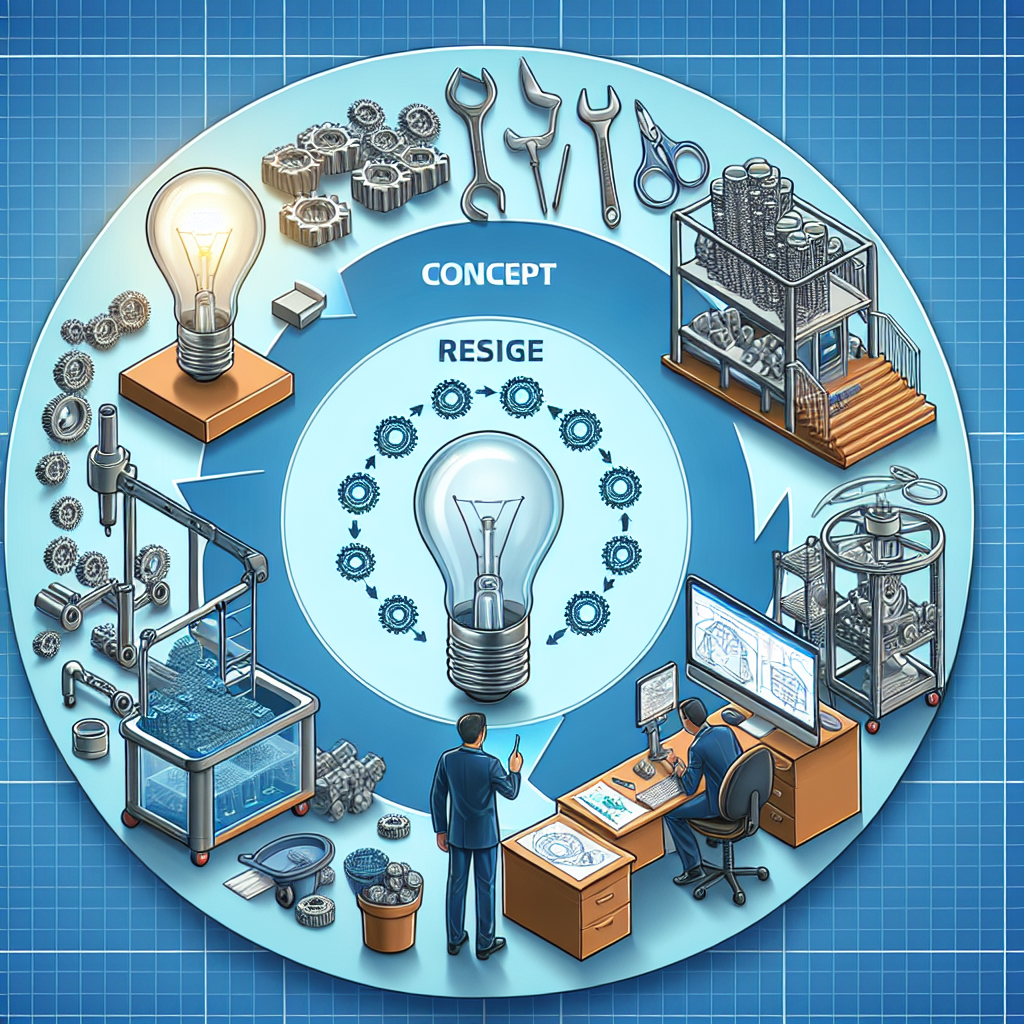
- Lifecycle Stages: The product lifecycle typically includes stages such as concept, design, manufacturing, service, and disposal. Each stage has its own set of processes and requirements.
- Data Management: Effective PLM requires robust data management to ensure that all product-related information is accurate, up-to-date, and accessible to relevant stakeholders.
- Collaboration: PLM fosters collaboration among various departments, including engineering, manufacturing, marketing, and sales, to ensure that all aspects of the product are aligned.
- Integration: PLM systems integrate with other enterprise systems such as Enterprise Resource Planning (ERP) and Customer Relationship Management (CRM) to provide a holistic view of the product lifecycle.
Key Terms
- Bill of Materials (BOM): A comprehensive list of materials, components, and assemblies required to build a product.
- Change Management: The process of managing changes to product designs and specifications throughout the lifecycle.
- Configuration Management: Ensuring that a product’s performance, functional, and physical attributes are consistent with its requirements and design.
- Digital Twin: A virtual representation of a physical product that is used for simulation, analysis, and monitoring.
Historical Development
The concept of PLM has evolved significantly over the years. Initially, product data management (PDM) systems were used to manage engineering data. However, as products became more complex and the need for cross-functional collaboration grew, the scope of these systems expanded to encompass the entire product lifecycle.
Key Milestones
- 1980s: The advent of Computer-Aided Design (CAD) systems revolutionized the way products were designed, leading to the development of PDM systems to manage CAD data.
- 1990s: The concept of PLM emerged as companies sought to integrate PDM with other enterprise systems and manage the entire product lifecycle.
- 2000s: The rise of digital technologies and the internet enabled more sophisticated PLM systems that supported global collaboration and real-time data sharing.
- 2010s: The introduction of Industry 4.0 and the Internet of Things (IoT) further expanded the capabilities of PLM systems, enabling the creation of digital twins and advanced analytics.
Notable Figures
Several individuals have made significant contributions to the development of PLM:
- Michael Grieves: Often credited with coining the term “PLM,” Grieves has written extensively on the subject and is a leading authority in the field.
- David Ullman: An expert in engineering design, Ullman has contributed to the development of PLM methodologies and best practices.
Applications
PLM is used across various industries to manage the lifecycle of products. Here are some practical applications:
Automotive Industry
In the automotive industry, PLM systems are used to manage the design and development of vehicles. For example, companies like Ford and General Motors use PLM to streamline their design processes, manage complex supply chains, and ensure compliance with regulatory standards.
Aerospace Industry
The aerospace industry relies heavily on PLM to manage the development of aircraft and spacecraft. Boeing, for instance, uses PLM to coordinate the efforts of its global engineering teams, manage complex assemblies, and ensure the safety and reliability of its products.
Consumer Electronics
Companies like Apple and Samsung use PLM to manage the rapid development cycles of consumer electronics. PLM helps these companies to innovate quickly, manage component suppliers, and ensure product quality.
Case Study: Siemens
Siemens, a global leader in industrial automation, uses PLM to manage the lifecycle of its products, from industrial machinery to medical devices. By integrating PLM with its digital enterprise solutions, Siemens has been able to reduce time-to-market, improve product quality, and enhance customer satisfaction.
Advanced Topics
Digital Twin
The concept of the digital twin is one of the most advanced topics in PLM. A digital twin is a virtual representation of a physical product that can be used for simulation, analysis, and monitoring. This technology enables engineers to test and optimize products in a virtual environment before they are built, reducing the need for physical prototypes and accelerating development cycles.
Artificial Intelligence and Machine Learning
AI and machine learning are increasingly being integrated into PLM systems to enhance decision-making and automate routine tasks. For example, AI can be used to analyze large datasets to identify patterns and trends, predict product failures, and optimize supply chains.
Blockchain Technology
Blockchain technology is being explored as a way to enhance the security and transparency of PLM systems. By creating an immutable record of product data, blockchain can help to prevent counterfeiting, ensure compliance with regulatory standards, and improve traceability throughout the supply chain.
Future Trends
The future of PLM is likely to be shaped by several emerging trends:
- Increased Integration: PLM systems will become more integrated with other enterprise systems, enabling a more seamless flow of information across the organization.
- Greater Use of IoT: The Internet of Things will enable more real-time data collection and analysis, enhancing the ability of PLM systems to monitor and optimize products throughout their lifecycle.
- Enhanced Collaboration: Advances in digital collaboration tools will enable more effective teamwork among geographically dispersed teams.
Challenges and Considerations
While PLM offers many benefits, it also presents several challenges and considerations:
Data Management
Managing large volumes of data can be challenging, particularly as products become more complex and the amount of data generated increases. Ensuring data accuracy, consistency, and security is critical for effective PLM.
Integration
Integrating PLM with other enterprise systems can be complex and time-consuming. Organizations need to ensure that their PLM systems are compatible with their existing IT infrastructure and can communicate effectively with other systems.
Change Management
Implementing PLM often requires significant changes to existing processes and workflows. Organizations need to manage these changes carefully to ensure that employees are adequately trained and that the transition is smooth.
Cost
The cost of implementing and maintaining a PLM system can be high, particularly for small and medium-sized enterprises. Organizations need to carefully consider the return on investment and ensure that they have the necessary resources to support PLM.
Potential Solutions
Several strategies can help to address these challenges:
- Data Governance: Implementing robust data governance policies and procedures can help to ensure data accuracy and consistency.
- Phased Implementation: Implementing PLM in phases can help to manage costs and reduce the risk of disruption.
- Training and Support: Providing comprehensive training and support can help to ensure that employees are comfortable with the new system and processes.
- Vendor Selection: Choosing a PLM vendor with a proven track record and strong support capabilities can help to ensure a successful implementation.
Conclusion
Product Lifecycle Management (PLM) is a critical approach in engineering design that helps organizations to manage the entire lifecycle of their products. By integrating people, processes, business systems, and information, PLM enables organizations to design products more efficiently, ensure quality, and bring products to market more quickly. While PLM presents several challenges, these can be addressed through careful planning, robust data management, and effective change management. As technology continues to evolve, PLM will play an increasingly important role in helping organizations to innovate and compete in a rapidly changing market.