Phase Equilibria and Phase Change
Introduction
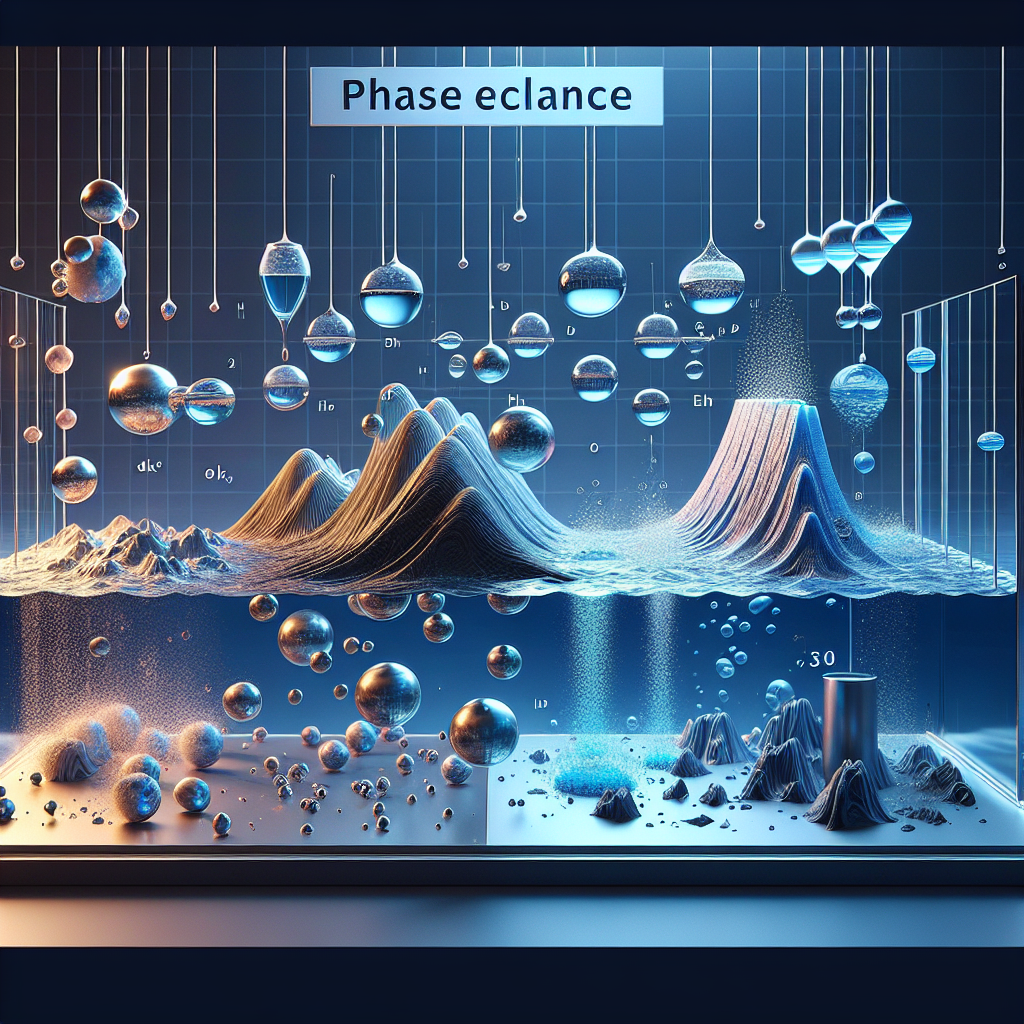
Phase equilibria and phase change are fundamental concepts in the field of thermodynamics, playing a crucial role in various engineering applications. Understanding these concepts is essential for designing and optimizing processes in industries such as chemical engineering, materials science, and mechanical engineering. Phase equilibria refer to the balance between different phases (solid, liquid, gas) in a system at equilibrium, while phase change involves the transformation of a substance from one phase to another. This article delves into the importance, principles, historical development, applications, advanced topics, challenges, and future trends related to phase equilibria and phase change in engineering.
Fundamentals
Basic Principles and Concepts
Phase equilibria and phase change are governed by the laws of thermodynamics, particularly the first and second laws. The first law, or the law of energy conservation, states that energy cannot be created or destroyed, only transformed. The second law introduces the concept of entropy, a measure of disorder, which tends to increase in spontaneous processes.
Key Terms and Definitions
- Phase: A distinct form of matter with uniform physical and chemical properties. Common phases include solid, liquid, and gas.
- Phase Equilibrium: A state where multiple phases coexist at equilibrium, with no net change in the amount of each phase over time.
- Phase Diagram: A graphical representation of the equilibrium between different phases as a function of temperature, pressure, and composition.
- Latent Heat: The amount of heat required to change the phase of a substance without changing its temperature.
- Triple Point: The unique set of conditions where all three phases (solid, liquid, gas) coexist in equilibrium.
- Critical Point: The end point of a phase equilibrium curve, beyond which distinct liquid and gas phases do not exist.
Historical Development
The study of phase equilibria and phase change has a rich history, with significant contributions from various scientists and engineers. In the 19th century, French engineer Sadi Carnot laid the groundwork for thermodynamics with his work on heat engines. Later, James Clerk Maxwell and Josiah Willard Gibbs made substantial contributions to the understanding of phase equilibria.
Gibbs, in particular, introduced the concept of the Gibbs free energy, a thermodynamic potential that can predict the direction of chemical reactions and phase changes. His phase rule, which relates the number of phases, components, and degrees of freedom in a system, remains a cornerstone of phase equilibria studies.
Applications
Chemical Engineering
In chemical engineering, phase equilibria are crucial for designing separation processes such as distillation, extraction, and crystallization. For instance, distillation columns rely on the differences in boiling points of components in a mixture to separate them. Understanding phase diagrams helps engineers optimize these processes for maximum efficiency.
Materials Science
Phase equilibria play a vital role in materials science, particularly in the development of alloys and composite materials. The iron-carbon phase diagram, for example, is essential for understanding the properties of steel and its various forms. By controlling the cooling rates and compositions, engineers can tailor the mechanical properties of materials for specific applications.
Mechanical Engineering
In mechanical engineering, phase change is integral to the design of heat exchangers, refrigeration systems, and power plants. The Rankine cycle, used in steam power plants, involves phase changes of water to generate electricity. Similarly, refrigeration cycles rely on the phase change of refrigerants to transfer heat.
Case Studies
One notable case study is the development of the Haber-Bosch process for ammonia synthesis. This process relies on the phase equilibria of nitrogen and hydrogen gases under high pressure and temperature to produce ammonia, a critical component in fertilizers. Understanding the phase behavior of the reactants and products was key to optimizing the process for industrial-scale production.
Advanced Topics
Supercritical Fluids
Supercritical fluids, which exist beyond the critical point, exhibit unique properties that make them useful in various applications. Supercritical CO2, for example, is used in supercritical fluid extraction to decaffeinate coffee and in enhanced oil recovery to extract crude oil from reservoirs.
Phase-Field Modeling
Phase-field modeling is a computational technique used to simulate the evolution of microstructures during phase changes. This method is particularly useful in materials science for predicting the behavior of alloys and composites under different conditions. Recent research has focused on improving the accuracy and efficiency of these models.
Nanotechnology
In nanotechnology, phase equilibria and phase change are critical for the synthesis and stabilization of nanoparticles. Controlling the phase behavior at the nanoscale can lead to the development of materials with unique properties, such as enhanced catalytic activity or improved mechanical strength.
Challenges and Considerations
Thermodynamic Data
Accurate thermodynamic data are essential for predicting phase equilibria and phase changes. However, obtaining this data can be challenging, especially for complex mixtures or systems at extreme conditions. Advanced experimental techniques and computational methods are being developed to address this issue.
Scale-Up
Scaling up processes from laboratory to industrial scale presents several challenges. Factors such as heat transfer, mass transfer, and reaction kinetics can behave differently at larger scales, affecting phase equilibria and phase change. Engineers must carefully consider these factors to ensure successful scale-up.
Environmental Impact
The environmental impact of processes involving phase change, such as refrigeration and power generation, is a significant concern. The use of environmentally friendly refrigerants and the development of more efficient energy conversion systems are areas of active research aimed at reducing the environmental footprint.
Conclusion
Phase equilibria and phase change are fundamental concepts in thermodynamics with wide-ranging applications in engineering. From chemical processes and materials development to energy systems and nanotechnology, understanding these concepts is crucial for designing and optimizing various industrial processes. While challenges such as obtaining accurate thermodynamic data and scaling up processes remain, ongoing research and innovations continue to advance our knowledge and capabilities in this field. The importance of phase equilibria and phase change in engineering cannot be overstated, as they are key to developing efficient, sustainable, and innovative solutions for the future.