Advanced Thermodynamic Cycles
Introduction
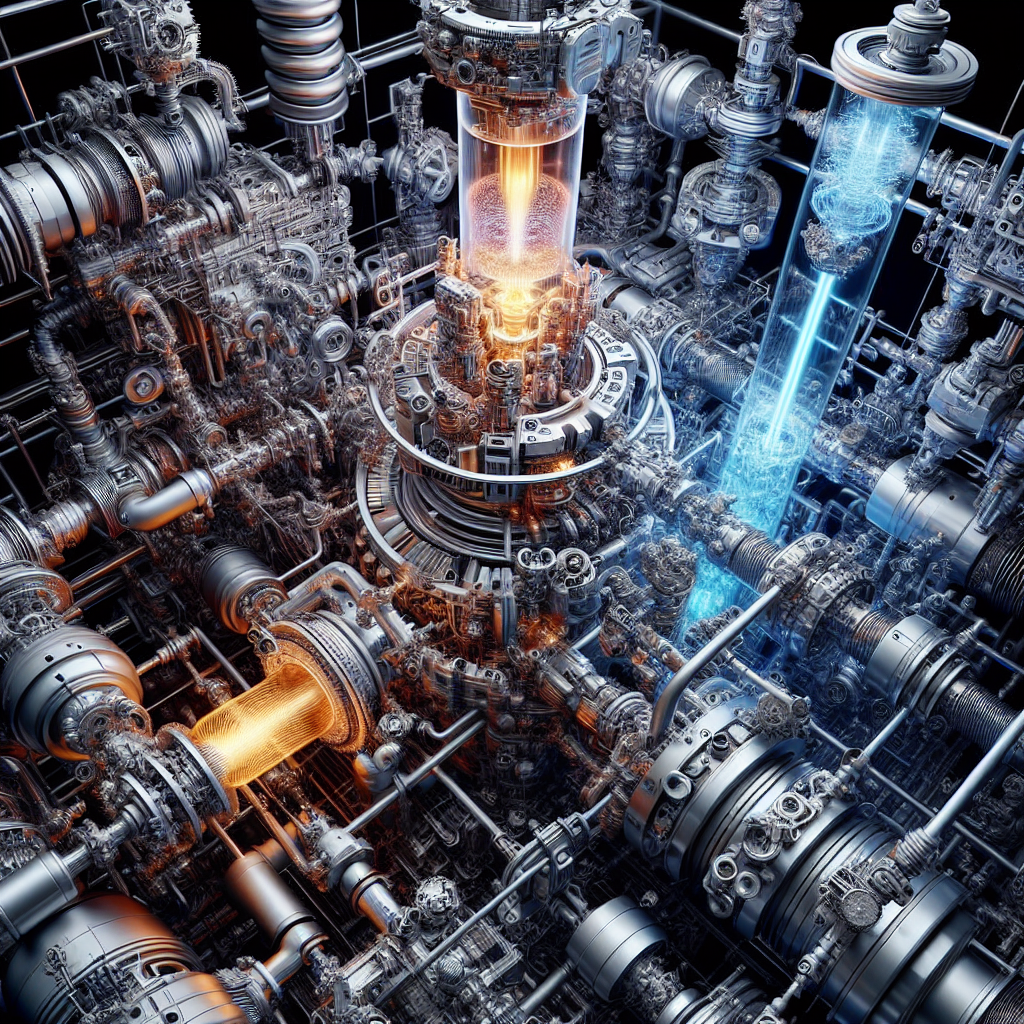
Thermodynamics is a cornerstone of engineering, playing a crucial role in the design and analysis of systems that convert energy from one form to another. Among the various topics within thermodynamics, advanced thermodynamic cycles stand out due to their importance in enhancing the efficiency and performance of energy systems. These cycles are fundamental to the operation of power plants, refrigeration systems, and various industrial processes. Understanding advanced thermodynamic cycles is essential for engineers aiming to innovate and optimize energy systems, thereby contributing to sustainable development and energy conservation.
Fundamentals
Basic Principles and Concepts
Thermodynamic cycles are sequences of processes that involve the transfer of heat and work into and out of a system, ultimately returning the system to its initial state. The performance of these cycles is often evaluated using parameters such as efficiency, work output, and heat input. Key terms and concepts include:
- First Law of Thermodynamics: This law states that energy cannot be created or destroyed, only transferred or converted from one form to another.
- Second Law of Thermodynamics: This law introduces the concept of entropy, stating that the total entropy of an isolated system can never decrease over time.
- Heat Engine: A device that converts heat energy into mechanical work.
- Refrigeration Cycle: A cycle that transfers heat from a low-temperature reservoir to a high-temperature reservoir.
- Efficiency: The ratio of useful work output to the total heat input.
Key Thermodynamic Cycles
Several thermodynamic cycles form the foundation for more advanced cycles:
- Carnot Cycle: An idealized cycle that provides the maximum possible efficiency for a heat engine operating between two temperatures.
- Rankine Cycle: Commonly used in power plants, this cycle involves the phase change of water to steam and back.
- Brayton Cycle: Used in gas turbines, this cycle involves the compression and expansion of air or gas.
- Otto Cycle: The idealized cycle for internal combustion engines, such as those in cars.
- Refrigeration Cycle: Includes cycles like the vapor-compression cycle, used in refrigerators and air conditioners.
Historical Development
The development of thermodynamic cycles has a rich history, marked by significant milestones and contributions from notable figures:
- Sadi Carnot (1824): Often referred to as the “father of thermodynamics,” Carnot introduced the concept of the Carnot cycle, laying the groundwork for the second law of thermodynamics.
- Rudolf Clausius (1850s): Clausius formulated the second law of thermodynamics and introduced the concept of entropy.
- William Rankine (1859): Rankine developed the Rankine cycle, which became the basis for steam power plants.
- George Brayton (1870s): Brayton developed the Brayton cycle, which is fundamental to modern gas turbines.
- Nikolaus Otto (1876): Otto developed the Otto cycle, which is the basis for internal combustion engines.
These foundational contributions have paved the way for the development of more advanced thermodynamic cycles, which continue to evolve with ongoing research and technological advancements.
Applications
Advanced thermodynamic cycles have a wide range of practical applications across various industries:
Power Generation
In power plants, advanced cycles such as the combined cycle and supercritical Rankine cycle are used to enhance efficiency and reduce emissions. For example, combined cycle power plants use both gas and steam turbines to achieve higher efficiencies by utilizing the waste heat from the gas turbine to generate additional power through a steam turbine.
Aerospace Engineering
In aerospace engineering, advanced Brayton cycles are employed in jet engines and gas turbines. Innovations such as intercooling, reheating, and regeneration are used to improve the performance and efficiency of these engines.
Refrigeration and Air Conditioning
Advanced refrigeration cycles, including absorption refrigeration and transcritical CO2 cycles, are used to improve the efficiency and environmental impact of cooling systems. These cycles are critical in industries ranging from food preservation to climate control in buildings.
Automotive Engineering
In the automotive industry, advanced internal combustion engine cycles, such as the Atkinson and Miller cycles, are used to improve fuel efficiency and reduce emissions. Hybrid vehicles often employ these advanced cycles in combination with electric propulsion systems.
Advanced Topics
Combined Cycles
Combined cycles integrate two or more thermodynamic cycles to improve overall efficiency. The most common example is the combined cycle power plant, which combines a gas turbine (Brayton cycle) with a steam turbine (Rankine cycle). This integration allows for the utilization of waste heat from the gas turbine to generate additional power, significantly improving the overall efficiency of the power plant.
Supercritical and Ultra-Supercritical Cycles
Supercritical and ultra-supercritical Rankine cycles operate at pressures and temperatures above the critical point of water, resulting in higher thermal efficiencies. These cycles are increasingly used in modern coal-fired power plants to reduce fuel consumption and emissions.
Organic Rankine Cycle (ORC)
The Organic Rankine Cycle (ORC) uses organic fluids with lower boiling points than water, making it suitable for low-temperature heat sources such as geothermal energy, waste heat recovery, and solar thermal power. ORC systems are gaining popularity due to their ability to convert low-grade heat into useful work.
Kalina Cycle
The Kalina cycle uses a mixture of water and ammonia as the working fluid, allowing for better thermal matching between the heat source and the working fluid. This results in higher efficiencies compared to traditional Rankine cycles, especially in applications involving low-temperature heat sources.
Recent Research and Innovations
Recent research in advanced thermodynamic cycles focuses on improving efficiency, reducing emissions, and integrating renewable energy sources. Innovations include:
- Supercritical CO2 Cycles: These cycles use supercritical carbon dioxide as the working fluid, offering higher efficiencies and compact system designs.
- Thermoelectric Generators: These devices convert heat directly into electricity using thermoelectric materials, offering potential for waste heat recovery in various applications.
- Advanced Heat Exchangers: Innovations in heat exchanger design, such as microchannel and printed circuit heat exchangers, improve heat transfer efficiency and reduce system size.
Challenges and Considerations
Despite the advancements in thermodynamic cycles, several challenges and considerations remain:
Technical Challenges
Implementing advanced cycles often involves complex system designs and high initial costs. For example, supercritical and ultra-supercritical cycles require materials that can withstand high pressures and temperatures, increasing the cost and complexity of power plant construction and maintenance.
Environmental Impact
While advanced cycles can improve efficiency and reduce emissions, they may also involve the use of environmentally harmful working fluids. For instance, some refrigeration cycles use hydrofluorocarbons (HFCs), which have high global warming potentials. Research is ongoing to develop environmentally friendly alternatives.
Economic Considerations
The economic feasibility of advanced thermodynamic cycles depends on factors such as fuel prices, regulatory policies, and market demand. High initial costs and long payback periods can be barriers to the widespread adoption of these technologies.
Potential Solutions and Future Research
To address these challenges, ongoing research focuses on developing cost-effective materials, improving system integration, and exploring alternative working fluids. Additionally, advancements in computational modeling and simulation tools enable more accurate predictions of system performance, aiding in the design and optimization of advanced thermodynamic cycles.
Conclusion
Advanced thermodynamic cycles are integral to the field of thermodynamics in engineering, offering significant potential for improving the efficiency and performance of energy systems. From power generation to refrigeration and automotive applications, these cycles play a crucial role in various industries. While challenges remain, ongoing research and innovations continue to push the boundaries of what is possible, paving the way for more sustainable and efficient energy solutions. Understanding and mastering advanced thermodynamic cycles is essential for engineers seeking to contribute to the development of cutting-edge technologies and the advancement of energy systems.