
Applications in Cryogenic Engineering
Introduction
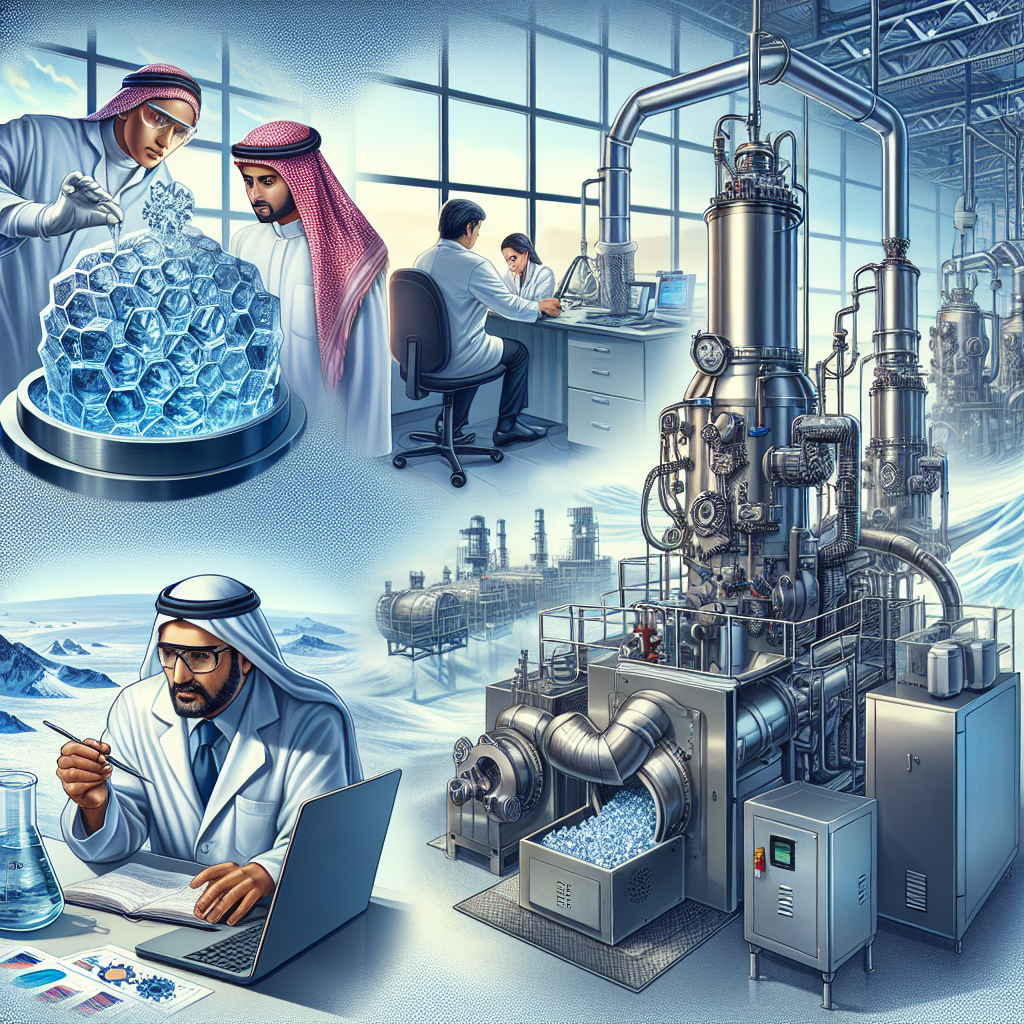
Cryogenic engineering is a specialized field within thermodynamics that deals with the production, maintenance, and application of extremely low temperatures, typically below -150°C (-238°F). This branch of engineering is crucial for various scientific and industrial applications, ranging from medical technologies to space exploration. The importance of cryogenic engineering lies in its ability to manipulate the properties of materials and systems at low temperatures, leading to advancements in numerous fields. This article delves into the fundamentals, historical development, practical applications, advanced topics, challenges, and future trends in cryogenic engineering.
Fundamentals
Basic Principles and Concepts
Cryogenic engineering is grounded in the principles of thermodynamics, particularly the laws governing heat transfer and the behavior of materials at low temperatures. Key concepts include:
- Absolute Zero: The theoretical lowest temperature possible, -273.15°C or 0 Kelvin, where molecular motion ceases.
- Liquefaction: The process of converting gases into liquids by cooling them below their boiling points.
- Superconductivity: A phenomenon where certain materials exhibit zero electrical resistance at very low temperatures.
- Specific Heat Capacity: The amount of heat required to change the temperature of a substance, which varies significantly at cryogenic temperatures.
Theories and Key Terms
Several theories and key terms are essential for understanding cryogenic engineering:
- Joule-Thomson Effect: Describes the temperature change in a gas when it is forced through a valve while kept insulated from heat exchange.
- Adiabatic Demagnetization: A method of achieving extremely low temperatures by reducing the magnetic field around a paramagnetic material.
- Helium Liquefaction: The process of cooling helium gas to its liquid state, which is crucial for achieving temperatures close to absolute zero.
Historical Development
Early Milestones
The history of cryogenic engineering dates back to the 19th century. Key milestones include:
- 1845: Michael Faraday successfully liquefied gases such as ammonia and carbon dioxide.
- 1877: Louis Paul Cailletet and Raoul Pictet independently liquefied oxygen, marking a significant breakthrough.
- 1908: Heike Kamerlingh Onnes liquefied helium, achieving temperatures as low as 4.2 Kelvin and discovering superconductivity in mercury.
Modern Developments
In the 20th and 21st centuries, cryogenic engineering has seen rapid advancements:
- 1950s: Development of cryogenic rocket fuels, enabling space exploration.
- 1980s: Advancements in magnetic resonance imaging (MRI) technology, utilizing cryogenic superconducting magnets.
- 2000s: Innovations in quantum computing, relying on cryogenic temperatures to maintain qubit stability.
Applications
Medical Field
Cryogenic engineering has revolutionized the medical field in several ways:
- Magnetic Resonance Imaging (MRI): Utilizes superconducting magnets cooled to cryogenic temperatures to produce detailed images of the human body.
- Cryosurgery: A technique that uses extreme cold to destroy abnormal or diseased tissue, such as tumors.
- Organ Preservation: Cryopreservation techniques are used to store organs and tissues at low temperatures for transplantation.
Space Exploration
The space industry heavily relies on cryogenic engineering:
- Rocket Propellants: Liquid hydrogen and liquid oxygen are used as rocket fuels due to their high energy density and efficiency.
- Space Telescopes: Instruments like the James Webb Space Telescope use cryogenic cooling to reduce thermal noise and improve image quality.
Industrial Applications
Cryogenic engineering is also vital in various industrial processes:
- Liquefied Natural Gas (LNG): Natural gas is cooled to cryogenic temperatures for easier storage and transportation.
- Metal Treatment: Cryogenic processing is used to enhance the properties of metals, such as increasing wear resistance and reducing residual stress.
Advanced Topics
Quantum Computing
Quantum computing is an emerging field that leverages cryogenic temperatures to maintain the coherence of qubits, the fundamental units of quantum information. Recent research focuses on developing more efficient cryogenic systems to support scalable quantum computers.
High-Temperature Superconductors
While traditional superconductors require extremely low temperatures, high-temperature superconductors operate at relatively higher temperatures (above 77 Kelvin). Research in this area aims to develop materials that can achieve superconductivity at even higher temperatures, reducing the need for extensive cryogenic cooling.
Advanced Cryocoolers
Innovations in cryocooler technology are making it possible to achieve and maintain cryogenic temperatures more efficiently. These advancements are crucial for applications in space exploration, medical imaging, and scientific research.
Challenges and Considerations
Technical Challenges
Cryogenic engineering faces several technical challenges:
- Material Selection: Materials must withstand extreme cold without becoming brittle or losing their structural integrity.
- Heat Transfer: Efficient heat transfer mechanisms are required to achieve and maintain cryogenic temperatures.
- Energy Consumption: Cryogenic systems often require significant energy input, making efficiency a critical consideration.
Economic and Environmental Considerations
The cost and environmental impact of cryogenic systems are also important factors:
- Cost: The production and maintenance of cryogenic systems can be expensive, limiting their accessibility.
- Environmental Impact: The energy consumption and potential release of cryogenic fluids pose environmental concerns that need to be addressed.
Potential Solutions
Ongoing research aims to address these challenges:
- Material Innovations: Developing new materials that perform well at cryogenic temperatures.
- Energy Efficiency: Improving the efficiency of cryogenic systems to reduce energy consumption.
- Sustainable Practices: Implementing sustainable practices to minimize the environmental impact of cryogenic engineering.
Conclusion
Cryogenic engineering is a vital field within thermodynamics that has far-reaching applications in medicine, space exploration, and industry. From the early milestones of gas liquefaction to modern advancements in quantum computing and high-temperature superconductors, cryogenic engineering continues to push the boundaries of what is possible. Despite the challenges and considerations, ongoing research and innovation promise to make cryogenic technologies more efficient, accessible, and sustainable. As we look to the future, the importance of cryogenic engineering in advancing scientific and industrial capabilities cannot be overstated.