Machining Processes: Milling
Introduction
Milling is a fundamental machining process in the field of manufacturing engineering, playing a crucial role in the production of a wide range of components and products. It involves the use of rotary cutters to remove material from a workpiece, shaping it into the desired form. The importance of milling in engineering cannot be overstated, as it is essential for creating precise and complex parts used in various industries, including automotive, aerospace, electronics, and medical devices. This article delves into the intricacies of milling, exploring its principles, historical development, applications, advanced topics, challenges, and considerations.
Fundamentals
Basic Principles and Concepts
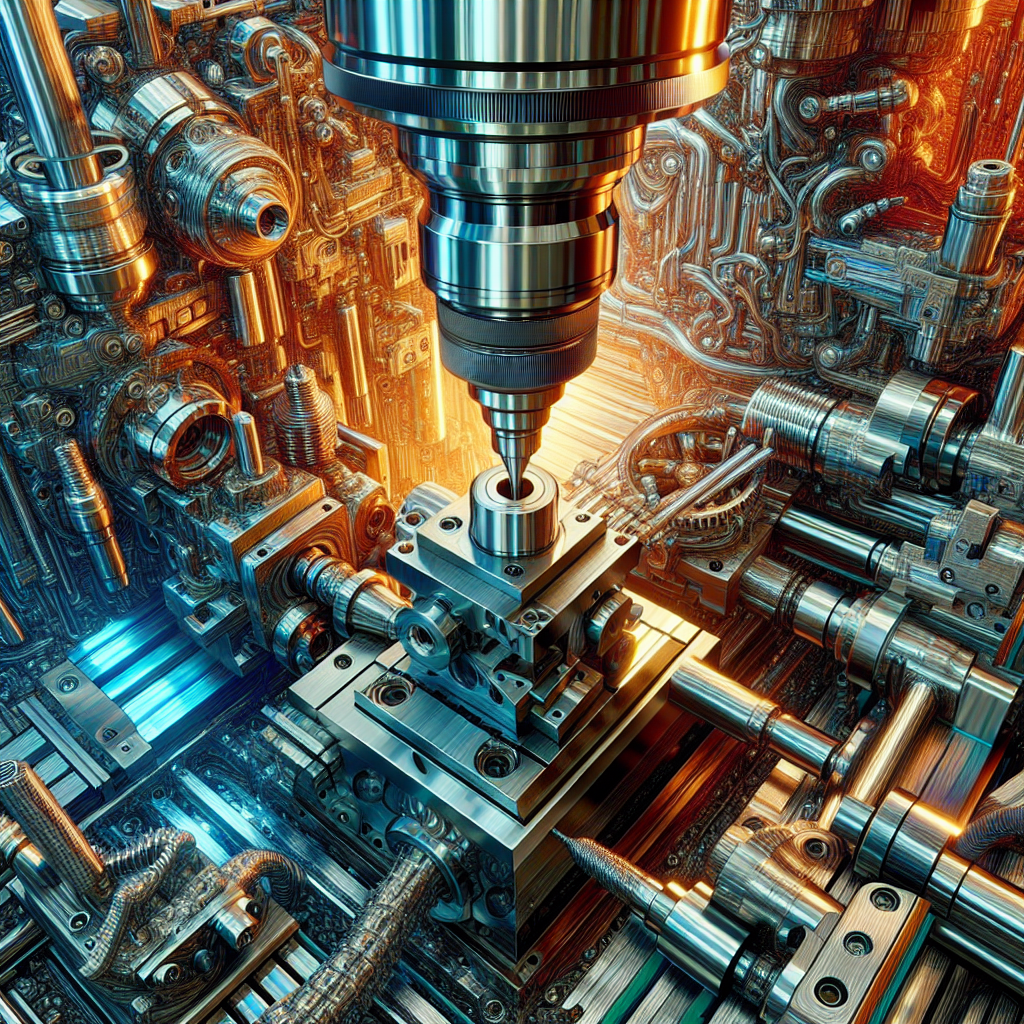
Milling is a subtractive manufacturing process where material is removed from a workpiece using rotary cutters. The workpiece is typically secured on a movable table, and the cutting tool rotates at high speeds to perform the cutting action. The primary motion in milling is the rotation of the cutting tool, while the secondary motion is the movement of the workpiece relative to the tool.
Key Terms
- Cutting Tool: The rotary tool used to remove material from the workpiece.
- Workpiece: The material or part being machined.
- Spindle: The rotating component that holds and drives the cutting tool.
- Feed Rate: The speed at which the workpiece is moved relative to the cutting tool.
- Depth of Cut: The thickness of the material layer removed in one pass of the cutting tool.
- Chip Formation: The process of material removal, resulting in the formation of chips.
Historical Development
The history of milling dates back to the early 19th century when Eli Whitney, an American inventor, developed the first milling machine in 1818. This machine was designed to produce interchangeable parts for firearms, revolutionizing the manufacturing industry. Over the years, milling technology has evolved significantly, with notable contributions from various inventors and engineers.
Key Milestones
- 1818: Eli Whitney invents the first milling machine.
- 1861: Brown & Sharpe develop the universal milling machine, capable of performing multiple operations.
- 1930s: Introduction of numerical control (NC) technology, allowing for automated control of milling machines.
- 1960s: Development of computer numerical control (CNC) technology, further enhancing automation and precision.
- 2000s: Advancements in multi-axis milling and high-speed machining techniques.
Applications
Milling is a versatile process with a wide range of applications across various industries. Its ability to produce complex shapes and high-precision components makes it indispensable in modern manufacturing.
Automotive Industry
In the automotive industry, milling is used to manufacture engine components, transmission parts, and various other critical components. The precision and accuracy of milling ensure that these parts meet stringent quality standards.
Aerospace Industry
The aerospace industry relies heavily on milling to produce components for aircraft and spacecraft. Milling is used to create intricate parts such as turbine blades, structural components, and landing gear parts, where precision and reliability are paramount.
Electronics Industry
Milling is employed in the electronics industry to manufacture printed circuit boards (PCBs) and other electronic components. The ability to create fine features and intricate patterns makes milling ideal for this application.
Medical Devices
In the medical field, milling is used to produce surgical instruments, implants, and prosthetics. The high precision and customization capabilities of milling are essential for creating medical devices that meet specific patient needs.
Advanced Topics
Multi-Axis Milling
Multi-axis milling involves the use of milling machines with multiple axes of movement, allowing for the creation of complex geometries and intricate features. This technique is widely used in industries requiring high precision and complex shapes, such as aerospace and medical devices.
High-Speed Machining
High-speed machining (HSM) is an advanced milling technique that involves using high spindle speeds and feed rates to achieve faster material removal rates and improved surface finishes. HSM is particularly useful for machining hard materials and achieving tight tolerances.
Recent Innovations
Recent advancements in milling technology include the development of hybrid machines that combine additive and subtractive manufacturing processes. These machines can perform both 3D printing and milling operations, offering greater flexibility and efficiency in manufacturing complex parts.
Challenges and Considerations
Material Selection
The choice of material for milling can significantly impact the machining process. Different materials have varying properties, such as hardness, toughness, and thermal conductivity, which can affect tool wear, cutting forces, and surface finish. Selecting the appropriate material and cutting parameters is crucial for achieving optimal results.
Tool Wear and Maintenance
Tool wear is a common challenge in milling, as the cutting tool is subjected to high forces and temperatures during the machining process. Regular maintenance and timely replacement of cutting tools are essential to ensure consistent performance and prevent defects in the machined parts.
Surface Finish and Tolerances
Achieving the desired surface finish and maintaining tight tolerances can be challenging in milling. Factors such as cutting speed, feed rate, tool geometry, and coolant usage can influence the surface quality and dimensional accuracy of the machined parts. Careful optimization of these parameters is necessary to meet the required specifications.
Potential Solutions
- Advanced Tool Materials: Using cutting tools made from advanced materials, such as carbide or ceramic, can improve tool life and performance.
- Optimized Cutting Parameters: Fine-tuning cutting speeds, feed rates, and depths of cut can enhance surface finish and reduce tool wear.
- Coolant and Lubrication: Proper use of coolants and lubricants can reduce heat generation and improve chip evacuation, leading to better surface quality and tool life.
- Automation and Monitoring: Implementing automated systems and real-time monitoring can help detect tool wear and optimize machining parameters for improved efficiency and quality.
Conclusion
Milling is a vital machining process in the field of manufacturing engineering, offering unparalleled precision and versatility in the production of complex components. From its historical development to its wide-ranging applications in various industries, milling has continuously evolved to meet the demands of modern manufacturing. Advanced techniques such as multi-axis milling and high-speed machining have further expanded its capabilities, enabling the creation of intricate and high-precision parts.
Despite the challenges associated with milling, ongoing research and innovations continue to address these issues, paving the way for more efficient and reliable machining processes. As technology advances, milling will remain a cornerstone of manufacturing, driving progress and innovation in engineering and beyond.