
Introduction to Robotics
Introduction
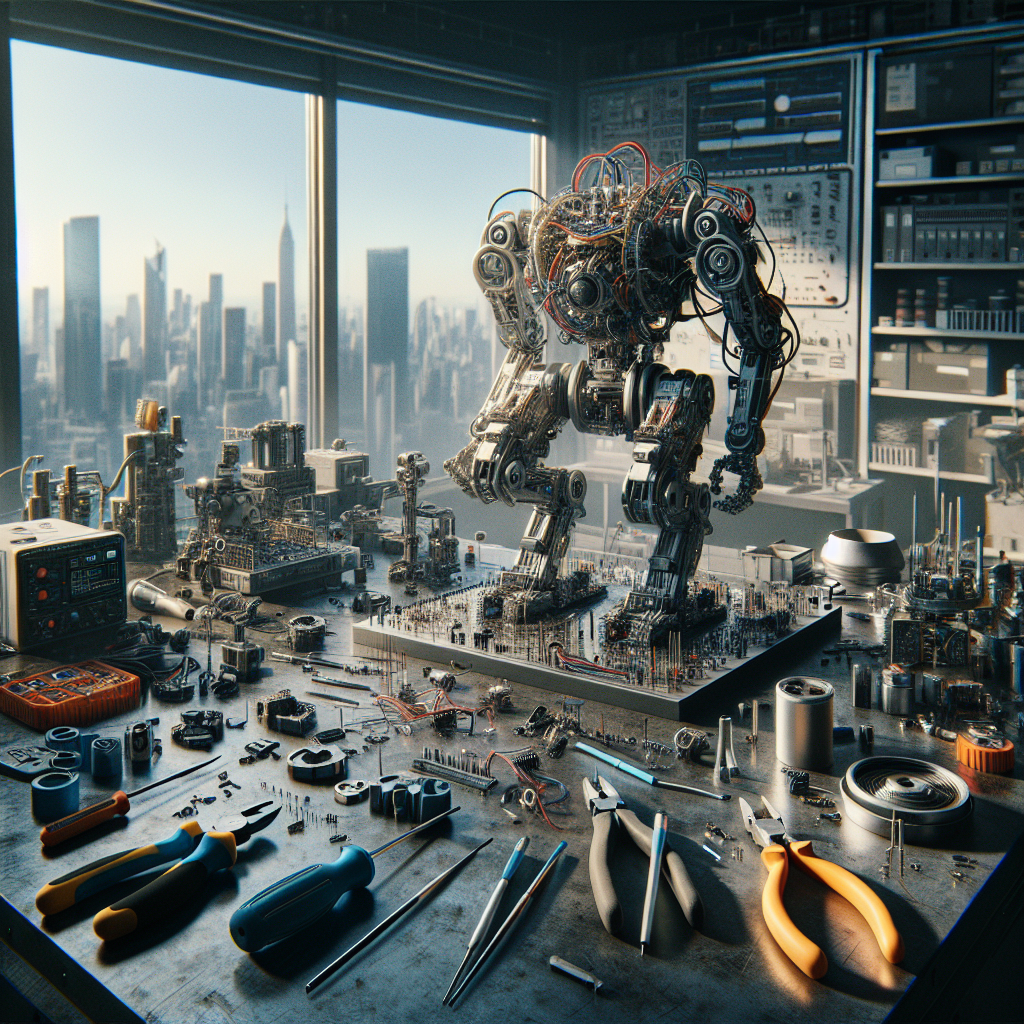
Robotics is a multidisciplinary field that integrates various branches of engineering and science, including mechanical engineering, electrical engineering, computer science, and more. The importance of robotics in engineering cannot be overstated, as it has revolutionized industries ranging from manufacturing to healthcare. Robotics involves the design, construction, operation, and use of robots to perform tasks that are either too dangerous, repetitive, or complex for humans. This article aims to provide a comprehensive introduction to robotics, covering its fundamentals, historical development, applications, advanced topics, challenges, and future trends.
Fundamentals
Basic Principles and Concepts
At its core, robotics involves the creation of machines that can perform tasks autonomously or semi-autonomously. The basic principles of robotics include:
- Actuation: The mechanism by which robots move and interact with their environment. This includes motors, hydraulic systems, and pneumatic systems.
- Sensing: The ability of a robot to perceive its environment using sensors such as cameras, LIDAR, and touch sensors.
- Control: The algorithms and software that govern the robot’s actions and responses to sensory inputs.
- Computation: The processing power required to run control algorithms and make decisions.
Key Terms
Understanding robotics requires familiarity with several key terms:
- Autonomy: The degree to which a robot can perform tasks without human intervention.
- Manipulators: Robotic arms and grippers used for handling objects.
- Mobile Robots: Robots that can move around in their environment, such as drones and autonomous vehicles.
- Artificial Intelligence (AI): The use of algorithms and machine learning to enable robots to make decisions and learn from their environment.
Historical Development
The field of robotics has a rich history that dates back to ancient times, but significant advancements have been made in the last century.
Early History
The concept of automated machines can be traced back to ancient civilizations. For example, the Greek engineer Hero of Alexandria created mechanical devices powered by steam and water. However, these early inventions were more akin to automata than modern robots.
20th Century Milestones
The 20th century saw rapid advancements in robotics, driven by developments in electronics and computing:
- 1940s: The first programmable digital computer, ENIAC, laid the groundwork for modern robotics.
- 1956: George Devol and Joseph Engelberger created the first industrial robot, Unimate, which was used in General Motors’ assembly line.
- 1960s-1970s: The development of artificial intelligence and machine learning began to influence robotics, leading to more sophisticated control systems.
- 1980s-1990s: The advent of microprocessors and advancements in sensor technology enabled the creation of more capable and affordable robots.
21st Century Innovations
The 21st century has seen exponential growth in robotics, driven by advancements in AI, machine learning, and materials science. Notable innovations include:
- 2000s: The development of autonomous vehicles and drones.
- 2010s: The rise of collaborative robots (cobots) designed to work alongside humans.
- 2020s: The integration of AI and machine learning for advanced decision-making and adaptability.
Applications
Robotics has a wide range of applications across various industries, each leveraging the technology to solve specific challenges.
Manufacturing
One of the earliest and most significant applications of robotics is in manufacturing. Industrial robots are used for tasks such as welding, painting, assembly, and material handling. These robots increase efficiency, precision, and safety in production lines.
Healthcare
In healthcare, robots are used for surgical procedures, rehabilitation, and patient care. Surgical robots, such as the da Vinci Surgical System, allow for minimally invasive surgeries with high precision. Rehabilitation robots assist patients in regaining mobility and strength.
Agriculture
Robots are increasingly being used in agriculture for tasks such as planting, harvesting, and monitoring crops. Autonomous tractors and drones equipped with sensors can optimize farming practices, leading to increased yields and reduced labor costs.
Logistics and Warehousing
In logistics and warehousing, robots are used for sorting, packing, and transporting goods. Companies like Amazon use robotic systems to streamline their operations, reducing the time and cost associated with order fulfillment.
Exploration
Robots play a crucial role in exploration, both on Earth and in space. Underwater robots explore the depths of the oceans, while rovers like NASA’s Perseverance are used to explore the surface of Mars.
Advanced Topics
As the field of robotics continues to evolve, several advanced topics have emerged, pushing the boundaries of what robots can achieve.
Artificial Intelligence and Machine Learning
AI and machine learning are transforming robotics by enabling robots to learn from their environment and improve their performance over time. Techniques such as reinforcement learning allow robots to develop complex behaviors through trial and error.
Human-Robot Interaction
Human-robot interaction (HRI) focuses on improving the ways humans and robots communicate and collaborate. This includes developing intuitive interfaces, natural language processing, and social robots that can understand and respond to human emotions.
Swarm Robotics
Swarm robotics involves the coordination of multiple robots to perform tasks collectively. Inspired by the behavior of social insects like ants and bees, swarm robotics has applications in areas such as search and rescue, environmental monitoring, and agriculture.
Soft Robotics
Soft robotics involves the creation of robots made from flexible materials, allowing for more adaptable and safer interactions with humans and the environment. These robots are particularly useful in medical applications and delicate manipulation tasks.
Challenges and Considerations
Despite the advancements in robotics, several challenges and considerations remain.
Technical Challenges
Robotics involves complex systems that require precise coordination between hardware and software. Technical challenges include improving battery life, enhancing sensor accuracy, and developing robust control algorithms.
Ethical and Social Considerations
The increasing use of robots raises ethical and social considerations, such as job displacement, privacy concerns, and the potential for autonomous weapons. Addressing these issues requires careful regulation and ethical guidelines.
Safety and Reliability
Ensuring the safety and reliability of robots is crucial, especially in applications involving human interaction. This includes developing fail-safe mechanisms, rigorous testing, and compliance with safety standards.
Cost and Accessibility
The high cost of advanced robotic systems can be a barrier to widespread adoption. Research into cost-effective materials and manufacturing processes is essential to make robotics accessible to a broader range of industries and applications.
Conclusion
Robotics is a dynamic and rapidly evolving field that holds immense potential for transforming various industries and improving our daily lives. From its historical roots to its current applications and future trends, robotics continues to push the boundaries of what is possible. While challenges remain, ongoing research and innovation promise to address these issues and unlock new possibilities. As we move forward, the importance of robotics in engineering will only continue to grow, making it a critical area of study and development for future engineers and scientists.