Industrial Engineering in Food and Beverage
Introduction
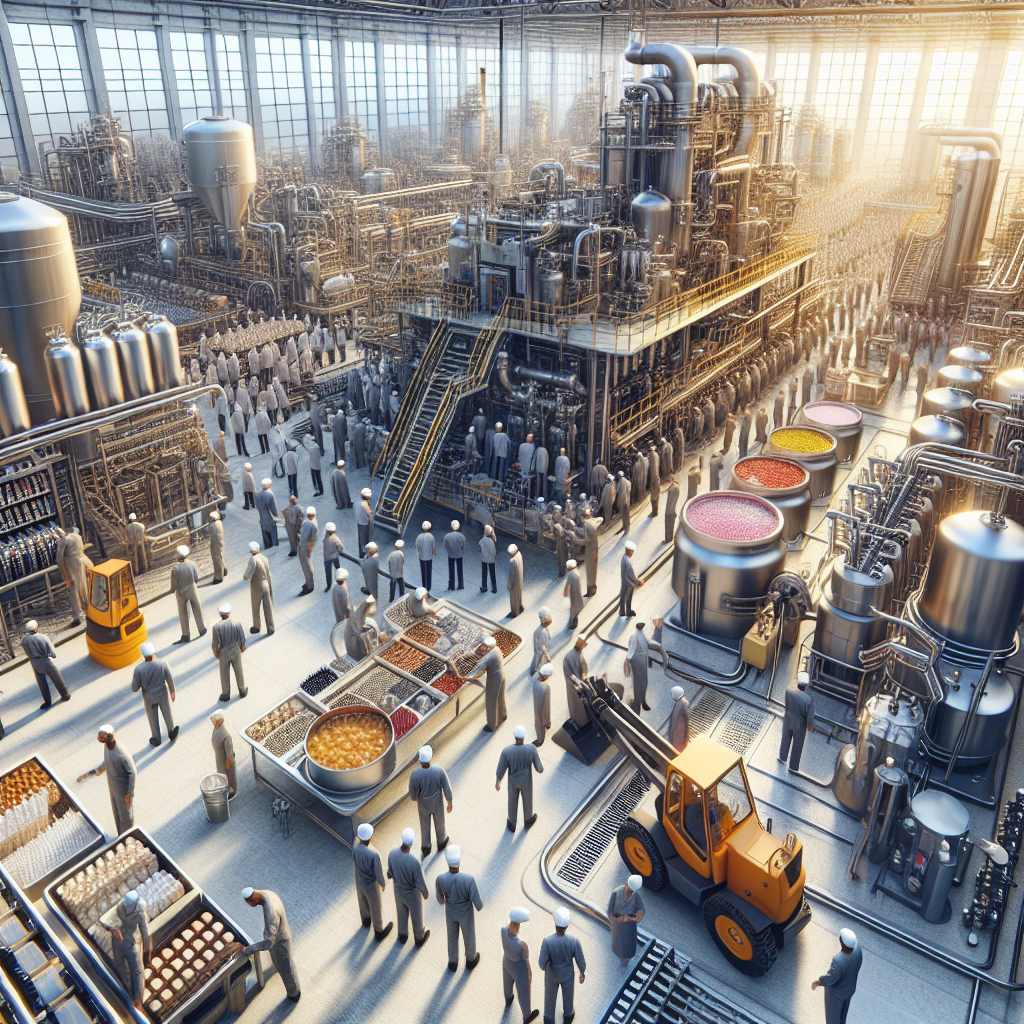
Industrial Engineering (IE) is a branch of engineering that focuses on optimizing complex processes, systems, and organizations. In the context of the food and beverage industry, Industrial Engineering plays a crucial role in enhancing efficiency, productivity, and quality. This article delves into the importance and relevance of Industrial Engineering in the food and beverage sector, exploring its fundamental principles, historical development, practical applications, advanced topics, challenges, and future trends.
Fundamentals
Basic Principles and Concepts
Industrial Engineering in the food and beverage industry involves the application of engineering principles to streamline operations, reduce waste, and improve product quality. Key concepts include:
- Process Optimization: Enhancing the efficiency of production processes to maximize output and minimize waste.
- Quality Control: Ensuring that products meet specified standards and are safe for consumption.
- Supply Chain Management: Coordinating the flow of materials, information, and finances from suppliers to consumers.
- Lean Manufacturing: Implementing practices that reduce waste and improve efficiency.
- Six Sigma: A data-driven approach to eliminate defects and improve quality.
Key Terms
- Throughput: The rate at which a system produces goods.
- Cycle Time: The total time from the beginning to the end of a process.
- Yield: The amount of product produced relative to the amount of raw material used.
- Kaizen: A Japanese term meaning “continuous improvement.”
Historical Development
Early Innovations
The application of Industrial Engineering principles in the food and beverage industry dates back to the early 20th century. Frederick Taylor’s scientific management principles were among the first to be applied, focusing on labor productivity and process efficiency.
Mid-20th Century Developments
During the mid-20th century, the introduction of automation and mechanization revolutionized the food and beverage industry. Notable figures like W. Edwards Deming and Joseph Juran contributed significantly to quality control and process improvement methodologies.
Modern Era
In recent decades, advancements in technology, such as computer-aided design (CAD), robotics, and data analytics, have further enhanced the capabilities of Industrial Engineering in the food and beverage sector. The integration of these technologies has led to more sophisticated and efficient production systems.
Applications
Production Optimization
Industrial Engineers work to optimize production lines in food and beverage manufacturing plants. This involves analyzing workflows, identifying bottlenecks, and implementing solutions to improve throughput and reduce cycle times. For example, a case study on a beverage bottling plant revealed that reconfiguring the production line and implementing automated quality checks reduced downtime by 20% and increased output by 15%.
Quality Control
Ensuring product quality is paramount in the food and beverage industry. Industrial Engineers use statistical process control (SPC) and Six Sigma methodologies to monitor and control production processes. For instance, a dairy processing plant implemented SPC to monitor pasteurization temperatures, resulting in a significant reduction in product spoilage.
Supply Chain Management
Effective supply chain management is critical for ensuring the timely delivery of raw materials and finished products. Industrial Engineers use techniques such as Just-In-Time (JIT) inventory management and demand forecasting to optimize supply chains. A case study on a bakery chain demonstrated that implementing JIT reduced inventory costs by 25% and improved order fulfillment rates.
Lean Manufacturing
Lean manufacturing principles are widely applied in the food and beverage industry to eliminate waste and improve efficiency. Techniques such as value stream mapping and 5S (Sort, Set in order, Shine, Standardize, Sustain) are used to streamline operations. For example, a snack food manufacturer used value stream mapping to identify and eliminate non-value-added activities, resulting in a 30% reduction in lead time.
Advanced Topics
Industry 4.0
The advent of Industry 4.0 has brought about significant advancements in the food and beverage industry. Technologies such as the Internet of Things (IoT), artificial intelligence (AI), and big data analytics are being integrated into production systems to enhance efficiency and quality. For instance, IoT sensors can monitor equipment performance in real-time, enabling predictive maintenance and reducing downtime.
Sustainable Manufacturing
Sustainability is becoming increasingly important in the food and beverage industry. Industrial Engineers are developing and implementing sustainable manufacturing practices to reduce environmental impact. Techniques such as energy-efficient process design, waste minimization, and water conservation are being employed. A case study on a brewery demonstrated that implementing energy-efficient brewing processes reduced energy consumption by 15% and water usage by 10%.
Advanced Robotics and Automation
Robotics and automation are transforming the food and beverage industry. Advanced robotic systems are being used for tasks such as packaging, palletizing, and quality inspection. These systems improve efficiency, reduce labor costs, and enhance product quality. For example, a confectionery manufacturer implemented robotic packaging systems, resulting in a 40% increase in packaging speed and a 20% reduction in labor costs.
Challenges and Considerations
Regulatory Compliance
The food and beverage industry is subject to stringent regulatory requirements to ensure product safety and quality. Industrial Engineers must navigate complex regulations and ensure compliance with standards such as the Food Safety Modernization Act (FSMA) and Hazard Analysis Critical Control Point (HACCP).
Technological Integration
Integrating advanced technologies into existing production systems can be challenging. Industrial Engineers must address issues such as system compatibility, data integration, and cybersecurity. Ensuring seamless integration requires careful planning and collaboration with technology providers.
Cost Management
Implementing advanced technologies and process improvements can be costly. Industrial Engineers must balance the costs of new technologies with the potential benefits. Conducting cost-benefit analyses and securing funding for capital investments are critical considerations.
Workforce Training
The adoption of new technologies and processes requires a skilled workforce. Industrial Engineers must develop training programs to equip employees with the necessary skills. Continuous training and development are essential to ensure that the workforce can effectively operate and maintain advanced systems.
Conclusion
Industrial Engineering plays a vital role in the food and beverage industry, driving improvements in efficiency, productivity, and quality. From optimizing production processes to ensuring regulatory compliance, Industrial Engineers are at the forefront of innovation and sustainability. As the industry continues to evolve, the integration of advanced technologies and sustainable practices will be key to addressing future challenges and meeting consumer demands. The contributions of Industrial Engineering to the food and beverage sector underscore its importance and relevance in the field of Engineering.