Historical Development of Thermodynamics
Introduction
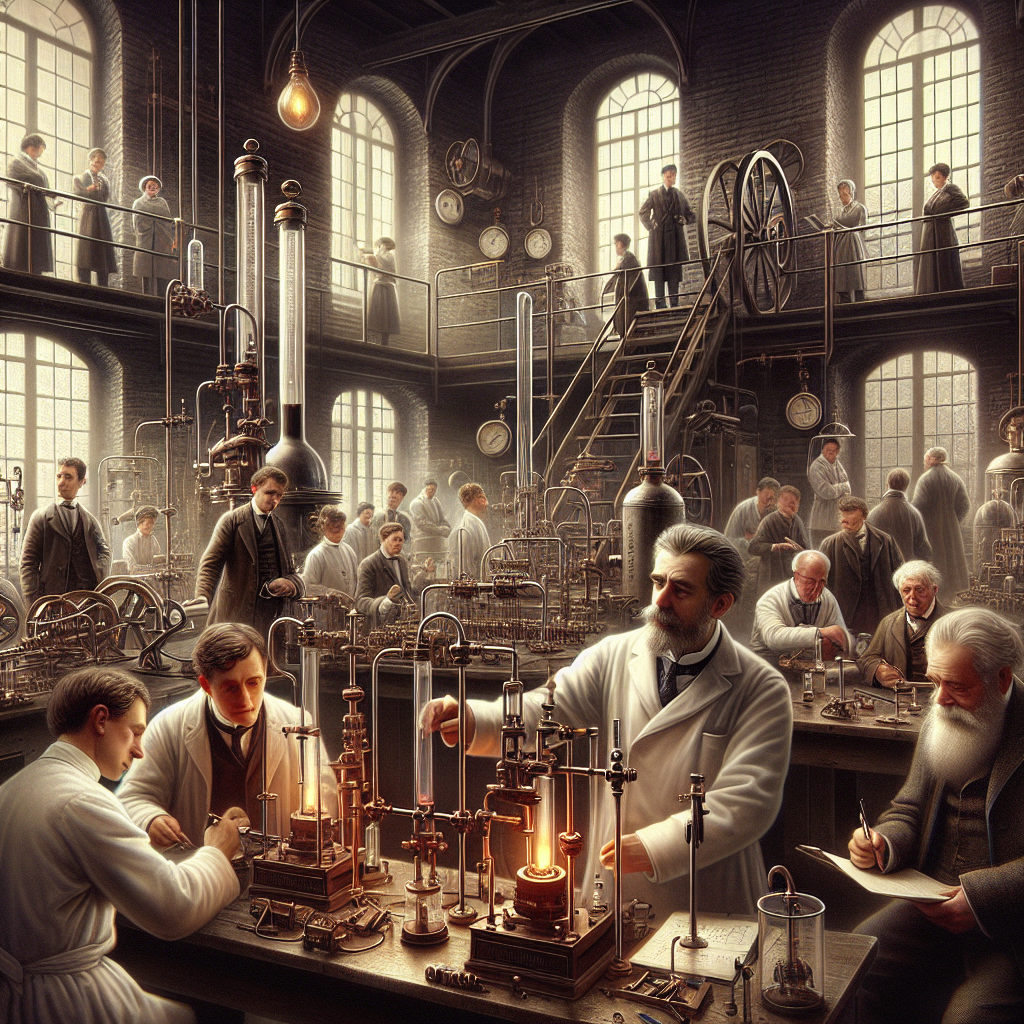
Thermodynamics is a fundamental branch of physics that deals with the study of energy, heat, and work, and their interconversion. It plays a crucial role in the field of engineering, influencing the design, analysis, and optimization of various systems and processes. From the engines that power our vehicles to the refrigeration systems that preserve our food, thermodynamics is integral to modern technology and industry. Understanding the historical development of thermodynamics provides valuable insights into how these principles have evolved and shaped the engineering landscape.
Fundamentals
Thermodynamics is built on several core principles and concepts that form the foundation of the field. These include:
Definitions and Key Terms
- System: A defined quantity of matter or a region in space chosen for study.
- Surroundings: Everything external to the system.
- Boundary: The real or imaginary surface that separates the system from its surroundings.
- State: The condition of a system as described by its properties.
- Process: A transformation from one state to another.
- Cycle: A series of processes that return a system to its initial state.
The Four Laws of Thermodynamics
- Zeroeth Law: If two systems are each in thermal equilibrium with a third system, they are in thermal equilibrium with each other. This law establishes the concept of temperature.
- First Law: Energy cannot be created or destroyed, only transferred or converted from one form to another. This is also known as the law of energy conservation.
- Second Law: The entropy of an isolated system always increases over time, and processes occur in the direction of increasing entropy. This law introduces the concept of irreversibility and the arrow of time.
- Third Law: As the temperature of a system approaches absolute zero, the entropy of the system approaches a minimum value. This law implies that it is impossible to reach absolute zero in a finite number of steps.
Historical Development
The development of thermodynamics spans several centuries, with contributions from numerous scientists and engineers. Key milestones in its history include:
Early Foundations
The roots of thermodynamics can be traced back to the work of early scientists such as Galileo Galilei and Evangelista Torricelli, who studied the properties of gases and vacuums. However, it was not until the 17th century that significant progress was made.
18th Century: The Birth of Thermodynamics
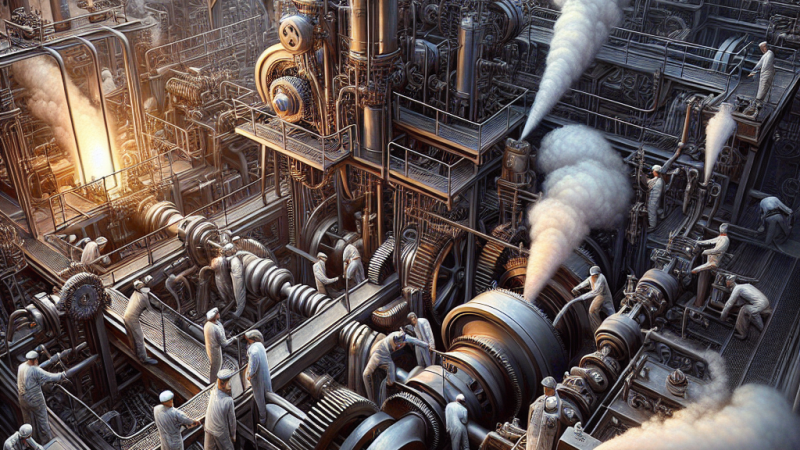
In the 18th century, the study of heat and work began to take shape. James Watt’s improvements to the steam engine in the late 1700s marked a turning point, as it highlighted the need for a better understanding of energy conversion processes.
19th Century: Formulation of Key Principles
The 19th century saw the formalization of thermodynamic principles. Sadi Carnot’s work on the Carnot cycle in 1824 laid the groundwork for the second law of thermodynamics. Rudolf Clausius and William Thomson (Lord Kelvin) further developed these ideas, introducing the concepts of entropy and absolute temperature.
20th Century: Expansion and Application
The 20th century witnessed the expansion of thermodynamic principles into new areas, such as statistical mechanics and quantum thermodynamics. The development of the first and second laws of thermodynamics provided a framework for understanding a wide range of physical phenomena, from chemical reactions to black hole thermodynamics.
Applications
Thermodynamics has a wide range of practical applications across various industries and fields. Some notable examples include:
Power Generation
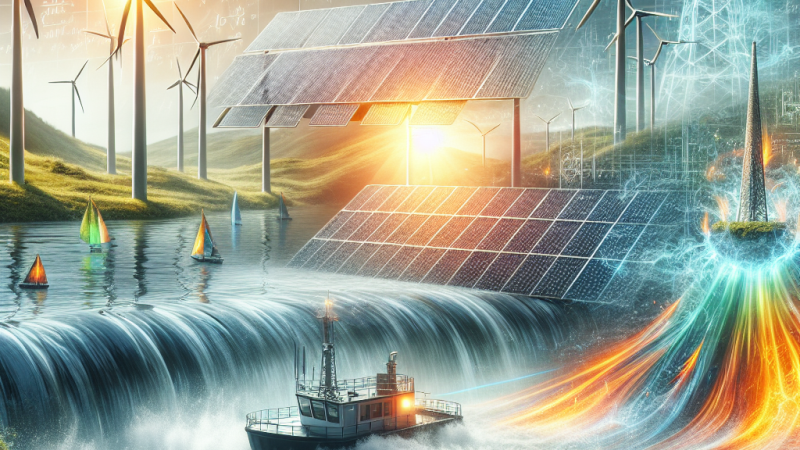
Thermodynamics is fundamental to the design and operation of power plants, including fossil fuel, nuclear, and renewable energy sources. The principles of energy conversion and efficiency are critical for optimizing power generation processes.
Refrigeration and Air Conditioning
Refrigeration and air conditioning systems rely on thermodynamic cycles, such as the vapor-compression cycle, to transfer heat and maintain desired temperatures. These systems are essential for food preservation, climate control, and industrial processes.
Automotive Engineering
Internal combustion engines, which power most vehicles, operate based on thermodynamic principles. Understanding the behavior of gases and heat transfer is crucial for improving engine efficiency and reducing emissions.
Aerospace Engineering
Thermodynamics plays a key role in the design of aircraft and spacecraft, particularly in areas such as propulsion, thermal management, and materials science. The study of high-temperature gases and heat transfer is essential for developing efficient and reliable aerospace systems.
Advanced Topics
As the field of thermodynamics continues to evolve, several advanced concepts and techniques have emerged. These include:
Non-Equilibrium Thermodynamics
Traditional thermodynamics focuses on systems in equilibrium, but many real-world processes occur far from equilibrium. Non-equilibrium thermodynamics extends the principles to study these dynamic systems, providing insights into phenomena such as chemical reactions, biological processes, and transport phenomena.
Quantum Thermodynamics
Quantum thermodynamics explores the interplay between quantum mechanics and thermodynamic principles. This emerging field seeks to understand how quantum effects influence energy transfer, entropy, and information processing at the microscopic scale.
Thermoeconomics
Thermoeconomics combines thermodynamics with economic principles to analyze and optimize energy systems. This interdisciplinary approach considers both the physical and economic aspects of energy production, distribution, and consumption, aiming to improve efficiency and sustainability.
Challenges and Considerations
Despite its many successes, the field of thermodynamics faces several challenges and limitations. These include:
Irreversibility and Entropy
The second law of thermodynamics implies that all real processes are irreversible and generate entropy. This presents a fundamental challenge for achieving maximum efficiency in energy conversion and utilization.
Complexity of Real Systems
Real-world systems are often complex and involve multiple interacting components. Accurately modeling and analyzing these systems requires advanced techniques and computational tools, which can be resource-intensive and time-consuming.
Environmental Impact
The production and use of energy have significant environmental impacts, including greenhouse gas emissions and resource depletion. Developing sustainable energy solutions requires a deep understanding of thermodynamic principles and their implications for environmental stewardship.
Future Research Directions
Ongoing research in thermodynamics aims to address these challenges and explore new frontiers. Potential areas for further investigation include:
- Developing more efficient and sustainable energy conversion technologies.
- Advancing the understanding of non-equilibrium and quantum thermodynamics.
- Integrating thermodynamic principles with emerging fields such as nanotechnology and biotechnology.
Conclusion
The historical development of thermodynamics has profoundly influenced the field of engineering, providing a framework for understanding and optimizing energy systems. From its early foundations to its modern applications, thermodynamics continues to be a vital area of study with far-reaching implications. As we face new challenges and opportunities in energy production, environmental sustainability, and technological innovation, the principles of thermodynamics will remain essential for guiding our efforts and shaping the future of engineering.