Historical Development of Heat Transfer
Introduction

Heat transfer is a fundamental concept in the field of engineering, playing a crucial role in a wide range of applications from industrial processes to everyday household appliances. Understanding how heat moves through different materials and systems is essential for designing efficient and effective engineering solutions. The study of heat transfer encompasses various mechanisms, including conduction, convection, and radiation, each with its own set of principles and applications. This article delves into the historical development of heat transfer, exploring its basic principles, key milestones, practical applications, advanced topics, and the challenges faced in this ever-evolving field.
Fundamentals
Basic Principles and Concepts
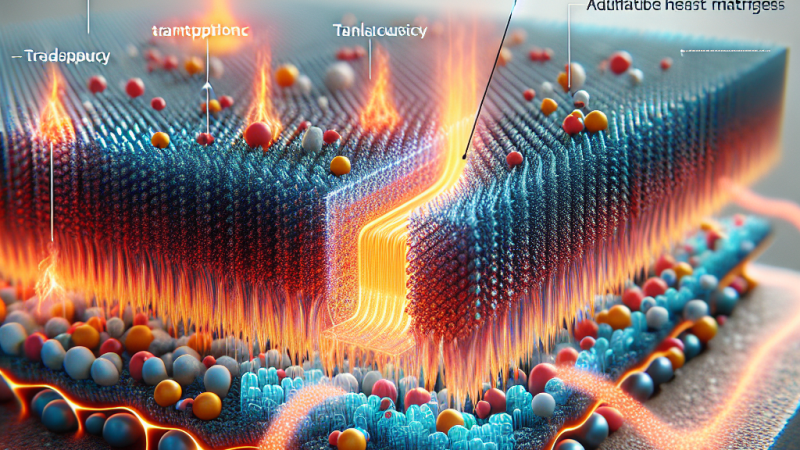
Heat transfer is the process by which thermal energy moves from one object or material to another. This movement can occur through three primary mechanisms:
- Conduction: The transfer of heat through a solid material from a region of higher temperature to a region of lower temperature. This occurs due to the vibration and movement of atoms and molecules within the material.
- Convection: The transfer of heat through a fluid (liquid or gas) caused by the fluid’s movement. This can be natural (due to buoyancy effects) or forced (using fans or pumps).
- Radiation: The transfer of heat through electromagnetic waves, such as infrared radiation. This mechanism does not require a medium and can occur in a vacuum.
Key Terms and Definitions
- Thermal Conductivity: A measure of a material’s ability to conduct heat.
- Heat Flux: The rate of heat energy transfer per unit area.
- Thermal Resistance: The opposition to heat flow through a material.
- Heat Exchanger: A device designed to transfer heat between two or more fluids.
Historical Development
Early Theories and Discoveries
The study of heat transfer dates back to ancient civilizations, where early scientists and philosophers began to explore the nature of heat and temperature. The Greek philosopher Heraclitus (circa 500 BCE) proposed that fire was one of the fundamental elements of the universe, highlighting the importance of heat in natural processes.
In the 17th century, Sir Isaac Newton made significant contributions to the understanding of heat transfer. His law of cooling, which describes the rate at which an object cools, laid the groundwork for future studies in the field. Newton’s work was followed by that of Joseph Fourier in the early 19th century. Fourier’s law of heat conduction provided a mathematical framework for analyzing heat transfer through solids, revolutionizing the field.
Key Milestones and Contributions
The 19th and 20th centuries saw numerous advancements in the study of heat transfer, driven by the Industrial Revolution and the growing need for efficient thermal management in engineering applications. Some key milestones include:
- Fourier’s Law (1822): Joseph Fourier’s publication of “The Analytical Theory of Heat” introduced the concept of thermal conductivity and provided a mathematical model for heat conduction.
- Stefan-Boltzmann Law (1879): Josef Stefan and Ludwig Boltzmann formulated a law describing the power radiated from a black body in terms of its temperature, laying the foundation for the study of thermal radiation.
- Prandtl’s Boundary Layer Theory (1904): Ludwig Prandtl introduced the concept of the boundary layer, which is crucial for understanding convective heat transfer in fluid flows.
- Heat Exchanger Design (1920s): The development of heat exchangers, such as shell-and-tube and plate heat exchangers, enabled more efficient thermal management in industrial processes.
Applications
Industrial Processes
Heat transfer plays a vital role in various industrial processes, including:
- Power Generation: In power plants, heat transfer is essential for converting thermal energy into mechanical energy and, subsequently, electrical energy. Boilers, turbines, and condensers are key components that rely on efficient heat transfer.
- Chemical Processing: Many chemical reactions are exothermic or endothermic, requiring precise thermal management to maintain optimal reaction conditions. Heat exchangers and reactors are commonly used in this industry.
- HVAC Systems: Heating, ventilation, and air conditioning systems rely on heat transfer principles to regulate indoor temperatures and ensure comfort in residential and commercial buildings.
Everyday Applications
Heat transfer is also integral to many everyday applications, such as:
- Cooking: The transfer of heat from a stove or oven to food involves conduction, convection, and radiation, ensuring that food is cooked evenly and thoroughly.
- Refrigeration: Refrigerators and freezers use heat transfer principles to remove heat from the interior, keeping food and beverages cold.
- Electronics Cooling: Heat sinks and cooling fans are used to dissipate heat generated by electronic components, preventing overheating and ensuring reliable operation.
Advanced Topics
Recent Research and Innovations
The field of heat transfer continues to evolve, with ongoing research and innovations aimed at improving efficiency and developing new technologies. Some recent advancements include:
- Nanofluids: The use of nanoparticles suspended in fluids to enhance thermal conductivity and heat transfer performance in various applications, such as cooling systems and heat exchangers.
- Phase Change Materials (PCMs): Materials that absorb and release thermal energy during phase transitions (e.g., solid to liquid) are being explored for thermal energy storage and temperature regulation.
- Microchannel Heat Exchangers: The development of heat exchangers with micro-scale channels to achieve high heat transfer rates and compact designs, particularly in electronics cooling and aerospace applications.
Future Trends
Looking ahead, several trends are expected to shape the future of heat transfer in engineering:
- Energy Efficiency: As the demand for energy-efficient solutions grows, advancements in heat transfer technologies will play a crucial role in reducing energy consumption and minimizing environmental impact.
- Renewable Energy: Heat transfer is essential for harnessing renewable energy sources, such as solar thermal and geothermal energy. Innovations in this area will contribute to the transition to sustainable energy systems.
- Advanced Materials: The development of new materials with enhanced thermal properties will enable more efficient heat transfer in various applications, from electronics to aerospace.
Challenges and Considerations
Technical Challenges
Despite significant advancements, several technical challenges remain in the field of heat transfer:
- Thermal Management: As electronic devices become smaller and more powerful, managing heat dissipation becomes increasingly challenging. Innovative cooling solutions are needed to prevent overheating and ensure reliable operation.
- Material Limitations: The thermal properties of materials can limit the efficiency of heat transfer systems. Research into advanced materials with superior thermal conductivity and stability is ongoing.
- Complex Systems: Analyzing and optimizing heat transfer in complex systems, such as multi-phase flows and turbulent convection, requires sophisticated modeling and simulation techniques.
Potential Solutions and Areas for Further Research
Addressing these challenges will require continued research and innovation. Some potential solutions and areas for further exploration include:
- Advanced Modeling Techniques: The development of more accurate and efficient computational models for simulating heat transfer in complex systems.
- Material Science: Research into new materials with enhanced thermal properties, such as high thermal conductivity composites and phase change materials.
- Integrated Systems: The design of integrated thermal management systems that combine multiple heat transfer mechanisms for optimal performance.
Conclusion
The historical development of heat transfer in engineering has been marked by significant milestones and contributions from notable figures, leading to a deeper understanding of the fundamental principles and practical applications of this essential field. From early theories and discoveries to recent innovations and future trends, heat transfer continues to play a vital role in various industries and everyday applications. As we face new challenges and opportunities, ongoing research and advancements in heat transfer technologies will be crucial for developing efficient, sustainable, and reliable engineering solutions. The importance of heat transfer in engineering cannot be overstated, as it underpins many of the systems and processes that drive modern society.