Historical Development of Biomechanical Engineering
Introduction
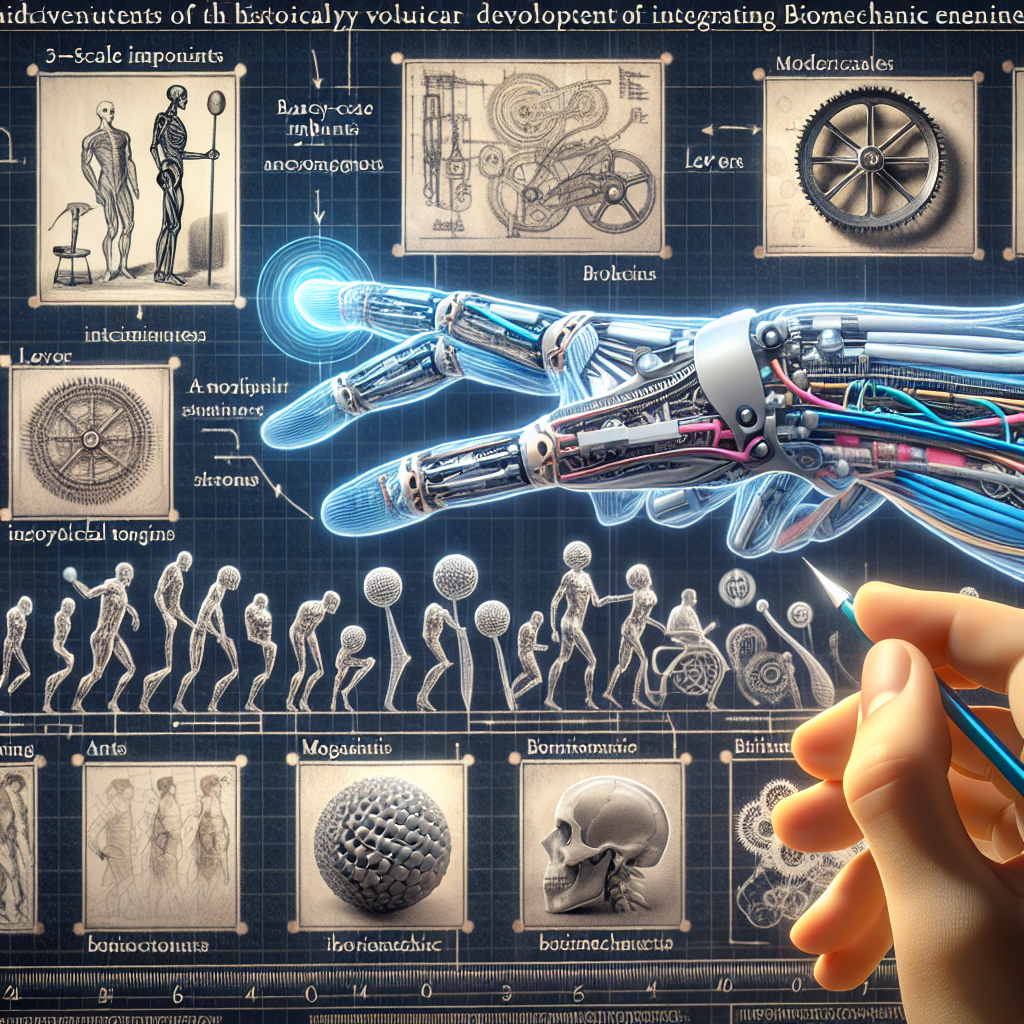
Biomechanical engineering is a multidisciplinary field that merges principles of mechanics with biological systems to solve complex problems in medicine, biology, and engineering. This field is crucial for developing medical devices, prosthetics, and understanding the mechanics of the human body. The importance of biomechanical engineering cannot be overstated, as it plays a pivotal role in improving healthcare outcomes, enhancing athletic performance, and advancing our understanding of human physiology. This article delves into the historical development of biomechanical engineering, exploring its fundamental principles, key milestones, practical applications, advanced topics, and the challenges it faces.
Fundamentals
Basic Principles and Concepts
Biomechanical engineering is grounded in the application of mechanical principles to biological systems. The field encompasses various sub-disciplines, including biomechanics, biofluid mechanics, and biomaterials. Here are some key terms and concepts:
- Biomechanics: The study of the mechanical aspects of living organisms. It involves analyzing forces and their effects on the body.
- Biofluid Mechanics: The study of fluid flow within biological systems, such as blood flow in arteries and air flow in the lungs.
- Biomaterials: Materials that interact with biological systems, used in medical devices and implants.
- Stress and Strain: Fundamental concepts in mechanics that describe how materials deform under various forces.
- Finite Element Analysis (FEA): A computational technique used to predict how structures respond to external forces, widely used in biomechanical engineering.
Historical Development
Early Beginnings
The roots of biomechanical engineering can be traced back to ancient civilizations. The Egyptians and Greeks made early contributions to the understanding of human anatomy and mechanics. Hippocrates and Galen were among the first to study the mechanics of the human body systematically.
Renaissance and Enlightenment
The Renaissance period saw significant advancements in the understanding of human anatomy, thanks to figures like Leonardo da Vinci, who meticulously studied and sketched the human body. The Enlightenment era brought further progress with the work of scientists like Isaac Newton, whose laws of motion laid the groundwork for modern biomechanics.
20th Century and Beyond
The 20th century marked a period of rapid development in biomechanical engineering. Key milestones include:
- 1920s: The development of the first prosthetic limbs with mechanical joints.
- 1950s: The advent of computational methods, such as FEA, revolutionized the field.
- 1970s: The introduction of advanced imaging techniques like MRI and CT scans provided detailed insights into the human body.
- 1990s: The Human Genome Project opened new avenues for personalized medicine and biomechanics.
Notable figures in the field include Y.C. Fung, often referred to as the father of modern biomechanics, and Robert L. Spilker, known for his contributions to computational biomechanics.
Applications
Medical Devices and Prosthetics
One of the most significant applications of biomechanical engineering is in the development of medical devices and prosthetics. Engineers design artificial limbs, joint replacements, and other devices that improve the quality of life for individuals with disabilities. For example, the development of the modern knee prosthesis has enabled countless individuals to regain mobility.
Sports Engineering
Biomechanical engineering is also crucial in sports engineering, where it helps optimize athletic performance and prevent injuries. By analyzing the mechanics of movement, engineers can design better sports equipment and training programs. For instance, the development of high-performance running shoes has been significantly influenced by biomechanical studies.
Rehabilitation Engineering
In rehabilitation engineering, biomechanical principles are applied to develop devices and therapies that aid in the recovery of patients with physical impairments. Examples include exoskeletons that assist in walking and robotic rehabilitation devices that help patients regain motor functions.
Case Studies
One notable case study is the development of the cochlear implant, a device that has restored hearing to thousands of individuals with severe hearing loss. This innovation was made possible through a deep understanding of the biomechanics of the ear and the principles of electrical engineering.
Advanced Topics
Recent Research and Innovations
Recent advancements in biomechanical engineering have been driven by innovations in materials science, computational methods, and biotechnology. Some cutting-edge topics include:
- Soft Robotics: The development of robots made from flexible materials that can mimic the movements of biological organisms.
- 3D Bioprinting: The use of 3D printing technology to create complex biological structures, such as tissues and organs.
- Wearable Technology: Devices that monitor physiological parameters in real-time, providing valuable data for health and performance optimization.
Future Trends
The future of biomechanical engineering looks promising, with trends pointing towards personalized medicine, advanced prosthetics, and the integration of artificial intelligence in biomechanical analysis. Researchers are also exploring the potential of nanotechnology in creating biomaterials that can interact at the cellular level.
Challenges and Considerations
Ethical and Regulatory Issues
One of the primary challenges in biomechanical engineering is navigating the ethical and regulatory landscape. The development of medical devices and implants must adhere to strict regulations to ensure safety and efficacy. Ethical considerations also come into play, particularly in areas like genetic engineering and human enhancement.
Technical Limitations
Despite significant advancements, biomechanical engineering still faces technical limitations. For instance, accurately modeling complex biological systems remains a challenge. Additionally, the integration of new materials and technologies into existing systems can be difficult.
Potential Solutions
Addressing these challenges requires a multidisciplinary approach, involving collaboration between engineers, biologists, medical professionals, and regulatory bodies. Continued research and development, along with advancements in computational methods and materials science, will be crucial in overcoming these hurdles.
Conclusion
Biomechanical engineering is a dynamic and rapidly evolving field that has made significant contributions to healthcare, sports, and rehabilitation. From its early beginnings to the advanced technologies of today, the field has continually pushed the boundaries of what is possible. As we look to the future, the potential for further innovation and improvement in human health and performance is immense. The historical development of biomechanical engineering underscores its importance and relevance in the broader field of engineering, highlighting the need for continued research and collaboration to address the challenges and unlock new possibilities.