Heat Transfer in Phase Change: Boiling and Condensation
Introduction
Heat transfer in phase change, particularly boiling and condensation, is a critical area of study in the field of engineering. These processes are fundamental to a wide range of applications, from power generation and refrigeration to chemical processing and aerospace engineering. Understanding the mechanisms of heat transfer during phase changes is essential for designing efficient thermal systems and improving energy utilization. This article delves into the principles, historical development, applications, advanced topics, and challenges associated with heat transfer in boiling and condensation.
Fundamentals
Basic Principles and Concepts
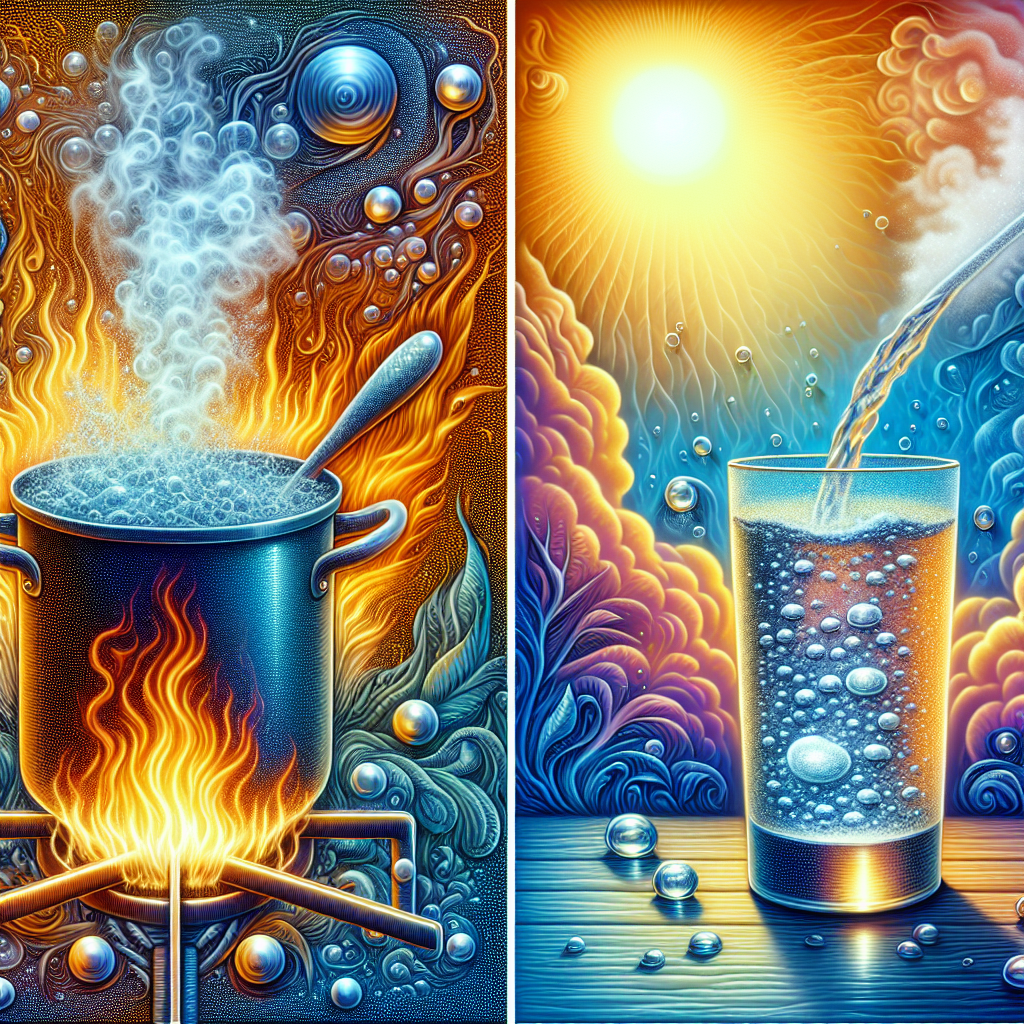
Heat transfer during phase change involves the transfer of thermal energy when a substance changes its phase, such as from liquid to vapor (boiling) or from vapor to liquid (condensation). These processes are characterized by the absorption or release of latent heat, which is the energy required to change the phase of a substance without changing its temperature.
Key Terms
- Latent Heat: The amount of heat required to change the phase of a unit mass of a substance without changing its temperature.
- Nucleate Boiling: A boiling regime where vapor bubbles form at discrete points on a heated surface.
- Film Condensation: A condensation regime where a continuous film of liquid forms on a cooled surface.
- Critical Heat Flux (CHF): The maximum heat flux at which boiling can occur before transitioning to film boiling.
- Heat Transfer Coefficient: A measure of the heat transfer rate per unit area per unit temperature difference.
Theories
The heat transfer during boiling and condensation can be described using several theories and models. For boiling, the Rohsenow correlation is commonly used to predict the heat transfer coefficient in nucleate boiling. For condensation, the Nusselt theory provides a framework for understanding film condensation on vertical surfaces. These theories help engineers design and optimize thermal systems by predicting heat transfer rates under various conditions.
Historical Development
Early Discoveries
The study of heat transfer during phase change dates back to the 18th century when scientists like Joseph Black and James Watt made significant contributions to the understanding of latent heat and steam engines. Watt’s improvements to the steam engine, which included a separate condenser, marked a pivotal moment in the industrial revolution and highlighted the importance of efficient heat transfer in engineering.
20th Century Advances
In the 20th century, researchers like Jakob and Rohsenow developed empirical correlations and theoretical models to describe boiling and condensation heat transfer. The advent of high-speed photography and advanced measurement techniques allowed for a deeper understanding of the microscale phenomena involved in these processes. The development of computational fluid dynamics (CFD) further revolutionized the field by enabling detailed simulations of phase change heat transfer.
Applications
Power Generation
Boiling and condensation are integral to power generation systems, particularly in steam turbines and nuclear reactors. In steam turbines, water is boiled to produce high-pressure steam, which drives the turbine blades. The steam is then condensed back into water in a condenser, completing the cycle. Efficient heat transfer during these phase changes is crucial for maximizing the efficiency of power plants.
Refrigeration and Air Conditioning
Refrigeration and air conditioning systems rely on the principles of boiling and condensation to transfer heat. In these systems, a refrigerant undergoes phase changes to absorb heat from a low-temperature environment and release it to a high-temperature environment. The performance of these systems depends on the effective design of evaporators (where boiling occurs) and condensers (where condensation occurs).
Chemical Processing
In the chemical industry, boiling and condensation are used in various processes such as distillation, where a mixture is separated into its components based on differences in boiling points. Efficient heat transfer during these phase changes is essential for optimizing the separation process and reducing energy consumption.
Aerospace Engineering
In aerospace engineering, phase change heat transfer is used in thermal management systems for spacecraft and satellites. Boiling and condensation are employed in heat pipes and loop heat pipes to transfer heat from electronic components to radiators, ensuring the reliable operation of space systems in the harsh environment of space.
Advanced Topics
Micro and Nano-Scale Heat Transfer
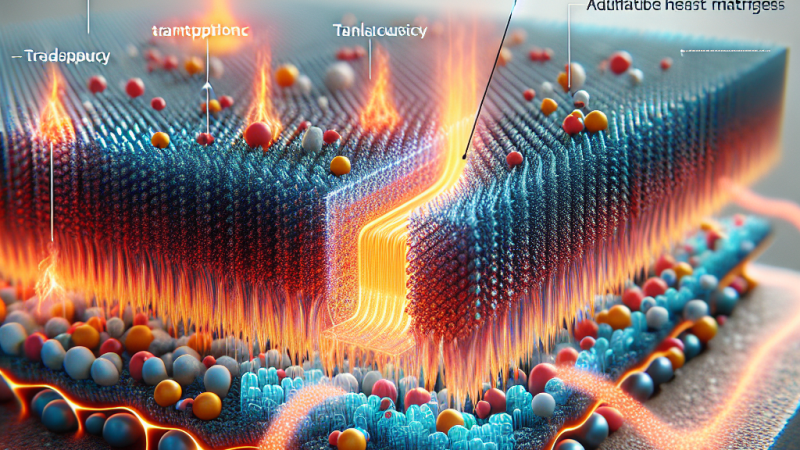
Recent research has focused on understanding heat transfer during phase change at micro and nano-scales. Advances in nanotechnology have led to the development of surfaces with enhanced heat transfer properties, such as superhydrophobic and superhydrophilic surfaces. These surfaces can significantly improve the efficiency of boiling and condensation processes by promoting or inhibiting bubble formation and liquid spreading.
Two-Phase Flow and Heat Transfer
Two-phase flow, where both liquid and vapor phases coexist, is a complex phenomenon that occurs during boiling and condensation. Understanding the dynamics of two-phase flow is essential for designing efficient thermal systems. Recent studies have employed advanced experimental techniques and CFD simulations to investigate two-phase flow patterns, heat transfer coefficients, and pressure drops in various geometries and conditions.
Heat Transfer Enhancement Techniques
Various techniques have been developed to enhance heat transfer during boiling and condensation. These include the use of extended surfaces (fins), microchannel heat exchangers, and surface coatings. Recent innovations in additive manufacturing have enabled the fabrication of complex geometries that can further enhance heat transfer performance.
Challenges and Considerations
Challenges
- Critical Heat Flux (CHF): Predicting and managing CHF is a significant challenge in boiling heat transfer. Exceeding CHF can lead to a sudden drop in heat transfer efficiency and potential damage to the system.
- Surface Fouling: The accumulation of deposits on heat transfer surfaces can reduce heat transfer efficiency and increase maintenance costs.
- Two-Phase Flow Instabilities: Managing flow instabilities in two-phase systems is crucial for ensuring reliable operation and preventing system failures.
Considerations
- Material Selection: Choosing materials with high thermal conductivity and corrosion resistance is essential for optimizing heat transfer performance and ensuring system longevity.
- System Design: Proper design of heat exchangers, evaporators, and condensers is crucial for maximizing heat transfer efficiency and minimizing pressure drops.
- Environmental Impact: Considering the environmental impact of refrigerants and working fluids is important for developing sustainable thermal systems.
Potential Solutions
To address these challenges, researchers are exploring advanced materials, surface treatments, and innovative system designs. For example, the use of nanofluids (fluids containing nanoparticles) has shown promise in enhancing heat transfer performance. Additionally, the development of smart surfaces that can dynamically change their properties in response to operating conditions is an area of active research.
Conclusion
Heat transfer in phase change, particularly boiling and condensation, is a vital area of study in the field of engineering. Understanding the principles and mechanisms of these processes is essential for designing efficient thermal systems and improving energy utilization. From power generation and refrigeration to chemical processing and aerospace engineering, the applications of boiling and condensation are vast and varied. Advances in micro and nano-scale heat transfer, two-phase flow dynamics, and heat transfer enhancement techniques continue to push the boundaries of what is possible. However, challenges such as critical heat flux, surface fouling, and two-phase flow instabilities must be addressed to fully realize the potential of these processes. By continuing to explore innovative solutions and conducting further research, engineers can develop more efficient and sustainable thermal systems, ultimately contributing to a more energy-efficient future.