Heat Transfer in Chemical Engineering
Introduction

Heat transfer is a fundamental concept in the field of engineering, playing a crucial role in various industrial processes. In chemical engineering, heat transfer is particularly significant as it directly impacts the efficiency, safety, and economic viability of chemical processes. From the design of reactors and heat exchangers to the optimization of energy consumption, understanding heat transfer mechanisms is essential for chemical engineers. This article delves into the importance and relevance of heat transfer in chemical engineering, exploring its basic principles, historical development, practical applications, advanced topics, and associated challenges.
Fundamentals
Basic Principles and Concepts
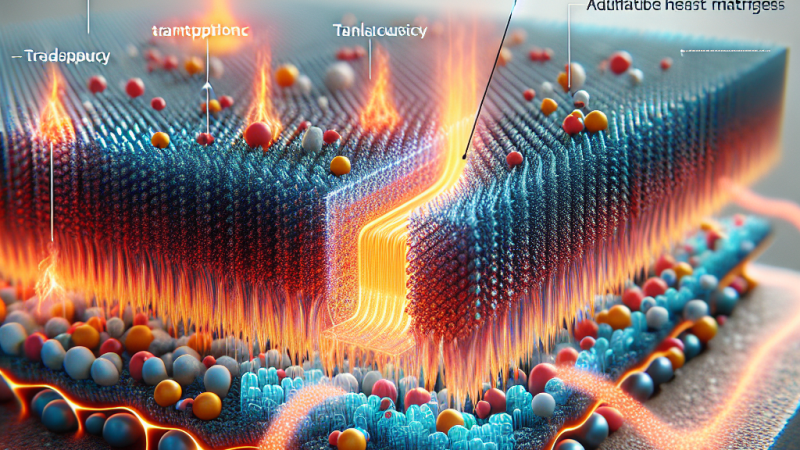
Heat transfer refers to the movement of thermal energy from one object or substance to another due to a temperature difference. The three primary modes of heat transfer are conduction, convection, and radiation.
- Conduction: The transfer of heat through a solid material from a region of higher temperature to a region of lower temperature. This process is governed by Fourier’s Law, which states that the heat flux is proportional to the negative gradient of temperature and the material’s thermal conductivity.
- Convection: The transfer of heat between a solid surface and a fluid (liquid or gas) in motion. Convection can be natural (driven by buoyancy forces due to temperature differences) or forced (driven by external means such as a pump or fan). Newton’s Law of Cooling describes the convective heat transfer rate as proportional to the temperature difference between the surface and the fluid.
- Radiation: The transfer of heat in the form of electromagnetic waves, primarily in the infrared spectrum. Unlike conduction and convection, radiation does not require a medium and can occur in a vacuum. The Stefan-Boltzmann Law quantifies the radiative heat transfer from a black body as proportional to the fourth power of its absolute temperature.
Key Terms
- Thermal Conductivity: A material property that indicates its ability to conduct heat.
- Heat Flux: The rate of heat energy transfer per unit area.
- Heat Exchanger: A device designed to efficiently transfer heat between two or more fluids.
- Thermal Resistance: A measure of a material’s resistance to heat flow.
- Overall Heat Transfer Coefficient: A parameter that combines the effects of conduction, convection, and radiation in a heat transfer process.
Historical Development
The study of heat transfer has a rich history, with significant contributions from various scientists and engineers over the centuries. The development of heat transfer theories and technologies has been instrumental in advancing chemical engineering and other fields.
Key Milestones
- Fourier’s Law (1822): Jean-Baptiste Joseph Fourier formulated the law of heat conduction, laying the foundation for the mathematical analysis of heat transfer.
- Newton’s Law of Cooling (1701): Sir Isaac Newton introduced the concept of convective heat transfer, describing the rate of cooling of an object in a fluid.
- Stefan-Boltzmann Law (1879): Josef Stefan and Ludwig Boltzmann developed the law of black body radiation, providing a quantitative description of radiative heat transfer.
- Development of Heat Exchangers (20th Century): The design and optimization of heat exchangers became a critical area of research, leading to the development of various types of heat exchangers such as shell-and-tube, plate, and finned-tube exchangers.
Notable Figures
- Jean-Baptiste Joseph Fourier: A French mathematician and physicist known for his work on heat conduction and the Fourier series.
- Sir Isaac Newton: An English mathematician, physicist, and astronomer who made significant contributions to the understanding of convective heat transfer.
- Josef Stefan and Ludwig Boltzmann: Austrian physicists who developed the Stefan-Boltzmann Law, a cornerstone of radiative heat transfer theory.
Applications
Heat transfer is integral to numerous industrial processes and applications in chemical engineering. Efficient heat management is essential for optimizing process performance, ensuring safety, and reducing energy consumption.
Practical Applications
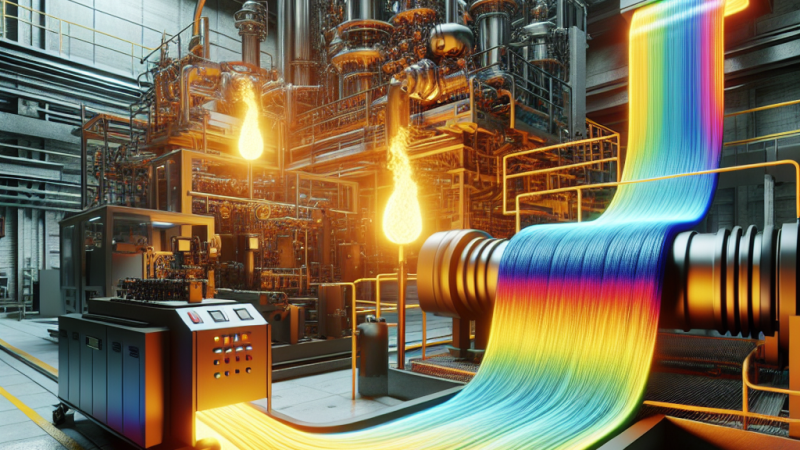
- Heat Exchangers: Widely used in chemical plants, refineries, and power plants to transfer heat between process streams. For example, in a petrochemical plant, heat exchangers are used to recover heat from hot process streams and preheat feedstock, improving energy efficiency.
- Reactor Design: Chemical reactors often require precise temperature control to ensure optimal reaction rates and product yields. Heat transfer plays a crucial role in maintaining the desired temperature profile within the reactor.
- Distillation Columns: Heat transfer is essential in distillation processes for separating components based on their boiling points. Reboilers and condensers are key components that facilitate the transfer of heat in distillation columns.
- Cooling Systems: Effective heat removal is critical in processes that generate excess heat. Cooling towers, chillers, and other cooling systems are employed to dissipate heat and maintain safe operating conditions.
- Drying Processes: Heat transfer is involved in drying operations where moisture is removed from solid materials. This is common in the production of pharmaceuticals, food products, and chemicals.
Case Studies
- Petrochemical Industry: In a petrochemical plant, heat exchangers are used to recover heat from hot effluent streams and preheat incoming feedstock, resulting in significant energy savings and improved process efficiency.
- Pharmaceutical Manufacturing: In pharmaceutical production, precise temperature control in reactors is essential for achieving high product purity and yield. Advanced heat transfer techniques are employed to maintain the desired reaction conditions.
Advanced Topics
As the field of heat transfer continues to evolve, new theories, techniques, and technologies are being developed to address emerging challenges and improve process efficiency.
Recent Research and Innovations
- Nanofluids: The use of nanofluids, which are fluids containing nanoparticles, has shown promise in enhancing heat transfer rates. Research is ongoing to understand the mechanisms and optimize the use of nanofluids in various applications.
- Heat Transfer Enhancement Techniques: Techniques such as the use of extended surfaces (fins), microchannels, and phase change materials are being explored to improve heat transfer performance in compact and high-efficiency systems.
- Computational Fluid Dynamics (CFD): Advanced CFD simulations are being used to model and optimize heat transfer processes, providing detailed insights into fluid flow and temperature distribution.
- Heat Transfer in Micro and Nanoscale Systems: With the miniaturization of electronic devices and the development of microreactors, understanding heat transfer at the micro and nanoscale has become increasingly important. Research in this area focuses on addressing thermal management challenges in small-scale systems.
Future Trends
- Energy Efficiency: As industries strive to reduce energy consumption and carbon emissions, there is a growing emphasis on developing energy-efficient heat transfer technologies and processes.
- Renewable Energy Systems: Heat transfer plays a critical role in renewable energy systems such as solar thermal collectors and geothermal heat pumps. Advances in these areas are expected to drive the adoption of sustainable energy solutions.
- Smart Materials: The development of smart materials with tunable thermal properties holds potential for innovative heat transfer applications, including adaptive thermal management systems.
Challenges and Considerations
Despite the advancements in heat transfer technologies, several challenges and considerations remain in the field of chemical engineering.
Challenges
- Fouling: The accumulation of unwanted materials on heat transfer surfaces can significantly reduce heat transfer efficiency. Addressing fouling through effective cleaning and maintenance strategies is a persistent challenge.
- Thermal Stresses: Rapid temperature changes can induce thermal stresses in materials, leading to mechanical failure. Designing systems to withstand thermal stresses is crucial for ensuring reliability and safety.
- Scale-Up: Scaling up laboratory-scale heat transfer processes to industrial-scale operations can be complex, requiring careful consideration of factors such as fluid dynamics, heat transfer coefficients, and material properties.
- Cost: Implementing advanced heat transfer technologies can be expensive. Balancing the cost of new technologies with the potential benefits in terms of efficiency and performance is a key consideration for engineers.
Potential Solutions and Areas for Further Research
- Advanced Materials: Developing materials with enhanced thermal properties and resistance to fouling and corrosion can improve heat transfer performance and longevity.
- Innovative Designs: Exploring novel heat exchanger designs and configurations can lead to more efficient and compact systems.
- Predictive Maintenance: Implementing predictive maintenance strategies using sensors and data analytics can help identify and address fouling and other issues before they impact performance.
- Interdisciplinary Research: Collaborating across disciplines, such as materials science, fluid dynamics, and computational modeling, can drive innovation and address complex heat transfer challenges.
Conclusion
Heat transfer is a critical aspect of chemical engineering, influencing the design, operation, and optimization of various industrial processes. Understanding the fundamental principles of conduction, convection, and radiation, as well as the historical development and practical applications of heat transfer, is essential for chemical engineers. Advances in nanofluids, heat transfer enhancement techniques, and computational modeling are driving innovation in the field, while challenges such as fouling and thermal stresses continue to be areas of active research. As industries strive for greater energy efficiency and sustainability, the importance of heat transfer in chemical engineering will only continue to grow, making it a vital area of study and application in the field of engineering.