Heat Exchangers: Design and Applications
Introduction
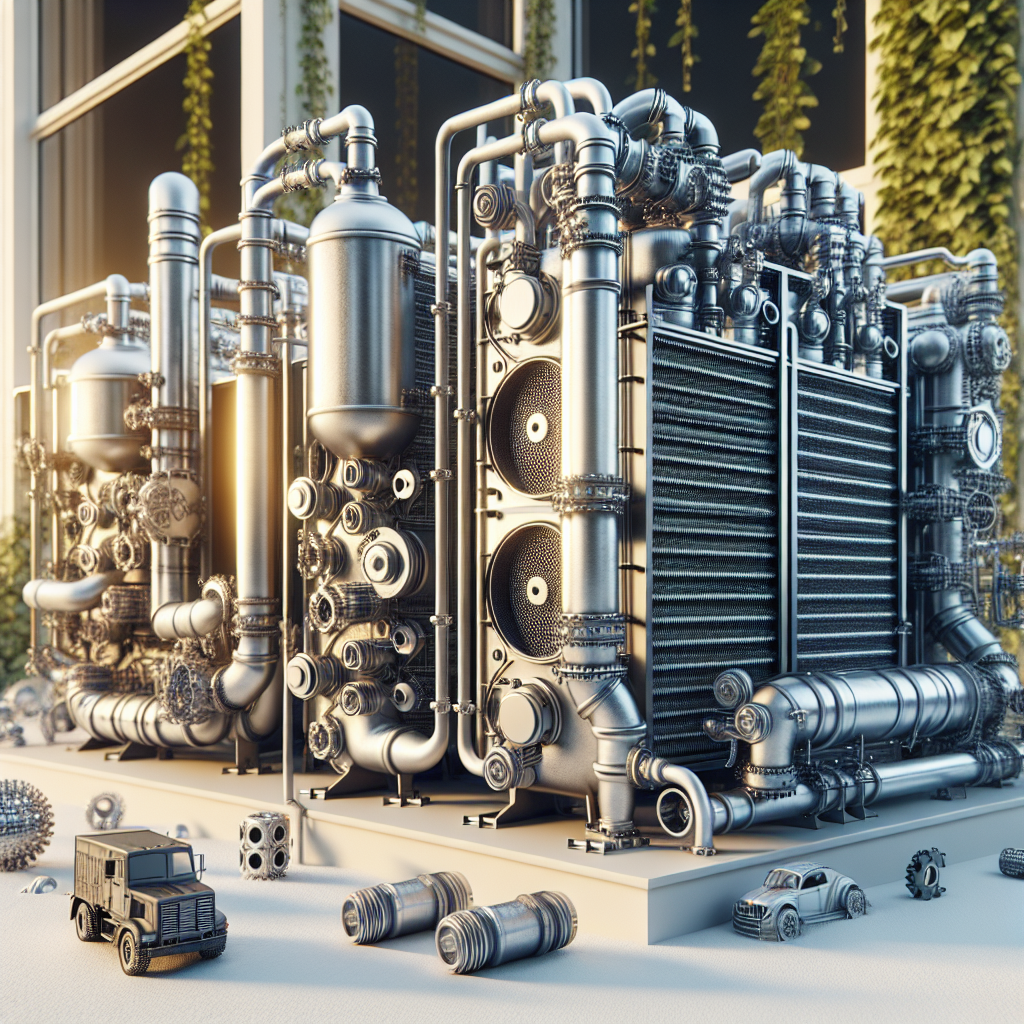
Heat exchangers are critical components in the field of thermodynamics and engineering, playing a pivotal role in a wide array of industrial processes. These devices facilitate the transfer of heat between two or more fluids, which can be either liquids or gases, without mixing them. The importance of heat exchangers cannot be overstated, as they are integral to the efficiency and functionality of systems ranging from power plants and chemical processing units to HVAC systems and automotive engines. This article delves into the design and applications of heat exchangers, exploring their fundamental principles, historical development, practical applications, advanced topics, and the challenges associated with their use.
Fundamentals
Basic Principles and Concepts
At its core, a heat exchanger is designed to transfer heat from one medium to another. The primary objective is to either heat or cool a fluid, depending on the application. The efficiency of this process is governed by several key principles and concepts:
- Heat Transfer Mechanisms: Heat can be transferred via conduction, convection, and radiation. In heat exchangers, conduction and convection are the primary mechanisms.
- Thermal Conductivity: This property of a material determines how well it can conduct heat. Materials with high thermal conductivity, such as metals, are often used in heat exchangers.
- Heat Transfer Coefficient: This is a measure of the heat transfer rate per unit area per unit temperature difference. It is influenced by factors such as fluid velocity, fluid properties, and surface roughness.
- Log Mean Temperature Difference (LMTD): This is a method used to determine the temperature driving force for heat exchange in flow systems, particularly in counterflow and parallel flow heat exchangers.
- Effectiveness-NTU Method: This method is used to analyze the performance of heat exchangers, where NTU stands for Number of Transfer Units.
Key Terms
- Shell and Tube Heat Exchanger: A type of heat exchanger that consists of a series of tubes, one set carrying the hot fluid and the other the cold fluid.
- Plate Heat Exchanger: A type of heat exchanger that uses metal plates to transfer heat between two fluids.
- Fouling: The accumulation of unwanted material on the heat transfer surfaces, which can reduce efficiency.
- Counterflow: A configuration where the two fluids flow in opposite directions, maximizing the temperature gradient and heat transfer efficiency.
- Parallel Flow: A configuration where the two fluids flow in the same direction, which is less efficient than counterflow.
Historical Development
The concept of heat exchange has been around for centuries, but significant advancements have been made over the last two centuries. The development of heat exchangers can be traced back to the early 19th century when the industrial revolution spurred the need for efficient thermal management systems.
Key Milestones
- 1822: The first recorded use of a heat exchanger was in a steam engine, where James Watt used a surface condenser to improve efficiency.
- 1923: The development of the shell and tube heat exchanger by Richard Seligman marked a significant advancement in the field.
- 1940s: The introduction of plate heat exchangers provided a more compact and efficient solution for various industrial applications.
- 1970s: The advent of computer-aided design (CAD) revolutionized the design and optimization of heat exchangers.
- 2000s: Advances in materials science and nanotechnology have led to the development of more efficient and durable heat exchangers.
Notable Figures
- James Watt: Known for his work on steam engines, Watt’s use of a surface condenser was an early form of a heat exchanger.
- Richard Seligman: Credited with the development of the shell and tube heat exchanger, which remains one of the most widely used types today.
- Donald Q. Kern: Author of the seminal book “Process Heat Transfer,” which has been a cornerstone in the education of heat exchanger design.
Applications
Heat exchangers are ubiquitous in various industries, each with unique requirements and challenges. Here are some of the most common applications:
Power Generation
In power plants, heat exchangers are used to transfer heat from the combustion of fuel to water, producing steam that drives turbines. This process is fundamental to both fossil fuel and nuclear power plants. For example, in a nuclear power plant, a heat exchanger transfers heat from the reactor core to a secondary loop, which then generates steam to drive the turbines.
HVAC Systems
Heating, Ventilation, and Air Conditioning (HVAC) systems rely heavily on heat exchangers to regulate indoor temperatures. In air conditioning units, heat exchangers transfer heat from the indoor air to the refrigerant, cooling the air in the process. Conversely, in heating systems, they transfer heat from a hot fluid to the indoor air.
Chemical Processing
The chemical industry uses heat exchangers for various processes, including heating and cooling of reactants, condensation of vapors, and evaporation of liquids. For instance, in a petrochemical plant, heat exchangers are used to cool down the products of a chemical reaction before they are further processed or stored.
Automotive Industry
In automotive engines, heat exchangers are used to transfer heat from the engine coolant to the air, preventing the engine from overheating. Radiators and intercoolers are common examples of heat exchangers in vehicles.
Food and Beverage Industry
Heat exchangers are used in the food and beverage industry for pasteurization, sterilization, and temperature control. For example, in dairy processing, plate heat exchangers are used to pasteurize milk by heating it to a specific temperature to kill harmful bacteria.
Advanced Topics
Recent Research and Innovations
Recent advancements in heat exchanger technology have focused on improving efficiency, reducing size, and enhancing durability. Some notable innovations include:
- Microchannel Heat Exchangers: These devices use micro-scale channels to increase the surface area for heat transfer, resulting in higher efficiency and compact size.
- Nanofluids: The use of nanofluids, which are fluids containing nanoparticles, has been shown to enhance thermal conductivity and heat transfer rates.
- Additive Manufacturing: 3D printing technology allows for the creation of complex geometries that were previously impossible to manufacture, leading to more efficient heat exchanger designs.
- Phase Change Materials (PCMs): Incorporating PCMs into heat exchangers can improve thermal storage capacity and efficiency.
Future Trends
The future of heat exchanger technology is likely to be shaped by several emerging trends:
- Smart Heat Exchangers: The integration of sensors and IoT technology will enable real-time monitoring and optimization of heat exchanger performance.
- Sustainable Materials: The development of eco-friendly materials will reduce the environmental impact of heat exchangers.
- Energy Recovery Systems: Advances in energy recovery systems will enhance the efficiency of industrial processes by capturing and reusing waste heat.
Challenges and Considerations
Despite their widespread use and numerous advantages, heat exchangers face several challenges and limitations:
Fouling
Fouling is the accumulation of unwanted material on the heat transfer surfaces, which can significantly reduce efficiency. Regular maintenance and the use of anti-fouling coatings can mitigate this issue.
Corrosion
Corrosion can degrade the materials used in heat exchangers, leading to leaks and reduced lifespan. The use of corrosion-resistant materials and protective coatings can help address this problem.
Pressure Drops
High pressure drops can reduce the efficiency of heat exchangers and increase operational costs. Optimizing the design to minimize pressure drops is crucial.
Cost
The initial cost of heat exchangers can be high, particularly for advanced designs and materials. However, the long-term benefits in terms of efficiency and energy savings often justify the investment.
Potential Solutions
Ongoing research and development are focused on addressing these challenges. For example, the use of advanced materials such as graphene and the development of self-cleaning surfaces are promising areas of research. Additionally, the implementation of predictive maintenance using AI and machine learning can help identify and address issues before they become critical.
Conclusion
Heat exchangers are indispensable in the field of thermodynamics and engineering, with applications spanning numerous industries. From their fundamental principles and historical development to their practical applications and advanced innovations, heat exchangers continue to evolve, driven by the need for greater efficiency and sustainability. While challenges such as fouling, corrosion, and pressure drops persist, ongoing research and technological advancements offer promising solutions. As we look to the future, the role of heat exchangers in enhancing energy efficiency and reducing environmental impact will only become more critical, underscoring their importance in the field of engineering.