
Flow Control Techniques
Introduction
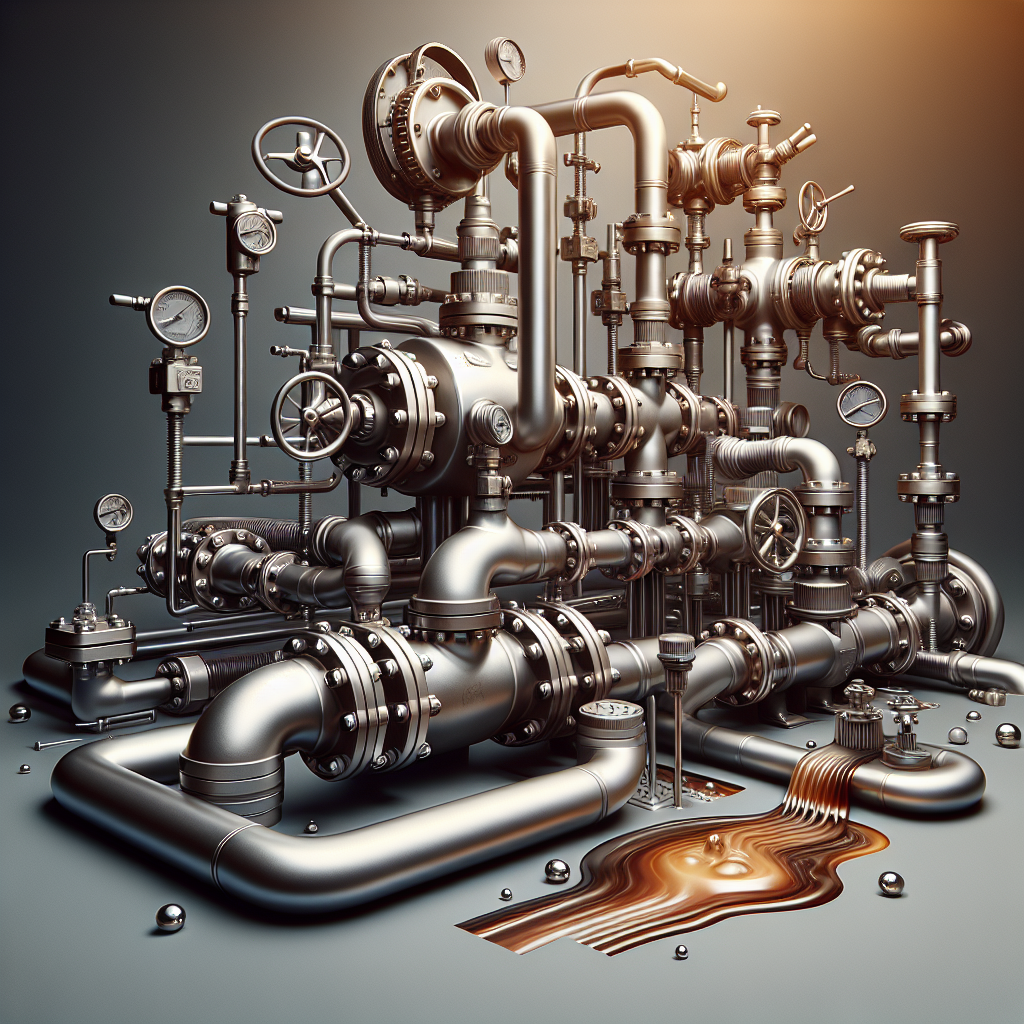
Flow control techniques are a cornerstone in the field of fluid dynamics, playing a crucial role in various engineering applications. These techniques are essential for optimizing the performance, efficiency, and safety of systems involving fluid flow, such as pipelines, aircraft, and HVAC systems. Understanding and implementing effective flow control methods can lead to significant improvements in energy consumption, operational costs, and overall system reliability. This article delves into the fundamentals, historical development, applications, advanced topics, and challenges associated with flow control techniques in engineering.
Fundamentals
Basic Principles and Concepts
Flow control in fluid dynamics involves manipulating the flow characteristics of a fluid to achieve desired outcomes. This can include altering the flow rate, pressure, velocity, and direction of the fluid. The primary goal is to enhance the performance and efficiency of fluid systems while minimizing energy losses and potential damage.
Key Terms and Definitions
- Laminar Flow: A smooth, orderly flow regime characterized by parallel layers of fluid with minimal mixing.
- Turbulent Flow: A chaotic flow regime with significant mixing and fluctuations in velocity and pressure.
- Reynolds Number: A dimensionless number used to predict flow regimes, defined as the ratio of inertial forces to viscous forces.
- Boundary Layer: A thin layer of fluid near a solid surface where velocity changes from zero to the free stream value.
- Drag: The resistance force exerted by a fluid on a moving object.
Theories and Models
Several theories and models underpin flow control techniques. The Navier-Stokes equations describe the motion of viscous fluid substances and are fundamental to fluid dynamics. The Bernoulli’s principle explains the relationship between pressure, velocity, and elevation in a moving fluid. Additionally, the Prandtl boundary layer theory provides insights into the behavior of fluid flow near solid surfaces.
Historical Development
Early Discoveries
The study of fluid dynamics dates back to ancient civilizations, with early contributions from Greek and Roman engineers who designed aqueducts and water supply systems. However, significant advancements began in the 17th century with the work of scientists like Isaac Newton, who formulated the laws of motion and viscosity.
Key Milestones
- 1738: Daniel Bernoulli publishes “Hydrodynamica,” introducing Bernoulli’s principle.
- 1822: Claude-Louis Navier and George Gabriel Stokes develop the Navier-Stokes equations.
- 1904: Ludwig Prandtl introduces the concept of the boundary layer, revolutionizing the understanding of fluid flow near surfaces.
- 1930s: Theodore von Kármán contributes to the development of turbulence theory and vortex shedding.
Modern Developments
In the 20th and 21st centuries, advancements in computational fluid dynamics (CFD) and experimental techniques have significantly enhanced the ability to analyze and control fluid flow. Innovations such as active flow control, microfluidics, and smart materials have opened new avenues for research and application.
Applications
Aerospace Engineering
Flow control techniques are vital in aerospace engineering for optimizing the performance of aircraft and spacecraft. By managing airflow over wings and control surfaces, engineers can reduce drag, increase lift, and improve fuel efficiency. Techniques such as boundary layer control, vortex generators, and synthetic jets are commonly used in this field.
Automotive Engineering
In the automotive industry, flow control is essential for enhancing the aerodynamics of vehicles, improving engine performance, and optimizing cooling systems. For example, active grille shutters can adjust airflow to reduce drag and improve fuel economy, while advanced cooling systems ensure efficient heat dissipation.
HVAC Systems
Heating, ventilation, and air conditioning (HVAC) systems rely on flow control techniques to maintain comfortable indoor environments. By regulating airflow and pressure, these systems can efficiently distribute conditioned air, ensuring optimal temperature and humidity levels. Variable air volume (VAV) systems and smart thermostats are examples of flow control applications in HVAC.
Industrial Processes
Flow control is crucial in various industrial processes, including chemical manufacturing, oil and gas production, and water treatment. Precise control of fluid flow ensures consistent product quality, efficient resource utilization, and safe operation. Techniques such as flow meters, control valves, and automated feedback systems are widely used in these industries.
Advanced Topics
Active Flow Control
Active flow control involves the use of external energy to manipulate fluid flow. This can include techniques such as synthetic jets, plasma actuators, and oscillating surfaces. Recent research has focused on developing more efficient and effective active flow control methods, with applications in aerospace, automotive, and renewable energy sectors.
Microfluidics
Microfluidics is the study and manipulation of fluids at the microscale. This field has gained significant attention due to its applications in medical diagnostics, drug delivery, and lab-on-a-chip devices. Advanced flow control techniques in microfluidics include electrokinetic flow, droplet-based microfluidics, and digital microfluidics.
Smart Materials
Smart materials, such as shape memory alloys and piezoelectric materials, can change their properties in response to external stimuli. These materials are being explored for use in flow control applications, where they can adapt to changing conditions and optimize fluid flow in real-time.
Computational Fluid Dynamics (CFD)
CFD has revolutionized the field of fluid dynamics by enabling detailed simulations of complex flow phenomena. Advanced CFD techniques, such as large eddy simulation (LES) and direct numerical simulation (DNS), provide insights into turbulent flows and help develop more effective flow control strategies.
Challenges and Considerations
Complexity and Cost
Implementing flow control techniques can be complex and costly, particularly in large-scale industrial applications. The design, installation, and maintenance of flow control systems require significant investment and expertise. Balancing cost and performance is a critical consideration for engineers.
Environmental Impact
Flow control techniques can have environmental implications, particularly in terms of energy consumption and emissions. Engineers must consider the environmental impact of flow control systems and strive to develop sustainable solutions that minimize resource use and reduce carbon footprints.
Reliability and Maintenance
The reliability and maintenance of flow control systems are essential for ensuring consistent performance and safety. Regular inspections, monitoring, and maintenance are necessary to prevent failures and extend the lifespan of these systems. Advances in predictive maintenance and IoT technologies are helping address these challenges.
Future Research
Ongoing research is focused on developing more efficient, cost-effective, and environmentally friendly flow control techniques. Areas of interest include bio-inspired flow control, adaptive systems, and the integration of artificial intelligence and machine learning for real-time optimization.
Conclusion
Flow control techniques are integral to the field of fluid dynamics in engineering, offering numerous benefits in terms of performance, efficiency, and safety. From aerospace and automotive engineering to HVAC systems and industrial processes, effective flow control can lead to significant improvements in various applications. While challenges such as complexity, cost, and environmental impact exist, ongoing research and innovation continue to drive advancements in this field. As technology evolves, the importance of flow control techniques will only grow, making them a critical area of focus for engineers and researchers alike.