Energy Systems in Telecommunications
Introduction

In the modern world, telecommunications play a pivotal role in connecting people, businesses, and governments. The backbone of this connectivity is the energy systems that power telecommunications infrastructure. These energy systems ensure that communication networks remain operational, reliable, and efficient. In the field of Energy Systems in Engineering, understanding the intricacies of energy systems in telecommunications is crucial for developing sustainable and resilient communication networks. This article delves into the importance, fundamentals, historical development, applications, advanced topics, challenges, and considerations of energy systems in telecommunications.
Fundamentals
Basic Principles and Concepts
Energy systems in telecommunications encompass the generation, distribution, and management of electrical power to support telecommunication networks. These systems are designed to provide uninterrupted power supply to various components such as base stations, data centers, and transmission equipment. Key principles include:
- Power Generation: The process of producing electrical energy from primary energy sources such as fossil fuels, nuclear power, or renewable sources like solar and wind.
- Power Distribution: The transmission of electrical power from generation sites to end-users, ensuring minimal losses and maintaining voltage levels.
- Energy Storage: Technologies like batteries and capacitors that store energy for use during power outages or peak demand periods.
- Power Management: Systems and strategies to optimize the use of electrical power, including load balancing, energy efficiency measures, and demand response.
Key Terms
- Uninterruptible Power Supply (UPS): A device that provides backup power to critical systems during power outages.
- Power Factor Correction (PFC): Techniques used to improve the efficiency of power delivery by reducing reactive power.
- Smart Grid: An advanced electrical grid that uses digital technology to monitor and manage the flow of electricity.
- Renewable Energy Integration: The incorporation of renewable energy sources into the power grid to reduce reliance on fossil fuels.
Historical Development
The evolution of energy systems in telecommunications has been marked by significant milestones and contributions from notable figures. In the early days of telecommunications, power systems were rudimentary, relying on simple battery backups and manual switching. However, as communication networks expanded and became more complex, the need for reliable and efficient energy systems grew.
Key Milestones
- Early 20th Century: The advent of telephone networks led to the development of centralized power systems to support long-distance communication.
- Mid-20th Century: The rise of television and radio broadcasting required more robust power systems, leading to innovations in power generation and distribution.
- Late 20th Century: The proliferation of the internet and mobile communications drove the need for advanced energy storage solutions and power management techniques.
- 21st Century: The integration of renewable energy sources and the development of smart grids have revolutionized energy systems in telecommunications.
Notable Figures
- Thomas Edison: Pioneered the development of electrical power systems, laying the groundwork for modern energy systems.
- Nikola Tesla: Made significant contributions to alternating current (AC) power systems, which are widely used in telecommunications today.
- Claude Shannon: Known as the father of information theory, his work has influenced the design and optimization of telecommunication networks and their energy systems.
Applications
Energy systems in telecommunications have a wide range of practical applications across various industries and fields. These applications ensure that communication networks remain operational, even in challenging conditions.
Telecommunication Networks
Energy systems are critical for maintaining the reliability and efficiency of telecommunication networks. Examples include:
- Base Stations: Cellular base stations require continuous power to provide mobile communication services. Energy systems with backup power solutions ensure uninterrupted service.
- Data Centers: Data centers house servers and networking equipment that require constant power. Advanced energy management systems optimize power usage and reduce operational costs.
- Transmission Equipment: Fiber optic and microwave transmission systems rely on stable power supplies to transmit data over long distances.
Emergency Services
Reliable communication is essential for emergency services such as police, fire, and medical response teams. Energy systems with robust backup solutions ensure that these services remain operational during power outages or natural disasters.
Remote and Rural Areas
In remote and rural areas, where access to the main power grid may be limited, energy systems with renewable energy sources and energy storage solutions provide reliable power for telecommunication networks. This connectivity is crucial for economic development and access to essential services.
Case Studies
- Hurricane Katrina (2005): During Hurricane Katrina, energy systems with backup power solutions played a vital role in maintaining communication networks, enabling emergency response teams to coordinate rescue efforts.
- Rural Electrification in Africa: In many African countries, solar-powered base stations have been deployed to provide mobile communication services in remote areas, improving connectivity and access to information.
Advanced Topics
The field of energy systems in telecommunications is continually evolving, with ongoing research and innovations driving advancements. Some of the advanced topics include:
Smart Grids
Smart grids use digital technology to monitor and manage the flow of electricity, improving the efficiency and reliability of power delivery. In telecommunications, smart grids enable real-time monitoring of energy usage, predictive maintenance, and integration of renewable energy sources.
Renewable Energy Integration
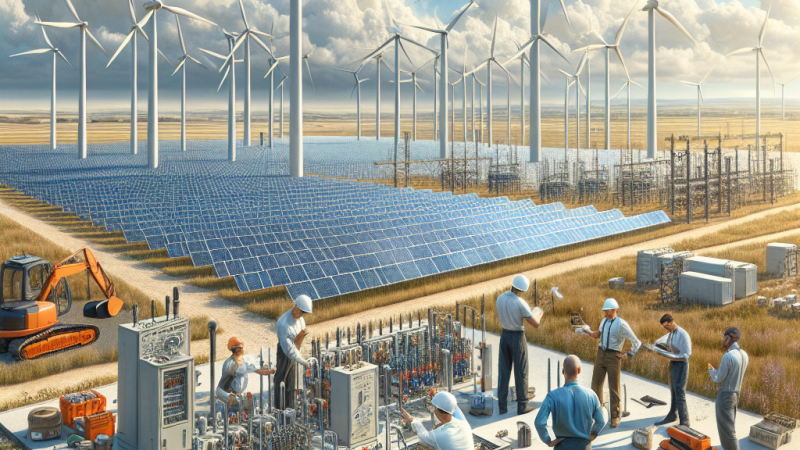
The integration of renewable energy sources such as solar and wind into telecommunication networks reduces reliance on fossil fuels and lowers carbon emissions. Advanced energy storage solutions, such as lithium-ion batteries, ensure a stable power supply even when renewable sources are intermittent.
Energy Harvesting
Energy harvesting technologies capture ambient energy from the environment, such as solar radiation, thermal gradients, and kinetic energy, to power telecommunication devices. This approach is particularly useful for remote sensors and IoT devices, reducing the need for external power sources.
Recent Research and Innovations
- 5G Networks: The deployment of 5G networks requires advanced energy systems to support higher data rates and increased connectivity. Research is focused on optimizing power consumption and integrating renewable energy sources.
- Artificial Intelligence (AI): AI algorithms are being developed to optimize energy management in telecommunication networks, predicting energy demand and adjusting power distribution in real-time.
- Microgrids: Microgrids are localized energy systems that can operate independently or in conjunction with the main power grid. They provide reliable power for telecommunication networks in remote or disaster-prone areas.
Challenges and Considerations
Despite the advancements in energy systems for telecommunications, several challenges and considerations remain:
Challenges
- Energy Efficiency: As telecommunication networks expand, the demand for energy increases. Improving energy efficiency is crucial to reduce operational costs and environmental impact.
- Reliability: Ensuring a continuous power supply is essential for maintaining communication services. This requires robust backup solutions and redundancy measures.
- Integration of Renewable Energy: While renewable energy sources offer environmental benefits, their intermittent nature poses challenges for maintaining a stable power supply.
- Cybersecurity: As energy systems become more interconnected and reliant on digital technology, they become vulnerable to cyberattacks. Ensuring the security of these systems is paramount.
Considerations
- Regulatory Compliance: Telecommunication companies must adhere to regulations and standards related to energy usage and environmental impact.
- Cost: The implementation of advanced energy systems and renewable energy sources can be costly. Balancing cost with benefits is a key consideration.
- Scalability: Energy systems must be scalable to accommodate the growth of telecommunication networks and the increasing demand for connectivity.
- Environmental Impact: Minimizing the environmental impact of energy systems is essential for sustainable development. This includes reducing carbon emissions and managing electronic waste.
Conclusion
Energy systems in telecommunications are a critical component of modern communication networks. They ensure the reliability, efficiency, and sustainability of telecommunication services, which are essential for economic development, emergency response, and global connectivity. Understanding the fundamentals, historical development, applications, advanced topics, challenges, and considerations of energy systems in telecommunications is crucial for engineers and researchers in the field of Energy Systems in Engineering. As technology continues to evolve, ongoing research and innovation will drive the development of more efficient, reliable, and sustainable energy systems, shaping the future of telecommunications.