Advanced Machining Processes: EDM
Introduction
In the ever-evolving field of manufacturing processes in engineering, advanced machining techniques have become indispensable for producing complex and precise components. One such technique is Electrical Discharge Machining (EDM). EDM is a non-traditional machining process that has revolutionized the way engineers and manufacturers approach the fabrication of intricate parts. This article delves into the importance, principles, historical development, applications, advanced topics, challenges, and future trends of EDM, providing a comprehensive overview of this critical technology.
Fundamentals
Basic Principles
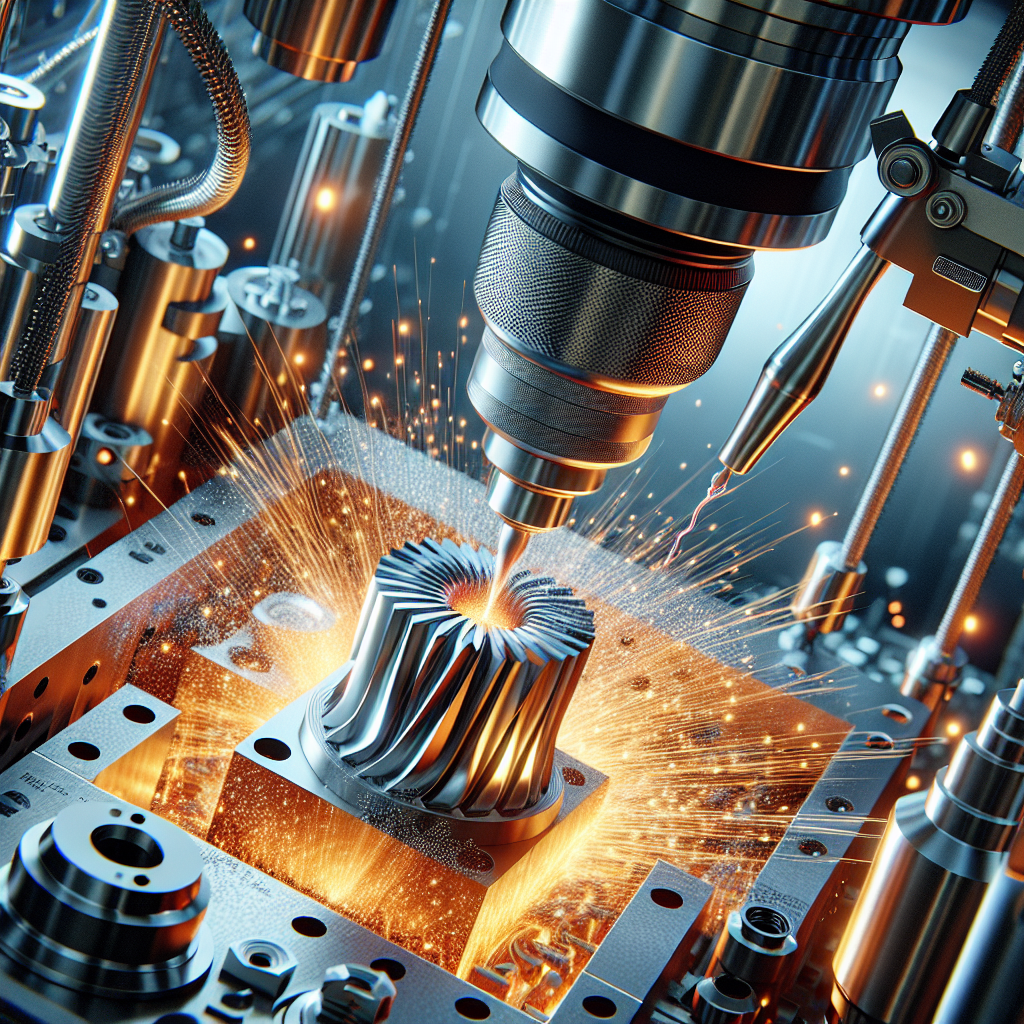
Electrical Discharge Machining (EDM) is a process that uses electrical discharges or sparks to remove material from a workpiece. The fundamental principle behind EDM is the erosion of material through a series of rapidly recurring electrical discharges between an electrode (tool) and the workpiece, both submerged in a dielectric fluid. The dielectric fluid acts as an insulator until a certain voltage threshold is reached, at which point it becomes ionized and allows a spark to pass through, eroding the material.
Key Terms and Definitions
- Electrode: The tool used to create the electrical discharges that erode the workpiece.
- Dielectric Fluid: An insulating fluid that surrounds the electrode and workpiece, facilitating the spark generation and cooling the process.
- Pulse Generator: A device that controls the frequency and intensity of the electrical discharges.
- Material Removal Rate (MRR): The rate at which material is removed from the workpiece, typically measured in cubic millimeters per minute.
- Surface Integrity: The condition of the surface layer of the machined part, including factors like roughness, hardness, and residual stress.
Historical Development
The origins of EDM can be traced back to the early 20th century. The first significant milestone was achieved by Joseph Priestly in 1770 when he discovered the erosive effect of electrical discharges. However, it wasn’t until the 1940s that EDM began to take shape as a practical machining process. Soviet scientists B.R. Lazarenko and N.I. Lazarenko developed the first controlled EDM process, known as the Lazarenko circuit, which laid the foundation for modern EDM technology.
In the 1950s and 1960s, EDM saw significant advancements with the development of more sophisticated pulse generators and dielectric fluids. The introduction of CNC (Computer Numerical Control) technology in the 1970s further revolutionized EDM, allowing for greater precision and automation. Notable figures in the field, such as Hans B. Künzli and Carl Sommer, contributed to the refinement and popularization of EDM, making it a staple in modern manufacturing.
Applications
EDM is widely used across various industries due to its ability to machine hard and brittle materials with high precision. Some of the key applications include:
Aerospace Industry
In the aerospace industry, EDM is used to manufacture complex components such as turbine blades, fuel system parts, and intricate cooling channels. The ability to machine high-temperature alloys and composites makes EDM an invaluable tool for producing parts that can withstand extreme conditions.
Medical Industry
EDM is employed in the medical industry to create precise and intricate components for medical devices, implants, and surgical instruments. The process is particularly useful for machining biocompatible materials like titanium and stainless steel, ensuring high-quality and reliable medical products.
Automotive Industry
The automotive industry utilizes EDM for producing molds, dies, and intricate engine components. The precision and repeatability of EDM make it ideal for manufacturing parts that require tight tolerances and complex geometries.
Tool and Die Making
EDM is extensively used in the tool and die industry to create molds, dies, and punches with intricate shapes and fine details. The process allows for the production of high-precision tools that are essential for mass production in various manufacturing sectors.
Advanced Topics
Wire EDM
Wire EDM is a specialized form of EDM that uses a thin, electrically charged wire as the electrode. This technique is particularly useful for cutting intricate shapes and contours in hard materials. Wire EDM is widely used in the production of precision components for industries such as aerospace, medical, and electronics.
Micro EDM
Micro EDM is an advanced technique that focuses on machining extremely small and precise features. This process is essential for manufacturing micro-components used in medical devices, microelectronics, and MEMS (Micro-Electro-Mechanical Systems). Recent research in micro EDM has led to innovations in electrode materials and pulse control, further enhancing its capabilities.
Hybrid EDM Processes
Hybrid EDM processes combine EDM with other machining techniques to achieve superior results. For example, combining EDM with ultrasonic machining or laser machining can enhance material removal rates and surface quality. These hybrid processes are at the forefront of current research and development, offering new possibilities for advanced manufacturing.
Recent Innovations and Future Trends
Recent innovations in EDM include the development of new dielectric fluids, advanced pulse control systems, and improved electrode materials. Researchers are also exploring the use of artificial intelligence and machine learning to optimize EDM processes, enhancing efficiency and precision. Future trends in EDM are likely to focus on further miniaturization, increased automation, and the integration of EDM with other advanced manufacturing technologies.
Challenges and Considerations
Material Limitations
While EDM is highly effective for machining hard and brittle materials, it is less suitable for softer materials like aluminum and copper. The process can also be slow compared to traditional machining methods, particularly for large-scale production.
Surface Integrity
EDM can affect the surface integrity of the machined part, leading to issues like surface roughness, micro-cracks, and residual stress. These factors can impact the performance and longevity of the component, necessitating additional finishing processes.
Electrode Wear
Electrode wear is a significant challenge in EDM, as it can affect the accuracy and consistency of the machining process. Advances in electrode materials and design are essential to mitigate this issue and improve the overall efficiency of EDM.
Environmental Considerations
The use of dielectric fluids in EDM raises environmental concerns, particularly regarding disposal and recycling. Developing eco-friendly dielectric fluids and improving waste management practices are critical areas for future research.
Conclusion
Electrical Discharge Machining (EDM) is a vital technology in the field of manufacturing processes in engineering. Its ability to machine complex and precise components from hard and brittle materials has made it indispensable across various industries, including aerospace, medical, automotive, and tool and die making. While EDM presents certain challenges, ongoing research and innovations continue to enhance its capabilities and address its limitations. As the field of manufacturing evolves, EDM will undoubtedly remain a cornerstone of advanced machining processes, driving progress and enabling the production of increasingly sophisticated components.