Advanced Battery Technologies
Introduction
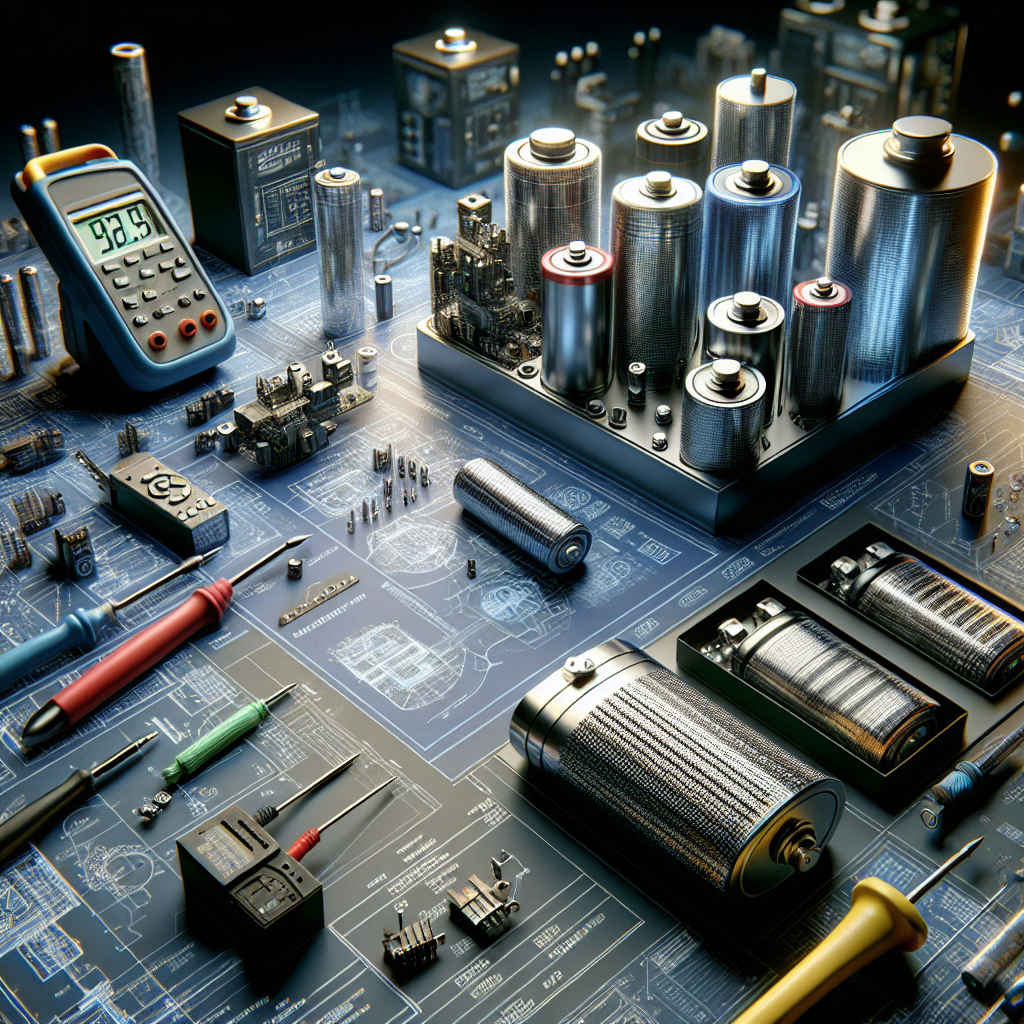
In the rapidly evolving field of Energy Systems in Engineering, advanced battery technologies have emerged as a cornerstone for sustainable energy solutions. These technologies are pivotal in addressing the global energy crisis, reducing carbon footprints, and enabling the transition to renewable energy sources. From electric vehicles (EVs) to grid storage and portable electronics, advanced batteries are integral to modern engineering applications. This article delves into the importance, fundamentals, historical development, applications, advanced topics, challenges, and future prospects of advanced battery technologies.
Fundamentals
Basic Principles and Concepts
At its core, a battery is an electrochemical device that converts chemical energy into electrical energy through redox reactions. The fundamental components of a battery include the anode, cathode, electrolyte, and separator. The anode undergoes oxidation, releasing electrons, while the cathode undergoes reduction, accepting electrons. The electrolyte facilitates the movement of ions between the anode and cathode, and the separator prevents direct contact between the two electrodes, avoiding short circuits.
Key Terms
- Energy Density: The amount of energy stored in a battery per unit volume or mass.
- Power Density: The rate at which energy can be delivered by the battery per unit volume or mass.
- Cycle Life: The number of complete charge-discharge cycles a battery can undergo before its capacity falls below a specified percentage of its original capacity.
- State of Charge (SoC): The current charge level of a battery relative to its capacity.
- Depth of Discharge (DoD): The percentage of the battery’s capacity that has been used.
Historical Development
Early Innovations
The history of battery technology dates back to the 18th century with the invention of the Leyden jar, an early form of a capacitor. However, the first true battery was developed by Alessandro Volta in 1800, known as the Voltaic Pile. This invention laid the groundwork for future advancements in electrochemical energy storage.
Key Milestones
- 1836: John Daniell invented the Daniell cell, which provided a more stable and reliable source of electrical energy.
- 1859: Gaston Planté developed the lead-acid battery, the first rechargeable battery, which is still in use today in various applications.
- 1899: Waldemar Jungner invented the nickel-cadmium (NiCd) battery, offering improved energy density and cycle life.
- 1980s: The development of lithium-ion (Li-ion) batteries by John B. Goodenough, Akira Yoshino, and others revolutionized portable electronics and electric vehicles.
Applications
Electric Vehicles (EVs)
One of the most significant applications of advanced battery technologies is in electric vehicles. Li-ion batteries, with their high energy density and long cycle life, have become the standard for EVs. Companies like Tesla, Nissan, and General Motors have leveraged these batteries to produce vehicles with extended ranges and reduced charging times. For instance, Tesla’s Model S uses a high-capacity Li-ion battery pack to achieve a range of over 370 miles on a single charge.
Grid Storage
Advanced batteries are also crucial for grid storage solutions, which help balance supply and demand in renewable energy systems. Technologies like flow batteries and solid-state batteries are being explored for their potential to store large amounts of energy efficiently. The Hornsdale Power Reserve in South Australia, powered by Tesla’s Li-ion batteries, is a prime example of how battery storage can stabilize the grid and provide backup power during outages.
Portable Electronics
From smartphones to laptops, advanced batteries have transformed the world of portable electronics. The high energy density and lightweight nature of Li-ion batteries make them ideal for these applications. Innovations in battery technology have led to longer-lasting devices, faster charging times, and improved safety features.
Advanced Topics
Solid-State Batteries
Solid-state batteries represent a significant advancement over traditional Li-ion batteries. They use a solid electrolyte instead of a liquid one, which enhances safety by reducing the risk of leaks and fires. Additionally, solid-state batteries offer higher energy densities and longer cycle lives. Companies like Toyota and QuantumScape are at the forefront of developing this technology, aiming to commercialize it within the next decade.
Flow Batteries
Flow batteries, such as vanadium redox flow batteries, are gaining attention for their scalability and long cycle life. These batteries store energy in liquid electrolytes contained in external tanks, allowing for easy scaling by increasing the tank size. Flow batteries are particularly suited for large-scale grid storage applications, where they can provide stable and reliable energy over extended periods.
Recent Research and Innovations
Recent research in advanced battery technologies focuses on improving energy density, reducing costs, and enhancing safety. Innovations such as silicon anodes, lithium-sulfur batteries, and advanced manufacturing techniques are being explored. For example, researchers at Stanford University have developed a lithium-sulfur battery with a high energy density and long cycle life, potentially offering a more sustainable and cost-effective alternative to Li-ion batteries.
Challenges and Considerations
Material Availability
The availability of raw materials, such as lithium, cobalt, and nickel, poses a significant challenge for the widespread adoption of advanced battery technologies. These materials are often sourced from regions with geopolitical instability, leading to supply chain vulnerabilities. Researchers are exploring alternative materials and recycling methods to mitigate these challenges.
Environmental Impact
The environmental impact of battery production and disposal is another critical consideration. The extraction of raw materials and the manufacturing process can have significant environmental consequences. Additionally, the disposal of used batteries poses a risk of soil and water contamination. Developing sustainable production methods and efficient recycling processes is essential to address these concerns.
Cost
The high cost of advanced batteries remains a barrier to their widespread adoption. While prices have been decreasing over the years, further cost reductions are necessary to make these technologies economically viable for various applications. Innovations in manufacturing processes and economies of scale are expected to drive down costs in the future.
Conclusion
Advanced battery technologies are at the forefront of the transition to sustainable energy systems. Their applications in electric vehicles, grid storage, and portable electronics highlight their importance in modern engineering. While challenges such as material availability, environmental impact, and cost remain, ongoing research and innovations offer promising solutions. As the field continues to evolve, advanced batteries will play a crucial role in shaping the future of energy systems in engineering, driving us towards a more sustainable and efficient world.