Life Cycle Assessment of Energy Systems
Introduction
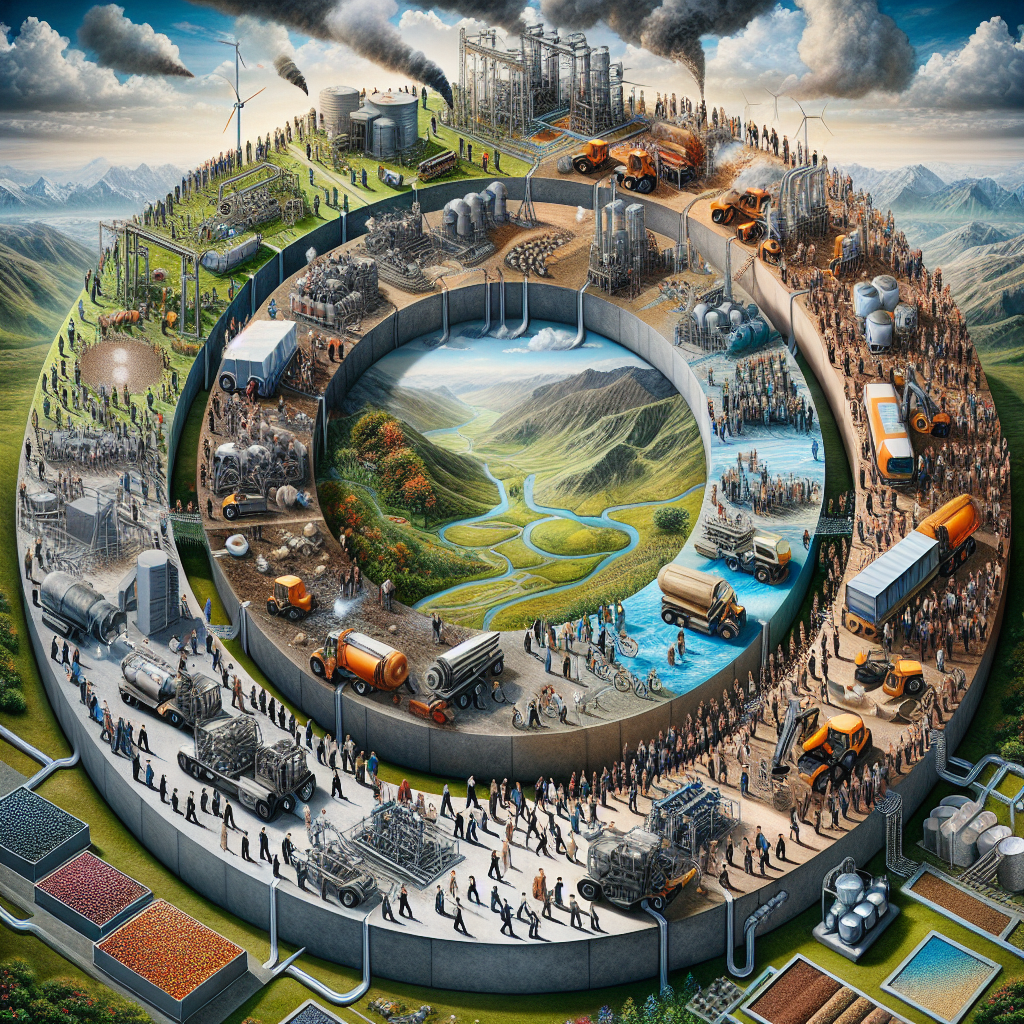
In the field of Energy Systems in Engineering, the concept of Life Cycle Assessment (LCA) has emerged as a critical tool for evaluating the environmental impacts of energy systems. LCA provides a comprehensive framework for assessing the environmental performance of energy systems from cradle to grave, encompassing all stages from raw material extraction to disposal. This holistic approach is essential for identifying and mitigating the environmental impacts associated with energy production, distribution, and consumption. The importance of LCA in engineering cannot be overstated, as it enables engineers and policymakers to make informed decisions that promote sustainability and reduce the ecological footprint of energy systems.
Fundamentals
Basic Principles and Concepts
Life Cycle Assessment (LCA) is a systematic method used to evaluate the environmental impacts of a product, process, or system throughout its entire life cycle. The life cycle stages typically include raw material extraction, manufacturing, transportation, use, and end-of-life disposal or recycling. The primary goal of LCA is to quantify the environmental burdens associated with each stage and identify opportunities for improvement.
Key Terms and Definitions
- Functional Unit: A measure of the function of the studied system, providing a reference to which the inputs and outputs are normalized.
- Life Cycle Inventory (LCI): The phase of LCA involving data collection and calculation procedures to quantify relevant inputs and outputs of a product system.
- Life Cycle Impact Assessment (LCIA): The phase of LCA aimed at understanding and evaluating the magnitude and significance of the potential environmental impacts of a product system.
- Cradle-to-Grave: An approach that considers the entire life cycle of a product, from raw material extraction (cradle) to disposal (grave).
- Cradle-to-Gate: An approach that considers the life cycle stages from raw material extraction to the factory gate, excluding the use and disposal phases.
Historical Development
The concept of Life Cycle Assessment has evolved significantly since its inception in the 1960s. The early development of LCA was driven by the need to understand the environmental impacts of products and processes in response to growing environmental concerns. One of the earliest applications of LCA was the “Coca-Cola Study” in 1969, which compared the environmental impacts of different beverage container options.
In the 1990s, LCA gained formal recognition with the establishment of standardized methodologies by organizations such as the International Organization for Standardization (ISO). The ISO 14040 series of standards provided a structured framework for conducting LCA, ensuring consistency and transparency in the assessment process. Notable figures such as Walter R. Stahel and Michael Braungart have made significant contributions to the development and popularization of LCA, advocating for circular economy principles and sustainable design.
Applications
Life Cycle Assessment has a wide range of applications across various industries and fields. In the energy sector, LCA is used to evaluate the environmental performance of different energy systems, including fossil fuels, nuclear power, and renewable energy sources such as wind, solar, and biomass. By comparing the life cycle impacts of these energy systems, LCA helps identify the most sustainable options and informs decision-making processes.
Case Studies
- Wind Energy: A study conducted by the National Renewable Energy Laboratory (NREL) assessed the life cycle impacts of wind energy systems. The study found that wind energy has significantly lower greenhouse gas emissions and environmental impacts compared to fossil fuel-based energy systems.
- Solar Photovoltaic (PV) Systems: An LCA study on solar PV systems revealed that the majority of environmental impacts occur during the manufacturing phase. However, the long-term benefits of solar PV, such as reduced greenhouse gas emissions during the use phase, outweigh the initial impacts.
- Bioenergy: LCA has been used to evaluate the sustainability of bioenergy systems, including biofuels and biomass power plants. These assessments consider factors such as land use change, water consumption, and greenhouse gas emissions to determine the overall environmental performance of bioenergy systems.
Advanced Topics
Recent Research and Innovations
Recent advancements in LCA methodologies and tools have enhanced the accuracy and comprehensiveness of environmental assessments. One notable innovation is the integration of dynamic LCA, which considers temporal variations in environmental impacts. This approach is particularly relevant for energy systems, where factors such as technological advancements and changes in energy demand can influence environmental performance over time.
Another emerging trend is the use of consequential LCA, which assesses the broader environmental consequences of changes in a product system. This approach goes beyond traditional attributional LCA by considering market dynamics, policy interventions, and indirect effects. Consequential LCA provides a more holistic understanding of the environmental impacts associated with energy systems and supports more informed decision-making.
Future Trends
The future of LCA in energy systems is likely to be shaped by advancements in data analytics, machine learning, and digitalization. These technologies can enhance the efficiency and accuracy of LCA by automating data collection, processing, and analysis. Additionally, the integration of LCA with other sustainability assessment tools, such as Life Cycle Costing (LCC) and Social Life Cycle Assessment (S-LCA), will provide a more comprehensive evaluation of energy systems, considering economic and social dimensions alongside environmental impacts.
Challenges and Considerations
Despite its many benefits, Life Cycle Assessment faces several challenges and limitations. One of the primary challenges is data availability and quality. Conducting a comprehensive LCA requires extensive data on material flows, energy consumption, emissions, and other environmental parameters. In many cases, this data may be incomplete, outdated, or inconsistent, leading to uncertainties in the assessment results.
Another consideration is the complexity and resource intensity of LCA. Conducting a detailed LCA can be time-consuming and require significant expertise and computational resources. Simplified LCA approaches, such as streamlined LCA or screening LCA, can help address this challenge by focusing on key life cycle stages and impact categories.
Additionally, the interpretation of LCA results can be challenging due to the inherent trade-offs between different environmental impacts. For example, a renewable energy system may have lower greenhouse gas emissions but higher resource consumption compared to a conventional energy system. Balancing these trade-offs requires careful consideration of the specific context and priorities of the assessment.
Conclusion
Life Cycle Assessment is a vital tool in the field of Energy Systems in Engineering, providing a comprehensive framework for evaluating the environmental impacts of energy systems from cradle to grave. By considering all life cycle stages and impact categories, LCA enables engineers and policymakers to make informed decisions that promote sustainability and reduce the ecological footprint of energy systems. The historical development of LCA, its wide range of applications, and recent advancements in methodologies and tools highlight its importance and relevance in the field. However, challenges such as data availability, complexity, and trade-offs must be carefully managed to ensure accurate and meaningful assessments. As the field continues to evolve, the integration of advanced technologies and holistic assessment approaches will further enhance the effectiveness of LCA in promoting sustainable energy systems.