Introduction to Structural Analysis
Introduction to Structural Analysis

Structural analysis is a fundamental aspect of civil and structural engineering, focusing on determining the effects of loads on physical structures and their components. This discipline is crucial for ensuring the safety, stability, and functionality of buildings, bridges, towers, and other structures. By understanding how structures respond to various forces, engineers can design and construct buildings that withstand environmental stresses, usage loads, and potential hazards. This article delves into the importance, principles, historical development, applications, advanced topics, challenges, and future trends in structural analysis.
Fundamentals
Basic Principles and Concepts
Structural analysis involves several key principles and concepts that form the foundation of the discipline:
- Load: Any force applied to a structure, including dead loads (permanent/static), live loads (temporary/dynamic), and environmental loads (wind, earthquake, snow).
- Stress: The internal force per unit area within a material, caused by external loads. It is typically measured in Pascals (Pa).
- Strain: The deformation or displacement of a material in response to stress, usually expressed as a dimensionless ratio.
- Equilibrium: A state where the sum of forces and moments acting on a structure is zero, ensuring stability.
- Compatibility: The requirement that deformations in a structure must be consistent and continuous.
- Material Properties: Characteristics of materials, such as elasticity, plasticity, and toughness, which influence their behavior under loads.
Theories and Key Terms
Several theories and key terms are essential in structural analysis:
- Elasticity Theory: Describes how materials deform and return to their original shape when loads are removed.
- Plasticity Theory: Explains how materials undergo permanent deformation when subjected to loads beyond their elastic limit.
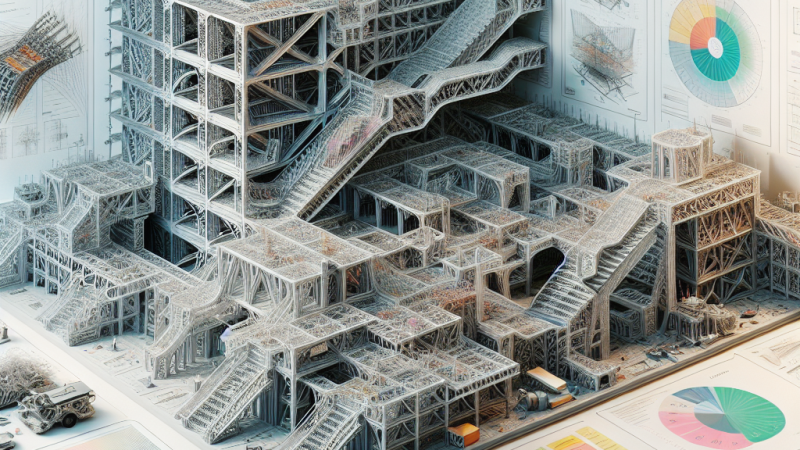
- Finite Element Method (FEM): A numerical technique for solving complex structural analysis problems by dividing structures into smaller, manageable elements.
- Beam Theory: Focuses on analyzing the behavior of beams under various loading conditions.
- Truss Analysis: Involves studying the forces in truss members, which are typically arranged in triangular units.
Historical Development
Early Beginnings
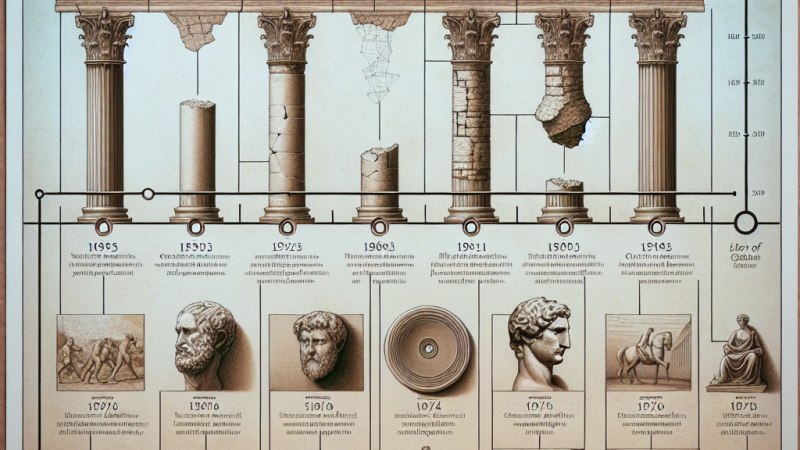
The history of structural analysis dates back to ancient civilizations, where rudimentary principles were applied in constructing monumental structures like the Pyramids of Egypt and the Parthenon in Greece. These early engineers relied on empirical knowledge and trial-and-error methods to achieve stability and durability.
Key Milestones
Several key milestones have shaped the development of structural analysis:
- 17th Century: The development of classical mechanics by Sir Isaac Newton laid the groundwork for understanding forces and motion.
- 18th Century: Leonhard Euler and Daniel Bernoulli made significant contributions to beam theory and the study of buckling.
- 19th Century: The advent of the Industrial Revolution spurred advancements in material science and structural engineering. Notable figures like Augustin-Louis Cauchy and Claude-Louis Navier developed theories of elasticity and stress analysis.
- 20th Century: The introduction of computers revolutionized structural analysis. The development of the Finite Element Method (FEM) by Richard Courant, Alexander Hrennikoff, and others enabled the analysis of complex structures with greater accuracy.
Applications
Construction Industry
Structural analysis is integral to the construction industry, ensuring the safety and stability of buildings, bridges, and other infrastructure. Engineers use structural analysis to design load-bearing elements, assess the impact of environmental forces, and optimize material usage. Examples include:
- Skyscrapers: Structural analysis ensures that tall buildings can withstand wind loads, seismic activity, and other forces.
- Bridges: Engineers analyze the forces acting on bridge components to ensure they can support traffic loads and resist environmental stresses.
Aerospace Industry
In the aerospace industry, structural analysis is crucial for designing aircraft and spacecraft that can endure aerodynamic forces, pressure differentials, and thermal stresses. Engineers use advanced techniques to analyze the structural integrity of wings, fuselages, and other components.
Automotive Industry
The automotive industry relies on structural analysis to design vehicles that are safe, durable, and efficient. Engineers analyze the impact of collisions, vibrations, and other forces on vehicle frames and components to enhance safety and performance.
Case Studies
Several notable case studies highlight the importance of structural analysis:
- Burj Khalifa: The world’s tallest building, Burj Khalifa in Dubai, required extensive structural analysis to ensure stability under wind loads and seismic activity.
- Millau Viaduct: This cable-stayed bridge in France, one of the tallest in the world, involved complex structural analysis to address wind forces and load distribution.
Advanced Topics
Nonlinear Analysis
Nonlinear analysis considers the nonlinear behavior of materials and structures under large deformations and complex loading conditions. This approach is essential for accurately predicting the performance of structures subjected to extreme forces.
Dynamic Analysis
Dynamic analysis examines the response of structures to time-varying loads, such as earthquakes, wind gusts, and vibrations. Techniques like modal analysis and time-history analysis are used to assess dynamic behavior and design structures that can withstand dynamic forces.
Recent Research and Innovations
Recent research in structural analysis focuses on developing more accurate models, improving computational methods, and exploring new materials. Innovations include:
- Advanced FEM Techniques: Enhancements in finite element methods enable more precise simulations of complex structures.
- Smart Materials: The use of materials with adaptive properties, such as shape memory alloys and piezoelectric materials, for improved structural performance.
- Machine Learning: Applying machine learning algorithms to predict structural behavior and optimize designs.
Challenges and Considerations
Complexity and Computational Resources
Structural analysis of large and complex structures requires significant computational resources and expertise. Ensuring accuracy while managing computational costs is a key challenge.
Material Uncertainties
Variations in material properties and behavior under different conditions can introduce uncertainties in structural analysis. Accurate material characterization and modeling are essential for reliable predictions.
Environmental Factors
Environmental factors, such as temperature changes, corrosion, and fatigue, can affect the long-term performance of structures. Engineers must consider these factors in their analyses and designs.
Potential Solutions
Addressing these challenges involves:
- Advanced Modeling Techniques: Developing more accurate and efficient modeling techniques to handle complex structures and loading conditions.
- Material Research: Conducting research to better understand material behavior and develop new materials with improved properties.
- Interdisciplinary Collaboration: Collaborating with experts in materials science, computer science, and other fields to address multifaceted challenges.
Conclusion
Structural analysis is a vital discipline in engineering, ensuring the safety, stability, and functionality of structures across various industries. From its historical roots to modern advancements, structural analysis has evolved significantly, driven by technological innovations and a deeper understanding of material behavior. Despite challenges, ongoing research and interdisciplinary collaboration continue to push the boundaries of what is possible in structural analysis. As we look to the future, the importance of structural analysis in engineering remains paramount, underpinning the design and construction of resilient, efficient, and sustainable structures.