Heat Treatment of Metals
Introduction
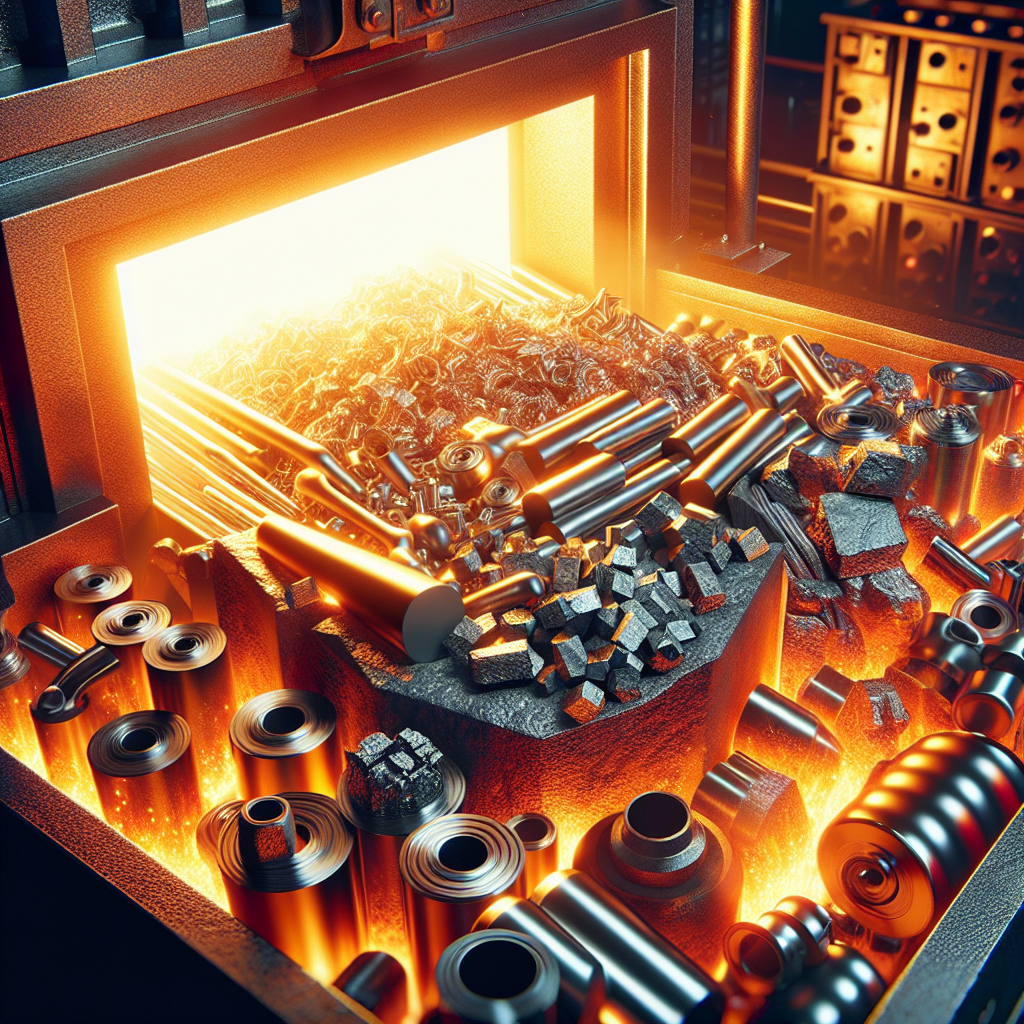
Heat treatment of metals is a critical process in the field of Material Science and Engineering, playing a pivotal role in enhancing the mechanical properties, durability, and performance of metallic materials. This process involves controlled heating and cooling of metals to alter their physical and sometimes chemical properties without changing their shapes. The importance of heat treatment cannot be overstated, as it is essential in manufacturing, automotive, aerospace, construction, and many other industries. By understanding and applying the principles of heat treatment, engineers can tailor the properties of metals to meet specific requirements, thereby optimizing their performance in various applications.
Fundamentals
Basic Principles and Concepts
Heat treatment encompasses a variety of processes designed to modify the microstructure of metals to achieve desired mechanical properties such as hardness, strength, ductility, and toughness. The fundamental principles of heat treatment involve three main stages: heating, soaking, and cooling.
- Heating: The metal is heated to a specific temperature where its microstructure changes. This temperature varies depending on the type of metal and the desired properties.
- Soaking: The metal is held at the target temperature for a certain period to ensure uniform temperature throughout the material.
- Cooling: The metal is cooled at a controlled rate to achieve the desired microstructure and properties. The cooling rate can significantly affect the final properties of the metal.
Key Terms
- Austenitizing: Heating a ferrous alloy to a temperature where it transforms into austenite.
- Quenching: Rapid cooling of a metal, usually in water, oil, or air, to lock in a specific microstructure.
- Tempering: Reheating a quenched metal to a lower temperature to reduce brittleness and increase toughness.
- Annealing: Heating a metal to a specific temperature and then slowly cooling it to remove internal stresses and improve ductility.
- Normalizing: Heating a metal to a temperature above its critical point and then air cooling it to refine its grain structure.
Historical Development
The history of heat treatment dates back to ancient civilizations, where blacksmiths intuitively used fire to harden and temper tools and weapons. However, the scientific understanding of heat treatment began to develop in the 19th century with the advent of modern metallurgy.
Key Milestones
- 1868: Robert Forester Mushet discovered the hardening effect of quenching steel in water, leading to the development of high-speed steel.
- 1911: The introduction of the iron-carbon phase diagram by Henry Marion Howe provided a scientific basis for understanding the transformations occurring during heat treatment.
- 1920s: The development of controlled atmosphere furnaces allowed for more precise control of heat treatment processes.
- 1940s: The advent of vacuum heat treatment technology enabled the treatment of metals without oxidation or contamination.
Notable Figures
- Henry Marion Howe: An American metallurgist who made significant contributions to the understanding of the iron-carbon phase diagram.
- Robert Forester Mushet: A British metallurgist known for his work on the development of high-speed steel.
- Albert Sauveur: A pioneer in the field of metallography and heat treatment, known for his work on the microstructure of steel.
Applications
Heat treatment is employed across various industries to enhance the properties of metals for specific applications. Below are some notable examples:
Automotive Industry
In the automotive industry, heat treatment is used to improve the strength, hardness, and wear resistance of components such as gears, crankshafts, and camshafts. Case hardening processes like carburizing and nitriding are commonly used to create a hard surface layer while maintaining a tough core.
Aerospace Industry
The aerospace industry relies on heat treatment to enhance the performance of critical components such as turbine blades, landing gear, and structural parts. Processes like solution heat treatment and precipitation hardening are used to achieve the required strength and fatigue resistance.
Manufacturing Industry
In manufacturing, heat treatment is applied to tools and dies to improve their wear resistance and extend their service life. Processes like induction hardening and flame hardening are used to selectively harden specific areas of a component.
Construction Industry
Heat treatment is used in the construction industry to improve the properties of structural steel, making it suitable for use in buildings, bridges, and other infrastructure projects. Normalizing and annealing processes are commonly used to refine the grain structure and enhance the toughness of steel.
Advanced Topics
Recent Research and Innovations
Recent advancements in heat treatment technology have focused on improving process efficiency, reducing energy consumption, and enhancing the properties of treated metals. Some notable innovations include:
- Laser Heat Treatment: Using laser beams to selectively heat and harden specific areas of a component with high precision.
- Induction Heat Treatment: Employing electromagnetic induction to heat metals rapidly and uniformly, allowing for precise control of the process.
- Nanostructured Materials: Developing heat treatment processes to create nanostructured metals with superior mechanical properties.
Future Trends
The future of heat treatment is likely to be shaped by advancements in digital technologies and materials science. Some emerging trends include:
- Industry 4.0: Integrating digital technologies such as IoT, AI, and machine learning to optimize heat treatment processes and improve quality control.
- Green Heat Treatment: Developing environmentally friendly heat treatment processes that reduce energy consumption and minimize emissions.
- Advanced Alloys: Creating new alloys with tailored properties through innovative heat treatment techniques.
Challenges and Considerations
Despite its numerous benefits, heat treatment also presents several challenges and considerations that must be addressed to ensure optimal results.
Challenges
- Distortion and Cracking: Rapid cooling during quenching can cause distortion and cracking in metals, leading to defects and reduced performance.
- Energy Consumption: Heat treatment processes can be energy-intensive, contributing to high operational costs and environmental impact.
- Process Control: Achieving precise control over temperature, time, and cooling rates is critical to ensuring consistent and reliable results.
Potential Solutions
- Advanced Monitoring Systems: Implementing advanced monitoring and control systems to ensure precise control of heat treatment parameters.
- Energy-Efficient Technologies: Developing and adopting energy-efficient heat treatment technologies to reduce energy consumption and environmental impact.
- Research and Development: Investing in research and development to address challenges and develop innovative solutions for improving heat treatment processes.
Conclusion
Heat treatment of metals is a fundamental process in Material Science and Engineering, essential for enhancing the mechanical properties and performance of metallic materials. By understanding the principles, historical development, and practical applications of heat treatment, engineers can optimize the properties of metals for various industrial applications. Despite the challenges associated with heat treatment, ongoing research and technological advancements continue to drive innovation in this field. As we look to the future, the integration of digital technologies and the development of environmentally friendly processes will play a crucial role in shaping the future of heat treatment, ensuring its continued relevance and importance in the field of Material Science and Engineering.