Control Systems: Open Loop vs. Closed Loop
Introduction
In the field of engineering, control systems play a pivotal role in ensuring that various processes and systems operate efficiently and effectively. Control systems are integral to numerous applications, from industrial automation to aerospace engineering, and they are essential for maintaining desired performance levels in dynamic environments. This article delves into the fundamental concepts of control systems, focusing on the distinction between open-loop and closed-loop systems. Understanding these concepts is crucial for engineers and practitioners who design, analyze, and implement control systems in various industries.
Fundamentals
Basic Principles and Concepts
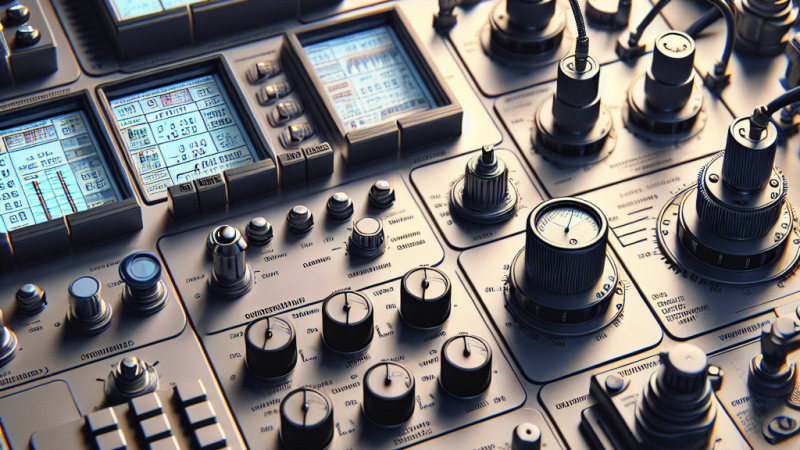
At its core, a control system is a set of devices or mechanisms that manage, command, direct, or regulate the behavior of other devices or systems. The primary objective of a control system is to achieve a desired output or performance by manipulating inputs based on feedback or predefined instructions.
Definitions
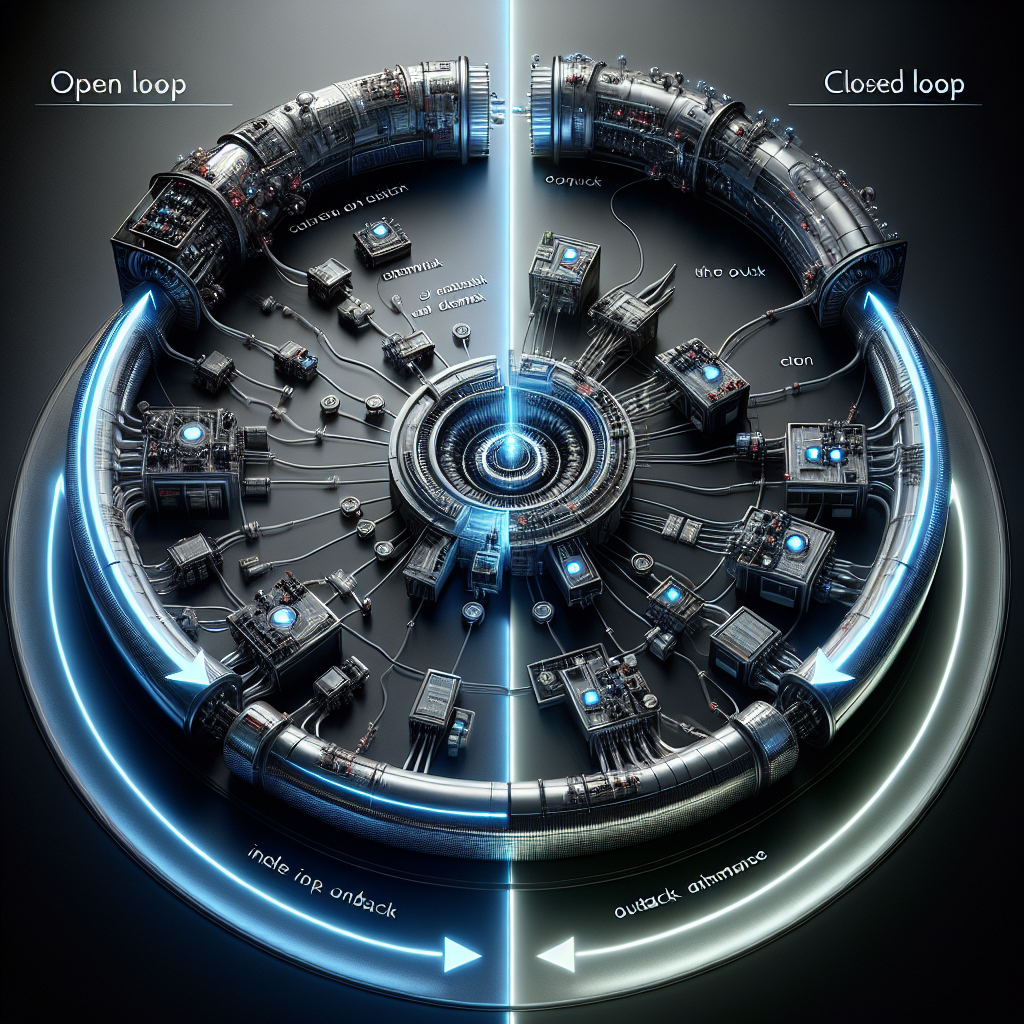
- Open-Loop Control System: An open-loop control system is one in which the control action is independent of the output. In other words, the system does not use feedback to adjust its input based on the output. An example of an open-loop system is a washing machine that runs for a set time regardless of the cleanliness of the clothes.
- Closed-Loop Control System: A closed-loop control system, also known as a feedback control system, uses feedback to compare the actual output with the desired output. The system then adjusts its input to minimize the difference between the actual and desired outputs. A common example is a thermostat-controlled heating system that adjusts the heat output based on the room temperature.
Theories and Key Terms
- Feedback: The process of using the output of a system to influence its input to achieve the desired result.
- Setpoint: The desired value or target that a control system aims to achieve.
- Controller: A device or algorithm that determines the necessary input to achieve the desired output based on feedback.
- Actuator: A component that converts the control signal into physical action to influence the system’s output.
- Sensor: A device that measures the output or state of the system and provides feedback to the controller.
Historical Development
The development of control systems has a rich history, with significant contributions from various scientists and engineers over the centuries. The evolution of control systems can be traced back to ancient times, but notable advancements occurred during the Industrial Revolution and the 20th century.
Key Milestones
- Ancient Times: Early examples of control systems include the water clock invented by the Greeks and the float valve mechanism used in ancient Egypt to regulate water levels.
- 18th Century: James Watt’s invention of the centrifugal governor for steam engines marked a significant advancement in feedback control systems. The governor automatically adjusted the engine’s speed by regulating the steam input based on the engine’s output speed.
- 20th Century: The development of modern control theory was greatly influenced by the work of engineers such as Norbert Wiener, who introduced the concept of cybernetics, and Harold S. Black, who invented the negative feedback amplifier. The advent of digital computers further revolutionized control systems, enabling more complex and precise control algorithms.
Applications
Control systems are ubiquitous in modern engineering and have a wide range of applications across various industries. Here are some notable examples:
Industrial Automation
In manufacturing and process industries, control systems are used to automate production lines, regulate chemical processes, and ensure product quality. Programmable logic controllers (PLCs) and distributed control systems (DCS) are commonly used to manage these operations.
Aerospace Engineering
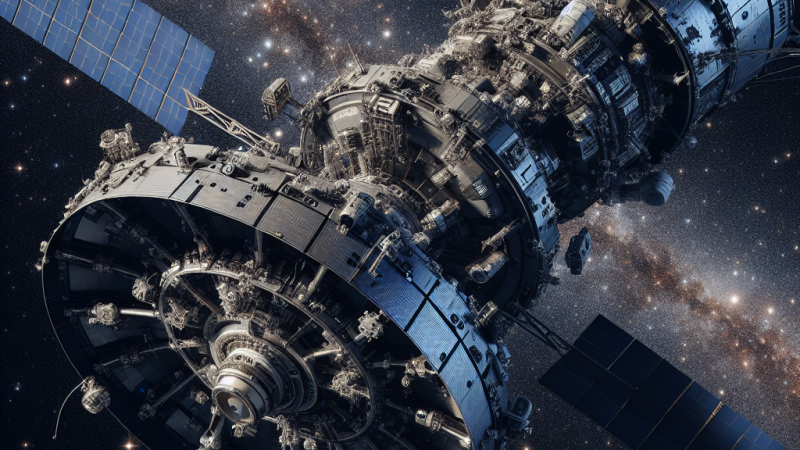
Control systems are critical in aerospace engineering for applications such as flight control, navigation, and stability. Autopilot systems in aircraft use closed-loop control to maintain altitude, speed, and course by continuously adjusting control surfaces based on sensor feedback.
Automotive Industry
Modern vehicles are equipped with numerous control systems, including engine control units (ECUs), anti-lock braking systems (ABS), and adaptive cruise control (ACC). These systems enhance vehicle performance, safety, and fuel efficiency by continuously monitoring and adjusting various parameters.
Robotics
Robotic systems rely heavily on control systems to perform tasks with precision and accuracy. Feedback control is used to manage the movement of robotic arms, ensure stability, and adapt to changing environments.
Case Study: HVAC Systems
Heating, ventilation, and air conditioning (HVAC) systems use closed-loop control to maintain comfortable indoor temperatures. Thermostats measure the room temperature and adjust the heating or cooling output to achieve the desired setpoint. This ensures energy efficiency and occupant comfort.
Advanced Topics
Adaptive Control
Adaptive control is an advanced technique where the control system can adjust its parameters in real-time to adapt to changing conditions or uncertainties in the system. This is particularly useful in applications where the system dynamics are not well-known or vary over time.
Model Predictive Control (MPC)
MPC is a sophisticated control strategy that uses a mathematical model of the system to predict future behavior and optimize control actions. MPC is widely used in process industries, automotive applications, and advanced robotics due to its ability to handle multivariable systems and constraints.
Recent Research and Innovations
Recent advancements in control systems research include the integration of artificial intelligence (AI) and machine learning (ML) techniques. These approaches enable control systems to learn from data, improve performance over time, and handle complex, nonlinear systems. Additionally, the development of Internet of Things (IoT) technologies has led to the emergence of smart control systems that can communicate and coordinate with other devices in real-time.
Challenges and Considerations
Challenges
- System Complexity: As control systems become more advanced, their complexity increases, making design, analysis, and implementation more challenging.
- Uncertainty and Disturbances: Real-world systems often face uncertainties and external disturbances that can affect performance. Designing robust control systems that can handle these challenges is a critical area of research.
- Cost and Scalability: Implementing advanced control systems can be costly, and scalability can be an issue, especially in large-scale industrial applications.
Considerations
- System Identification: Accurate modeling of the system is essential for effective control. Engineers must invest time and resources in system identification and parameter estimation.
- Safety and Reliability: Control systems must be designed with safety and reliability in mind, especially in critical applications such as aerospace and healthcare.
- Human-Machine Interaction: The interface between human operators and control systems should be intuitive and user-friendly to ensure effective monitoring and intervention when necessary.
Potential Solutions and Future Research
To address these challenges, ongoing research focuses on developing more robust and adaptive control algorithms, improving system identification techniques, and leveraging AI and ML for enhanced performance. Additionally, advancements in sensor technology and communication networks are expected to further enhance the capabilities of control systems.
Conclusion
Control systems, whether open-loop or closed-loop, are fundamental to the field of dynamics and control in engineering. They enable precise regulation of processes and systems across various industries, ensuring efficiency, safety, and performance. Understanding the principles, historical development, applications, and advanced concepts of control systems is essential for engineers and practitioners. As technology continues to evolve, control systems will play an increasingly vital role in shaping the future of engineering and automation. By addressing current challenges and embracing innovative solutions, the field of control systems will continue to advance, driving progress and innovation in numerous domains.