Dynamics and Control of UAVs
Introduction
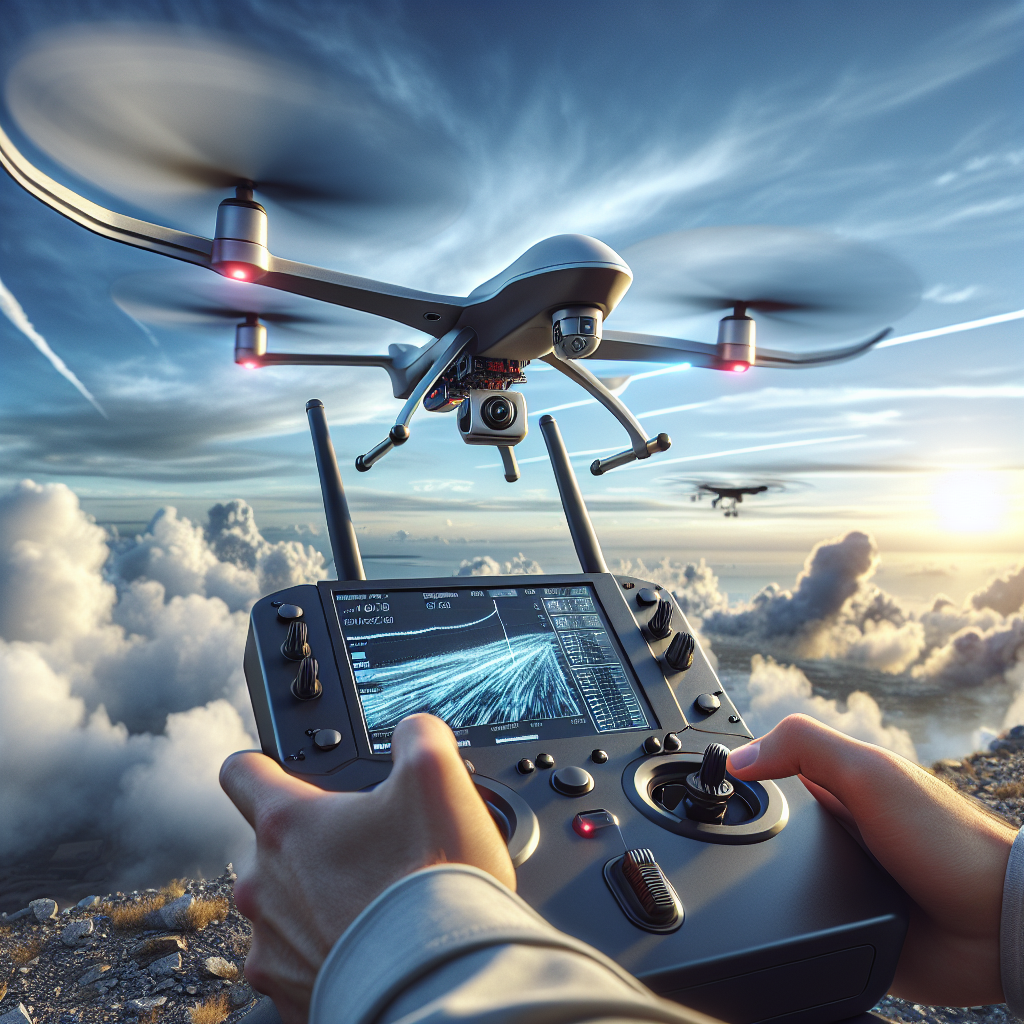
Unmanned Aerial Vehicles (UAVs), commonly known as drones, have revolutionized various sectors, from military operations to commercial applications. The dynamics and control of UAVs are critical areas of study within the field of Dynamics and Control in Engineering. Understanding these aspects is essential for the design, stability, and functionality of UAVs. This article delves into the importance, principles, historical development, applications, advanced topics, challenges, and future trends in the dynamics and control of UAVs.
Fundamentals
Basic Principles and Concepts
The dynamics of UAVs involve the study of forces and torques that affect their motion. This includes understanding the equations of motion, which are derived from Newton’s laws of motion. The control aspect focuses on how to manipulate these forces and torques to achieve desired flight behaviors.
Key Terms
- Attitude: The orientation of the UAV in three-dimensional space.
- Stability: The ability of the UAV to maintain its flight path or return to it after a disturbance.
- Control System: A system that manages the UAV’s flight parameters, such as altitude, speed, and direction.
- Autopilot: An automated system that controls the UAV without human intervention.
Theories
Several theories underpin the dynamics and control of UAVs:
- Linear Control Theory: Focuses on linear systems and uses techniques like PID (Proportional-Integral-Derivative) control.
- Nonlinear Control Theory: Deals with systems that exhibit nonlinear behavior, often requiring more complex control strategies.
- Adaptive Control: Adjusts control parameters in real-time to cope with changing conditions.
- Robust Control: Ensures system performance under uncertain conditions and disturbances.
Historical Development
The development of UAVs dates back to the early 20th century. The first significant milestone was the creation of the Kettering Bug in 1918, an early cruise missile used during World War I. However, it wasn’t until the late 20th century that UAV technology saw substantial advancements.
Key Milestones
- 1940s: Development of radio-controlled aircraft for military training.
- 1960s: Introduction of the Firebee, a target drone used by the U.S. military.
- 1980s: Emergence of the Predator drone, which became a cornerstone of modern UAV technology.
- 2000s: Rapid advancements in miniaturization, sensors, and control systems, leading to the proliferation of commercial drones.
Notable Figures
- Abraham Karem: Known as the “father of the Predator drone,” Karem’s work significantly advanced UAV technology.
- Reginald Denny: A pioneer in radio-controlled aircraft, Denny’s contributions laid the groundwork for modern UAVs.
Applications
UAVs have found applications in various industries, demonstrating their versatility and utility.
Military
UAVs are extensively used for surveillance, reconnaissance, and combat missions. Their ability to operate in hostile environments without risking human lives makes them invaluable assets.
Agriculture
Drones equipped with multispectral sensors are used for crop monitoring, irrigation management, and pesticide application. This precision agriculture approach enhances yield and reduces resource usage.
Delivery Services
Companies like Amazon and UPS are exploring drone delivery systems to expedite shipping and reduce costs. UAVs can deliver packages to remote or hard-to-reach areas efficiently.
Environmental Monitoring
Drones are used for wildlife monitoring, forest management, and disaster response. They provide real-time data and high-resolution imagery, aiding in conservation efforts and emergency management.
Case Studies
- Amazon Prime Air: A project aimed at using drones for package delivery within 30 minutes of ordering.
- PrecisionHawk: A company that uses UAVs for agricultural data collection and analysis, helping farmers optimize their operations.
Advanced Topics
Recent Research and Innovations
Recent advancements in UAV technology focus on enhancing autonomy, improving sensor integration, and developing more efficient propulsion systems.
- Swarm Intelligence: Research is being conducted on how multiple UAVs can work together autonomously to complete complex tasks.
- Machine Learning: Integrating AI and machine learning algorithms to improve decision-making and adaptability in real-time.
- Hybrid UAVs: Combining the features of fixed-wing and rotary-wing drones to achieve better performance and versatility.
Future Trends
The future of UAVs looks promising, with several trends emerging:
- Urban Air Mobility (UAM): The development of air taxis and other urban transport solutions using UAV technology.
- Regulatory Frameworks: Establishing comprehensive regulations to ensure safe and efficient UAV operations.
- Energy Efficiency: Innovations in battery technology and alternative energy sources to extend flight times and reduce environmental impact.
Challenges and Considerations
Technical Challenges
Despite the advancements, several technical challenges remain:
- Battery Life: Limited battery capacity restricts flight time and range.
- Collision Avoidance: Ensuring UAVs can detect and avoid obstacles in real-time.
- Weather Conditions: Adverse weather can significantly impact UAV performance and safety.
Regulatory and Ethical Considerations
The widespread use of UAVs raises several regulatory and ethical issues:
- Privacy: Concerns about surveillance and data collection by drones.
- Airspace Management: Integrating UAVs into existing air traffic control systems.
- Security: Preventing unauthorized use and potential misuse of UAV technology.
Potential Solutions
Addressing these challenges requires a multi-faceted approach:
- Research and Development: Continued investment in R&D to overcome technical limitations.
- Regulatory Frameworks: Developing comprehensive regulations to ensure safe and ethical UAV operations.
- Public Awareness: Educating the public about the benefits and risks associated with UAVs.
Conclusion
The dynamics and control of UAVs are pivotal in unlocking the full potential of this transformative technology. From military applications to commercial uses, UAVs are reshaping various industries. While significant advancements have been made, challenges remain that require ongoing research and innovation. As we look to the future, the continued development of UAV technology promises to bring even more exciting possibilities, making it an essential area of study in the field of Dynamics and Control in Engineering.