Thermodynamics A Heat Transfer Approach to Mechanical Engineering
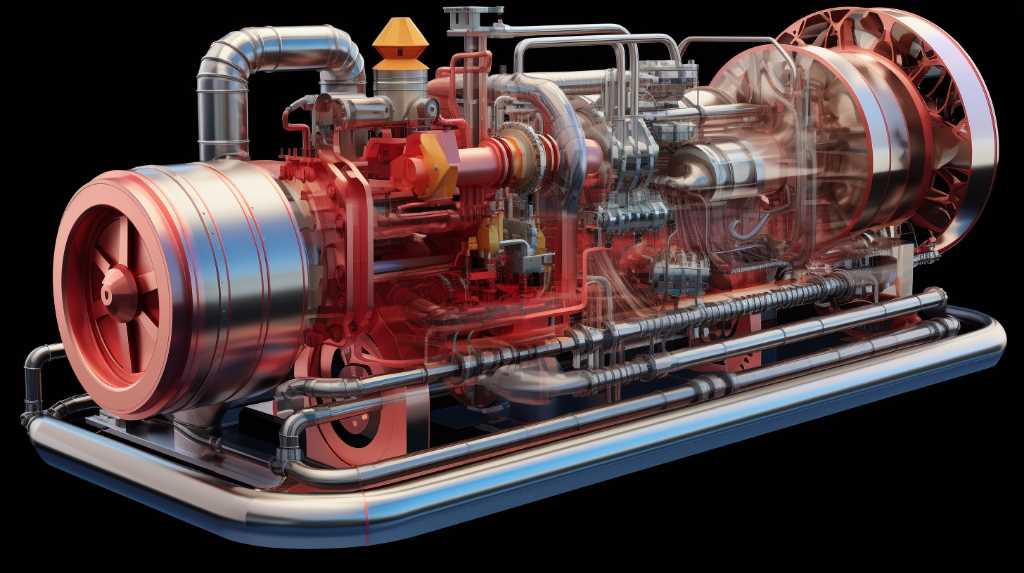
Thermodynamics is a crucial part of mechanical engineering that looks at how energy changes and how heat moves. Focusing on how heat is transferred, this subject helps engineers understand how thermal energy works together in machines and systems, making them run better. It teaches the basic ideas of thermodynamics, giving engineers the skills to check and improve how energy is used in systems.
Learning about the basics of heat transfer – like how heat moves through solids (conduction), how it moves in fluids (convection), and how it travels as light or electromagnetic waves (radiation) – is key to coming up with new and better ways to use in machines.
Understanding heat transfer is also really important because it helps save money and protects the environment. Finding ways to use energy more efficiently is becoming more and more important. Growing our knowledge in thermodynamics means we can make mechanical engineering more sustainable and keep coming up with new technologies.
For example, using insulation materials that reduce heat loss can make buildings more energy-efficient. Or, in car design, improving the aerodynamics can help save fuel by reducing drag. These are just a couple of ways that a deep understanding of heat transfer can lead to smarter and greener solutions in mechanical engineering.
Understanding Core Principles
Mechanical engineers dig deep into the basic rules of thermodynamics to understand how heat moves and how energy changes from one form to another. These rules are key to figuring out the best way to make machines and processes, both in nature and ones we’ve created, work efficiently.
The first big rule is about saving energy: it tells us that energy can’t just appear or vanish; it always changes into another type of energy. This is super important when we look at a system where energy is being swapped around because we need to keep track of all the energy coming in and going out very carefully.
The second rule brings in the idea of entropy, which is basically a fancy word for messiness that tends to increase as time goes on. Entropy affects how heat moves and puts a limit on how well we can turn energy from one form into another without losing some of it.
Knowing about these rules helps engineers design and improve all sorts of mechanical systems and processes in a smart way. They make sure to use these principles to guide their work, aiming to create technology that’s as effective as possible within the boundaries set by these natural laws.
Heat Transfer Fundamentals
Heat transfer is a key part of thermodynamics and it’s very important in mechanical engineering. It’s about moving heat and involves three main ways: conduction, convection, and radiation.
Conduction is when heat moves through or between objects that are touching because one part is hotter than the other, and this is explained by something called Fourier’s law.
Convection is when heat goes along with the flow of liquids or gases, which can be helped by things like fans or pumps.
Radiation is different because it sends out heat as invisible waves that don’t need anything to travel through; this is measured by the Stefan-Boltzmann law.
Engineers need to understand these methods really well to make sure things like engines and buildings don’t overheat and work as they should.
For example, in a car engine, engineers use conduction principles to design parts that transfer heat effectively to avoid overheating. They might recommend materials like copper or aluminum for parts that need to conduct heat well.
For convection, they might design a cooling system with a fan to keep the engine at a safe temperature.
And for radiation, they consider how heat is emitted from the engine and might use insulation to manage it. All of this helps cars run smoothly and safely.
Applications in Mechanical Design
In the field of mechanical design, engineers often use knowledge of how heat moves to make sure machines and parts handle heat well. This is important because it helps the machinery run at a safe temperature, which makes it work better and last longer.
Take the design of heat exchangers, for example. These are crucial in power plants and cooling systems. Engineers have to be very careful when they work out how heat moves through materials — this is done by looking at heat going through solids, moving with fluids, and traveling as light. These careful calculations help them choose the best materials and shapes to move heat effectively without losing any that they don’t want to lose.
In the car industry, keeping engines at the right temperature is key. Designers plan out cooling systems that may use advanced computer programs to predict and manage where heat goes. These examples show just how important it is to understand heat movement in designing mechanical systems.
Energy Efficiency Strategies
Engineers who work on machines and systems aim to make them use less energy while still doing their jobs well. They carefully examine how heat moves and is used in a system, choosing the best materials and planning the energy flow. To keep heat from being wasted through conduction (heat moving through solid materials), convection (heat moving through liquids or gases), and radiation (heat traveling as electromagnetic waves), they use parts that work very efficiently and insulate with advanced materials.
For systems that have changing workloads, techniques like reusing wasted heat, producing electricity and heat at the same time (cogeneration), and using motors that can change speed help make the most of the energy used. It’s also crucial to keep an eye on the system and adjust it in real-time to ensure it runs at its best, which saves energy.
Saving energy is important not just to cut costs but also to address the problem of how energy use affects the environment. For instance, using a smart thermostat in your home can help manage heating and cooling, which saves energy and money. It’s like giving your home’s heating and cooling system a brain that knows when to turn on and off based on when you’re home or away.
Future of Engineering Thermodynamics
In the exciting world of engineering thermodynamics, scientists are finding new ways to make energy systems better. They’re using tiny technologies to control heat better, which could make things like radiators and insulating materials more effective.
At the same time, powerful computer tools are helping us understand complicated energy systems, leading to smarter designs that use less energy.
Integrating thermodynamics with cutting-edge artificial intelligence and machine learning could lead to systems that adjust themselves to save energy. This means they could change how they operate to handle heat without wasting energy.
These advances are crucial for creating a sustainable future and reducing the harmful carbon emissions that affect our planet.
Conclusion
To wrap it up, when mechanical engineers use the rules of thermodynamics and how heat moves, they make designs that work better and use less energy. It’s very important for them to carefully apply this knowledge to create new and lasting systems.
Engineering is always changing, and engineers need to keep up with new tools and ways of doing things. This helps make heating and cooling processes better, and it’s a big part of how engineering makes a difference in solving today’s energy problems.