The Frontiers of Research in Mechanical Engineering
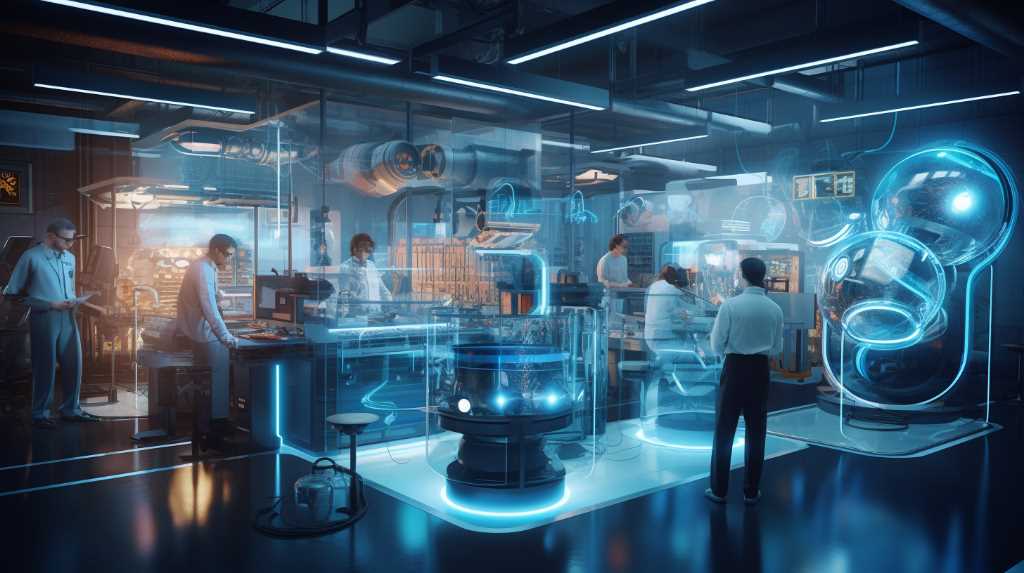
Mechanical engineering is a key field driving progress in technology and it’s always changing with new research and breakthroughs. For example, tiny tech or nanotechnology is making materials stronger and lighter than ever before, which is a big deal for everything from sports equipment to airplanes.
In healthcare, engineers are making better artificial limbs and tools to find diseases earlier, which helps people live better lives. Mechanical systems are also getting smarter because we’re adding artificial intelligence (AI) to them, so they can improve as they go.
Energy is a big topic too, and engineers are working hard to make sure we can power our lives using energy from the sun or wind rather than oil or coal. Lastly, the space industry is buzzing with new types of spaceships and engines that could take us further into the cosmos.
Every one of these areas shows just how exciting and game-changing mechanical engineering research can be.
Advancements in Nanotechnology
Nanotechnology is changing the game in mechanical engineering, with five key breakthroughs making a big impact.
For starters, we’ve got carbon nanotubes. These tiny structures are super strong yet lightweight, which is a game-changer for building materials.
Then there are quantum dots, which are tiny particles that are making big waves in electronics and medical imaging because of their ability to manipulate light in new ways.
Another huge step forward is the making of transistors so small, they’re pushing the limits of how tiny and powerful our electronic devices can get. This keeps our gadgets getting smaller and faster, just when it seemed like they couldn’t get any better.
We’ve also created nanoporous materials, which have tiny holes that can filter substances or speed up chemical reactions, useful for things like making water clean or creating medicines.
The last piece of the puzzle is atomic layer deposition, a fancy way of saying we can now coat things with super-thin layers for high-tech uses, like making solar panels or electronics even more efficient.
These advances are all about doing more with less, building from the ground up, atom by atom. It’s like having a construction kit for the molecular world, and it’s opening doors we didn’t even know were there.
Progress in Biomechanical Engineering
Biomechanical engineering is a field where biology and mechanics combine to create amazing new health solutions and ways for humans and machines to work together. Researchers from different fields like material science, sensor tech, and computing are working together to make artificial limbs (prosthetics) work better and feel more like real ones. They’re also making special materials that live cells can grow on, which is important for fixing or replacing damaged tissues. Plus, by studying how people move, they’re making devices that help people move in a way that feels natural. All this work is leading to medical tools and treatments designed for each person, based on a really deep understanding of how living bodies and mechanical parts interact.
For example, a new prosthetic arm might use sensors that can tell how the user wants to move it, thanks to advances in sensor tech. And for someone with a knee injury, tissue engineers could create a scaffold that helps their own cells rebuild the damaged area. This isn’t just about fixing problems; it’s about making solutions that fit each person’s unique needs, which could mean less pain and a better quality of life for many.
It’s pretty cool how different types of science and technology are coming together to push healthcare forward in this way.
Integration of Artificial Intelligence
In the field of mechanical engineering, the introduction of artificial intelligence is creating big changes. Machines are now starting to understand, learn, and react to their surroundings in new ways. This isn’t just a small upgrade—it’s a complete overhaul that uses AI to predict outcomes, learn over time, and even think in a way that boosts what machines can do. By combining AI with mechanical engineering, we’re seeing cool new developments in robots, better maintenance that can predict problems before they happen, and smarter ways to manufacture products.
Experts are carefully looking at what happens when you mix AI with mechanical systems. They’re thinking about questions like how machines make decisions on their own, the moral implications of machines that can ‘think,’ and whether we can rely on machines that use AI to operate. This mix of different fields is pushing the boundaries of what we can do in mechanical engineering, leading to new discoveries and tech advancements.
For instance, in robotics, this blend of AI and mechanics is creating robots that can adapt to their tasks and surroundings, making them more useful in a variety of settings, from factories to hospitals. In terms of maintenance, AI helps predict when a machine will need repairs, saving time and money. And in manufacturing, smart systems can optimize the production process, ensuring better quality and efficiency.
This is why the integration of AI into mechanical engineering is so important—it’s changing the game entirely.
Sustainable Energy Solutions
Mechanical engineering research is increasingly focusing on the development of sustainable energy solutions to address global environmental challenges. This strategic pivot is manifest in the pursuit of advanced materials and technologies that facilitate efficient energy conversion, storage, and utilization.
Scholars are delving into the thermodynamic and material properties of renewable energy systems, aiming to optimize the performance and reduce the carbon footprint of wind, solar, and tidal power sources. The integration of computational fluid dynamics (CFD) and finite element analysis (FEA) is critical in designing systems that maximize energy capture and minimize structural and environmental impacts.
The research is also exploring the scalability of bio-inspired energy systems and the potential for harnessing energy from organic and waste sources, contributing to a circular economy.
Innovations in Aerospace Engineering
In the field of aerospace engineering, a lot of research is focused on making planes and spacecraft better and safer. Experts are creating new lightweight materials that are still strong, which helps planes and spacecraft use less fuel and carry more. At the same time, they’re working on new types of engines, like electric and hybrid rockets, that could be better for the environment and provide more power without adding weight. Researchers use advanced computer programs to predict tough situations these vehicles might face and fix problems before they happen.
This careful and detailed work is pushing aerospace engineering to new heights of performance and safety.
For example, by using a new composite material in the construction of an airplane’s wings, the plane can carry more passengers without using more fuel. This is important because it makes air travel more cost-effective and reduces carbon emissions.
As another example, if a company develops an electric propulsion system that can be used in a spacecraft, this could lead to less pollution on Earth and make space exploration more sustainable. These innovations are critical as we look to a future where air and space travel are more frequent and must be environmentally responsible.
Conclusion
Mechanical engineering is entering an exciting new phase, thanks to major breakthroughs in different areas.
For example, tiny machines and devices are becoming more advanced because of nanotechnology, while biomechanical engineering is expanding what we can do with biological systems.
Artificial intelligence is changing the way we create and build things, making it smarter and more efficient.
At the same time, finding new ways to use energy that don’t harm the environment is becoming more important, as we need to take care of our planet.
In the field of aerospace engineering, new technologies are allowing us to go further in space and improve how we travel.
Together, these areas are leading us to a future where technology is more connected and has more possibilities than ever before.