Mechanical Testing of Materials
Introduction
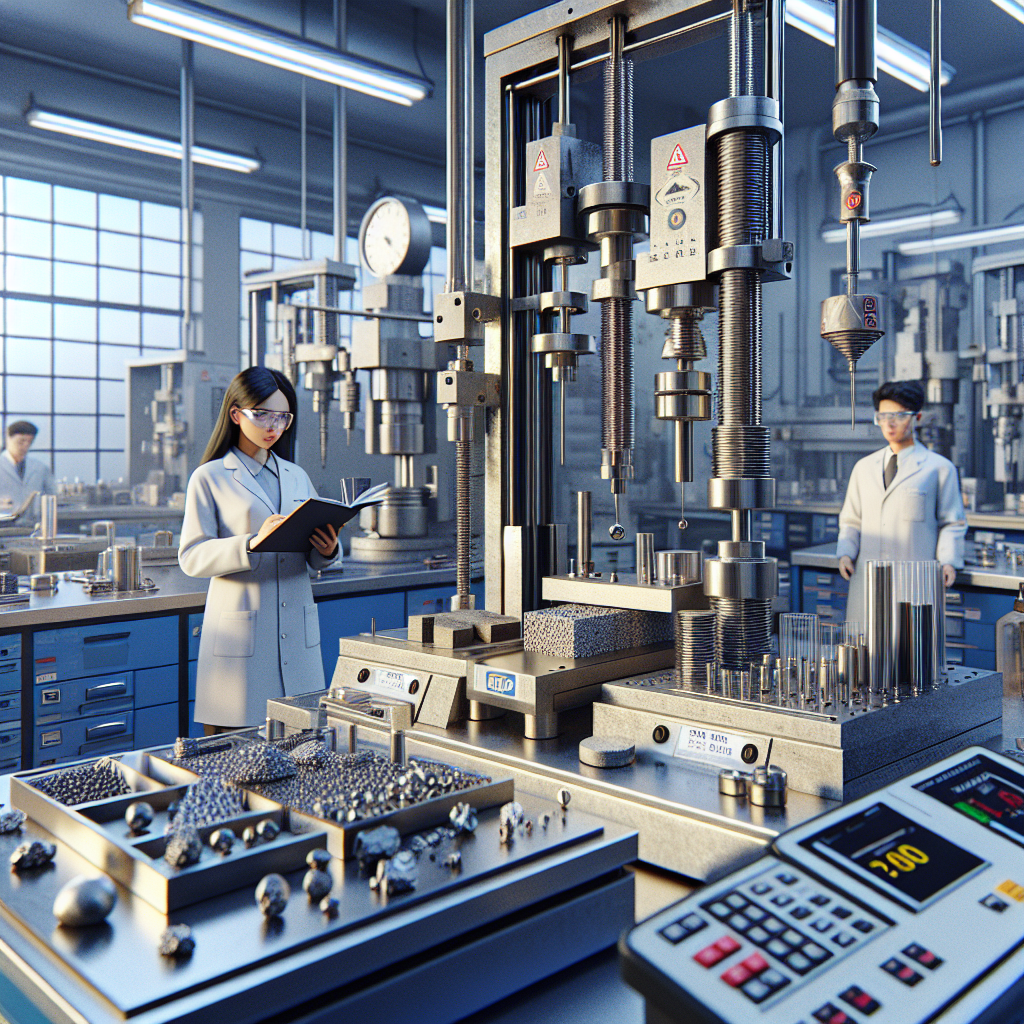
Mechanical testing of materials is a cornerstone in the field of Material Science and Engineering. It involves evaluating the mechanical properties of materials to ensure they meet specific performance criteria. These tests are crucial for understanding how materials will behave under various conditions, such as stress, strain, and temperature. The importance of mechanical testing cannot be overstated, as it directly impacts the safety, reliability, and efficiency of engineering structures and components. From aerospace to civil engineering, mechanical testing provides the data needed to make informed decisions about material selection, design, and quality control.
Fundamentals
Basic Principles and Concepts
Mechanical testing encompasses a variety of tests designed to measure different properties of materials. The most common tests include:
- Tensile Testing: Measures the material’s response to uniaxial tensile stress, providing data on tensile strength, yield strength, and elongation.
- Compression Testing: Evaluates the material’s behavior under compressive loads, offering insights into compressive strength and deformation characteristics.
- Hardness Testing: Determines the material’s resistance to indentation, which correlates with strength and wear resistance.
- Impact Testing: Assesses the material’s ability to absorb energy during fracture, providing information on toughness.
- Fatigue Testing: Examines the material’s durability under cyclic loading, crucial for predicting lifespan and failure modes.
Key Terms
- Stress: The internal force per unit area within a material.
- Strain: The deformation or displacement per unit length of a material.
- Elasticity: The ability of a material to return to its original shape after the removal of stress.
- Plasticity: The permanent deformation of a material after the yield point is surpassed.
- Fracture Toughness: The ability of a material to resist crack propagation.
Historical Development
The history of mechanical testing dates back to ancient civilizations, where rudimentary methods were used to assess the quality of materials. However, significant advancements occurred during the Industrial Revolution. In the 19th century, scientists like August Wöhler pioneered fatigue testing, while the development of the tensile test machine by Tinius Olsen in 1880 marked a significant milestone.
In the 20th century, the field saw further advancements with the introduction of standardized testing methods by organizations such as ASTM International and ISO. Notable figures like George Rankine and Stephen Timoshenko made substantial contributions to the theoretical understanding of material behavior under stress and strain.
Applications
Mechanical testing has a wide range of applications across various industries:
Aerospace
In the aerospace industry, mechanical testing is critical for ensuring the structural integrity of aircraft components. For example, fatigue testing is used to predict the lifespan of airplane wings, while tensile testing ensures that materials can withstand the high stresses encountered during flight.
Automotive
The automotive industry relies on mechanical testing to improve safety and performance. Crash tests, which are a form of impact testing, help in designing safer vehicles. Additionally, tensile and hardness tests are used to select materials for engine components and body panels.
Civil Engineering
In civil engineering, mechanical testing is essential for the construction of buildings, bridges, and other infrastructure. Compression tests on concrete and tensile tests on steel rebar ensure that these materials can support the loads they will encounter.
Medical Devices
Mechanical testing is also crucial in the medical field. For instance, tensile and fatigue tests are used to evaluate the durability of implants and prosthetics, ensuring they can withstand the stresses of daily use.
Advanced Topics
Nanomechanical Testing
Recent advancements have led to the development of nanomechanical testing, which evaluates the mechanical properties of materials at the nanoscale. This is particularly important for the development of nanomaterials and nanocomposites, which have unique mechanical properties.
High-Throughput Mechanical Testing
High-throughput mechanical testing techniques are being developed to rapidly assess the mechanical properties of a large number of samples. This is particularly useful in materials discovery and optimization, where speed is crucial.
Digital Image Correlation (DIC)
DIC is an advanced optical method used to measure deformation, strain, and displacement in materials. It provides full-field data, offering a more comprehensive understanding of material behavior under various loading conditions.
Challenges and Considerations
Despite its importance, mechanical testing faces several challenges:
Sample Preparation
Preparing samples for mechanical testing can be time-consuming and may introduce variability. Ensuring consistent sample preparation is crucial for obtaining reliable data.
Environmental Factors
Environmental conditions such as temperature and humidity can significantly affect test results. Controlling these factors is essential for accurate measurements.
Data Interpretation
Interpreting mechanical test data requires a deep understanding of material behavior and the limitations of each testing method. Advanced analytical techniques and computational models are often needed to make sense of complex data.
Cost and Time
Mechanical testing can be expensive and time-consuming, particularly for high-throughput or specialized tests. Developing more efficient testing methods is an ongoing area of research.
Conclusion
Mechanical testing of materials is a fundamental aspect of Material Science and Engineering, providing critical data for material selection, design, and quality control. From its historical roots to modern advancements, mechanical testing continues to evolve, offering new insights into material behavior. Despite the challenges, ongoing research and innovation promise to make mechanical testing more efficient and accurate, further solidifying its role in engineering and industry. As we look to the future, the importance of mechanical testing in ensuring the safety, reliability, and performance of materials remains as vital as ever.