Intelligent Guardian of the Forestry Environment
 Engineering a Sustainable Forestry Future
The protection and monitoring of forestry environments have undergone a dramatic transformation, thanks to engineering innovations. In the past, manual inspections and basic tools offered limited insights into the health of forests. Today, advanced environmental monitoring systems combine engineering disciplines such as instrumentation, IoT integration, and sustainable energy design to create intelligent guardians for our forests. By bridging the gap between nature and technology, these systems empower forestry managers with the precision tools needed to ensure ecological balance and address environmental challenges proactively.
The Engineering Behind Forestry Monitoring Systems
The advanced systems used for forestry monitoring rely on a convergence of engineering disciplines. Mechanical engineers design robust enclosures to protect sensitive instruments from harsh conditions. Electrical engineers develop energy-efficient sensors and circuits to minimize power consumption. Meanwhile, software engineers create algorithms that analyze data in real time, allowing for predictive modeling and decision-making. These systems are often powered by renewable energy sources, such as solar panels, making them both innovative and sustainable.
Revolutionizing Forestry with Advanced Monitoring Systems
Monitoring and protecting forestry environment has always been an important task for us. In the past, our understanding of forest environment often relied on manual inspections and limited detection methods, which was inefficient and difficult to be comprehensive and accurate. Today, the emergence of environmental monitoring systems has completely changed this situation. They are like countless pairs of sharp eyes, able to monitor various parameters in the forest environment in real time. Whether in the depths of dense jungles or in the corners of the vast forests, they can work silently and transmit the collected data back accurately.
Key Environmental Factors in Forestry Monitoring
Forests are complex ecosystems where various environmental factors work together to sustain their health and growth. Monitoring these factors provides critical insights into the well-being of the forestry environment and aids in proactive management. Below are some of the most influential factors monitored by forestry systems.
The Impact of Rainfall on Forestry Ecology
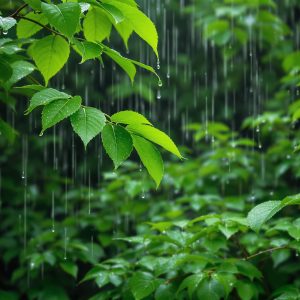 Appropriate rainfall can moisten the soil and provide sufficient water for the growth of trees. However, too much or too little rainfall can have an adverse effect on forestry. For example, heavy rains may cause floods, submerge forest areas, damage tree roots, and even wash away entire forests; while long-term droughts will lead to a lack of soil moisture, limited tree growth, and easy to cause disasters such as forest fires. Forestry environment monitoring stations can accurately measure rainfall through rain gauges, whether it is a fine drizzle or a downpour, and can accurately record every drop of rain falling, providing forestry managers with first-hand rainfall data.
The Role of Wind Speed and Direction in Forest Health
Strong winds may cause direct mechanical damage to trees, especially during the critical period of tree growth or when the trees themselves are relatively fragile. For example, in the seedling stage of trees, strong winds may blow down seedlings, affecting the survival rate of afforestation; for adult trees, continuous strong winds may break branches, affect the health of trees. Wind direction affects the diffusion direction of pollutants and the spread of forest fires. Forestry environment monitoring stations can accurately capture the size and direction of wind speed, accurate to every subtle angle and slight change in wind speed, providing extremely important information for the research and management of forestry environment.
Negative Oxygen Ions: The Measure of a Forest’s Vitality
One of the important reasons why forests are called “lungs of the earth” is that they can produce a large number of negative oxygen ions. Negative oxygen ions have many benefits, such as purifying the air and regulating human physiological functions. The monitoring of negative oxygen ions by the forestry environment monitoring station can reflect the ecological function of the forest. A high concentration of negative oxygen ions means that the forest ecosystem is relatively healthy and can provide a high-quality air environment for the surrounding areas; conversely, if the concentration of negative oxygen ions is low, it may indicate that there are some problems in the forest ecosystem, such as pollution or poor tree growth.
Leveraging IoT and Data Engineering for Forest Management
Internet of Things (IoT) technology plays a critical role in modern forestry monitoring. Sensors embedded in forests communicate through wireless networks to centralized platforms, where data engineers process vast amounts of information. This real-time data is used to model environmental conditions, predict potential threats such as wildfires or pest outbreaks, and provide actionable insights. By integrating IoT devices, engineers have transformed static forestry management into a dynamic, responsive system that adapts to changing conditions.
Atmospheric Conditions Affecting Forestry
The atmosphere plays a significant role in shaping the forest environment. Changes in air pressure, temperature, and humidity directly impact tree growth, pest activity, and overall forest health. Monitoring these conditions is crucial for maintaining ecological balance.
Air Pressure: A Subtle yet Influential Factor in Forestry
For example, low pressure is often accompanied by rainy weather, while high pressure usually brings sunny weather. For forestry, changes in air pressure may affect the transpiration of trees, the activity of insects, etc. The real-time monitoring of air pressure by the forestry environment monitoring station helps to better understand the intrinsic connection with forestry.
Temperature: A Crucial Element in Tree Growth and Survival
Different tree species have different adaptability ranges to temperature. Some tree species are suitable for growing in warm environments, while others can thrive in cold climates. Too high or too low temperatures will affect the growth of trees. High temperature may cause the water of trees to evaporate too quickly, causing water stress and affecting the photosynthesis and metabolism of trees; low temperature may cause trees to suffer frost damage, especially in winter, when extreme low temperature may freeze the branches and even the roots of trees. The forestry environment monitoring station can accurately measure the changes in temperature, whether it is the temperature difference between day and night or the temperature difference between seasons, and can record it clearly, which is of great significance for forestry managers to choose suitable tree species for afforestation and formulate corresponding nurturing and management measures.
Humidity: Balancing the Moisture Needs of Forests
Appropriate humidity can ensure the normal growth of trees and maintain the water balance in trees. An overly dry environment will cause trees to face drought stress, while excessive humidity may cause the breeding of pests and diseases. The monitoring of humidity by the forestry environment monitoring station can help managers to understand the humidity conditions of the forest environment in a timely manner and take corresponding measures, such as irrigation when the humidity is low and strengthening ventilation when the humidity is too high.
Water and Radiation Monitoring in Forests
Water and sunlight are indispensable resources for forest ecosystems. Monitoring evaporation rates and radiation levels allows forestry managers to understand soil moisture dynamics and optimize photosynthesis efficiency for better tree health and growth.
Evaporation: Understanding Soil Moisture and Tree Transpiration
The monitoring of evaporation by the forestry environment monitoring station can help us better understand the water balance in the forest ecosystem. If the evaporation is too large, it may mean that the soil moisture is lost too quickly, and measures need to be taken to increase the soil’s water retention capacity; on the contrary, if the evaporation is too small, it may imply that the transpiration of trees is inhibited, and it is necessary to check whether there are pests or other environmental factors.
Radiation: Illuminating Forest Growth through Solar Energy
Radiation of different intensities and wavelengths has different effects on the photosynthetic efficiency of trees. The monitoring of radiation by the forestry environment monitoring station can help us understand the light conditions in the forest environment, thereby providing a basis for optimizing forest structure and improving the photosynthetic efficiency of trees. For example, by monitoring the radiation intensity in different seasons and different regions, the planting density of trees can be reasonably adjusted to ensure that each tree can get enough light.
Soil and Light: Ground-Level and Above
The soil beneath and the sunlight above form the foundation of forest health. Monitoring ground temperature ensures root vitality, while tracking sunlight patterns helps optimize forest structure for maximum growth potential.
Ground Temperature: The Foundation of Root Health
The root system is an important part of trees, and its growth condition is directly related to the overall health of trees. Suitable ground temperature can promote the growth and development of the root system and improve the root system’s ability to absorb water and nutrients. The monitoring of ground temperature at different depths by the forestry environment monitoring station can provide forestry managers with important information about the root growth environment. For example, in the cold winter, corresponding warming measures can be taken according to the ground temperature to protect the roots of trees from frost damage; in spring, the increase in ground temperature is an important signal for the start of tree growth, and afforestation and tending work can be arranged accordingly.
Sunlight: Tailoring Forestry to Light Requirements
Different tree species have different requirements for the duration and intensity of sunshine. Some light-loving tree species need sufficient sunshine to thrive, while some shade-tolerant tree species can survive in an environment with relatively less sunshine. The monitoring of sunshine by the forestry environment monitoring station can help forestry managers to reasonably plan afforestation areas and forest stand structures according to the needs of different tree species, and improve the ecological of forests.
Forestry environment monitoring is a green shield to protect forests, allowing forests to continue to contribute vitality and vitality to the earth under its protection. Through advanced technologies and systems, it realizes real-time monitoring of forest health, assessment of ecological and environmental changes, prevention and response to natural disasters, and promotion of sustainable development of forestry. These functions and technical applications together constitute a comprehensive forestry environment monitoring system, which effectively protects forest resources and ecological balance.
Engineering Innovation: The Foundation of Sustainable Forestry
Engineering innovation lies at the heart of modern forestry protection. From precision sensors to IoT networks and renewable energy integration, the systems safeguarding our forests today represent a blend of technological ingenuity and environmental stewardship. These advancements not only ensure the health of forest ecosystems but also contribute to sustainable development by providing data-driven solutions to complex ecological challenges. As engineering continues to evolve, so too will our ability to protect and nurture the vital “lungs of the earth,” securing their role in sustaining life for generations to come.