Composite Materials: Design and Applications
Introduction
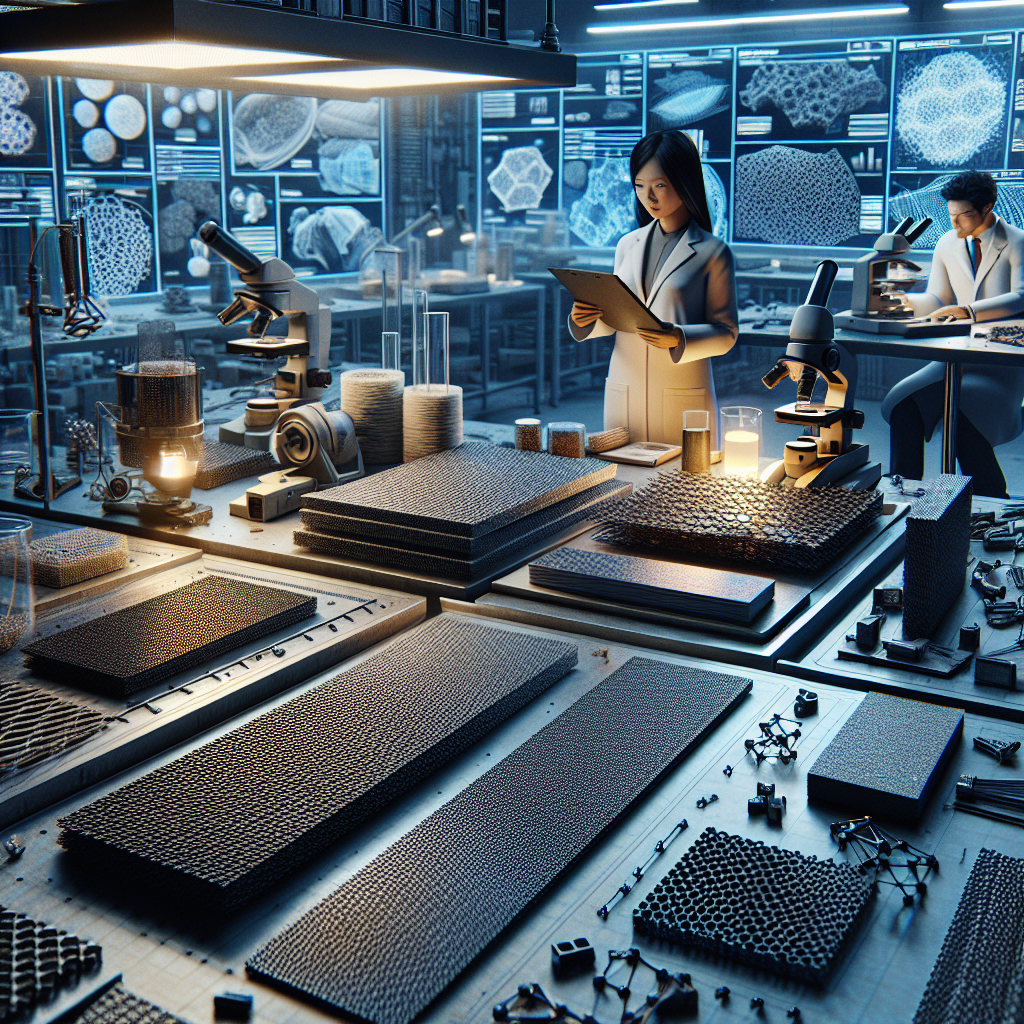
Composite materials have revolutionized the field of engineering, offering a unique combination of properties that are unattainable with traditional materials. These materials are engineered by combining two or more constituent materials with significantly different physical or chemical properties. The resulting composite material exhibits characteristics superior to those of the individual components. This article delves into the design and applications of composite materials, highlighting their importance and relevance in modern engineering.
Fundamentals
Definitions and Key Terms
A composite material is a material made from two or more constituent materials with different properties that, when combined, produce a material with characteristics different from the individual components. The two main components of a composite material are the matrix and the reinforcement.
- Matrix: The matrix is the continuous phase that holds the reinforcement in place. It can be a polymer, metal, or ceramic.
- Reinforcement: The reinforcement is the dispersed phase that provides strength and stiffness to the composite. It can be in the form of fibers, particles, or flakes.
Theories and Concepts
The performance of composite materials is governed by several theories and principles:
- Rule of Mixtures: This principle predicts the properties of a composite material based on the properties and volume fractions of its constituents.
- Load Transfer: The effectiveness of a composite material depends on the efficient transfer of load between the matrix and the reinforcement.
- Interface Bonding: The strength of the bond between the matrix and the reinforcement is crucial for the overall performance of the composite.
Historical Development
The use of composite materials dates back to ancient times. Early examples include straw-reinforced mud bricks and laminated wood. However, the modern era of composite materials began in the mid-20th century with the development of advanced polymers and high-strength fibers.
Key Milestones
- 1940s: The development of glass fiber-reinforced polymers (GFRP) marked the beginning of modern composite materials.
- 1960s: The introduction of carbon fibers significantly improved the strength-to-weight ratio of composites.
- 1980s: The aerospace industry began using composites extensively, leading to innovations in manufacturing techniques and material properties.
- 2000s: The development of nanocomposites and bio-composites opened new avenues for research and applications.
Notable Figures
Several pioneers have made significant contributions to the field of composite materials:
- Dr. Stephanie Kwolek: Inventor of Kevlar, a high-strength aramid fiber used in various composite applications.
- Dr. Leslie Phillips: Known for his work on carbon fiber composites, which are widely used in aerospace and automotive industries.
- Dr. Tsai and Dr. Wu: Developed the Tsai-Wu failure criterion, a widely used theory for predicting the failure of composite materials.
Applications
Composite materials are used in a wide range of industries due to their superior properties. Here are some notable applications:
Aerospace
The aerospace industry was one of the earliest adopters of composite materials. The high strength-to-weight ratio of composites makes them ideal for aircraft structures, reducing weight and improving fuel efficiency. For example, the Boeing 787 Dreamliner uses composite materials for 50% of its primary structure, including the fuselage and wings.
Automotive
In the automotive industry, composites are used to manufacture lightweight and durable components, improving fuel efficiency and performance. Carbon fiber-reinforced polymers (CFRP) are commonly used in high-performance vehicles, such as the BMW i8 and McLaren P1.
Construction
Composite materials are increasingly used in construction for their durability and resistance to corrosion. Fiber-reinforced polymers (FRP) are used in bridge decks, reinforcing bars, and structural components. The use of composites in construction extends the lifespan of structures and reduces maintenance costs.
Sports and Recreation
Composites are widely used in sports equipment for their lightweight and high-strength properties. Examples include tennis rackets, golf clubs, bicycles, and helmets. The use of composites enhances performance and safety in sports.
Renewable Energy
In the renewable energy sector, composites are used in wind turbine blades and solar panel structures. The lightweight and high-strength properties of composites improve the efficiency and durability of renewable energy systems.
Advanced Topics
Nanocomposites
Nanocomposites are materials that incorporate nanoscale reinforcements, such as carbon nanotubes or graphene, into the matrix. These materials exhibit exceptional mechanical, thermal, and electrical properties. Recent research focuses on optimizing the dispersion and alignment of nanoreinforcements to maximize their benefits.
Bio-composites
Bio-composites are made from natural fibers and biodegradable matrices. They offer an eco-friendly alternative to traditional composites and are used in applications such as packaging, automotive interiors, and construction materials. Research is ongoing to improve the mechanical properties and durability of bio-composites.
Smart Composites
Smart composites are materials that can respond to external stimuli, such as temperature, pressure, or electrical fields. These materials have potential applications in self-healing structures, adaptive aerospace components, and responsive medical devices. Innovations in smart composites are driven by advancements in material science and nanotechnology.
Challenges and Considerations
Despite their advantages, composite materials face several challenges and limitations:
Manufacturing Complexity
The manufacturing processes for composite materials are often complex and require specialized equipment. Techniques such as autoclave curing, resin transfer molding, and filament winding demand high precision and control. Research is focused on developing cost-effective and scalable manufacturing methods.
Cost
The high cost of raw materials and manufacturing processes can be a barrier to the widespread adoption of composites. Efforts are being made to reduce costs through material optimization, recycling, and improved manufacturing techniques.
Environmental Impact
The disposal and recycling of composite materials pose environmental challenges. Traditional composites are not easily recyclable, leading to concerns about waste management. The development of bio-composites and recyclable composites is a step towards addressing these issues.
Performance Prediction
Predicting the long-term performance and failure of composite materials is complex due to their heterogeneous nature. Advanced modeling and simulation techniques are being developed to improve the accuracy of performance predictions.
Conclusion
Composite materials have become an integral part of modern engineering, offering unparalleled advantages in terms of strength, weight, and durability. Their applications span across various industries, from aerospace and automotive to construction and renewable energy. While challenges remain, ongoing research and innovations continue to push the boundaries of what is possible with composite materials. As we look to the future, the development of advanced composites, such as nanocomposites and bio-composites, promises to further enhance the capabilities and sustainability of these remarkable materials. The importance of composite materials in the field of Material Science in Engineering cannot be overstated, as they continue to drive progress and innovation in numerous applications.