Composite Manufacturing Techniques
Introduction
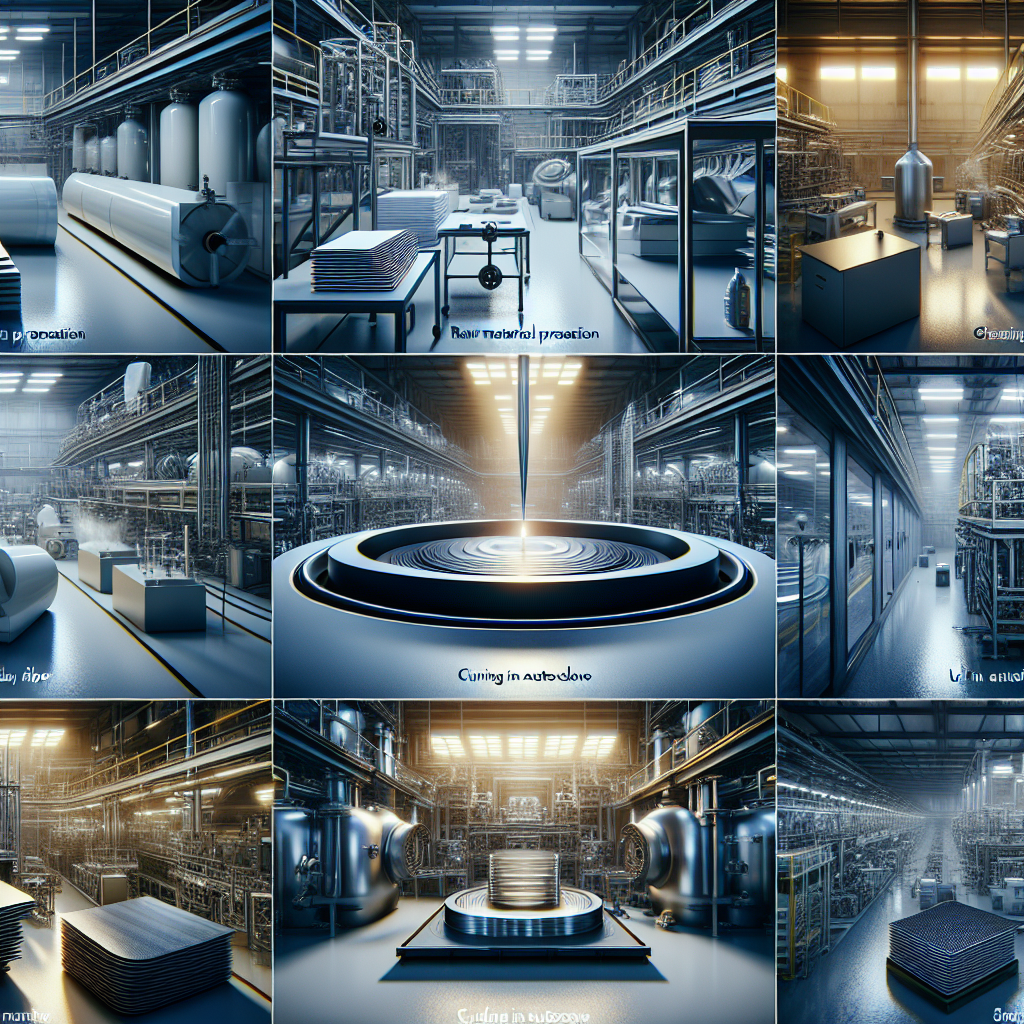
Composite manufacturing techniques represent a pivotal area in the field of Material Science in Engineering. These techniques involve the combination of two or more distinct materials to create a composite material with superior properties compared to its individual constituents. The importance of composite materials lies in their ability to offer enhanced strength, reduced weight, and improved durability, making them indispensable in various engineering applications. From aerospace to automotive industries, composite materials have revolutionized the way engineers approach design and manufacturing, leading to innovations that were once thought impossible.
Fundamentals
Basic Principles and Concepts
Composite materials are engineered by combining two or more materials with different physical or chemical properties. The resulting composite material exhibits characteristics that are different from the individual components. The primary components of a composite material are:
- Matrix: The continuous phase that holds the composite together. It can be a polymer, metal, or ceramic.
- Reinforcement: The dispersed phase that provides strength and stiffness. Common reinforcements include fibers (carbon, glass, aramid) and particles (ceramic, metal).
The interaction between the matrix and the reinforcement determines the overall properties of the composite. Key terms in composite manufacturing include:
- Fiber Volume Fraction (Vf): The ratio of the volume of fibers to the total volume of the composite.
- Laminate: A composite structure made by stacking multiple layers of fiber-reinforced materials.
- Prepreg: Fibers pre-impregnated with a resin matrix, ready for lay-up and curing.
Historical Development
The development of composite materials can be traced back to ancient civilizations, where natural composites like straw-reinforced mud bricks were used. However, the modern era of composite materials began in the mid-20th century with the advent of advanced fiber-reinforced polymers (FRPs).
Key Milestones
- 1940s: The development of glass fiber-reinforced polymers (GFRP) marked the beginning of modern composite materials.
- 1960s: The introduction of carbon fibers revolutionized the aerospace industry due to their high strength-to-weight ratio.
- 1980s: The automotive industry began adopting composite materials for weight reduction and fuel efficiency.
- 2000s: Advances in nanotechnology led to the development of nanocomposites with enhanced mechanical and thermal properties.
Notable figures in the field include Dr. Stephanie Kwolek, who invented Kevlar, and Dr. Leslie Phillips, who made significant contributions to the development of carbon fiber composites.
Applications
Composite materials have found applications across various industries due to their unique properties. Some of the key applications include:
Aerospace
The aerospace industry extensively uses composite materials to reduce the weight of aircraft, leading to improved fuel efficiency and performance. For example, the Boeing 787 Dreamliner is made up of approximately 50% composite materials by weight.
Automotive
In the automotive industry, composites are used to manufacture lightweight components, which contribute to better fuel economy and reduced emissions. The BMW i3 electric car features a carbon fiber-reinforced plastic (CFRP) body, significantly reducing its weight.
Construction
Composite materials are used in construction for their high strength and durability. Fiber-reinforced concrete and composite decking materials are common examples. These materials offer resistance to corrosion and environmental degradation, making them ideal for infrastructure projects.
Sports Equipment
Composite materials are widely used in sports equipment to enhance performance and durability. Examples include carbon fiber tennis rackets, golf clubs, and bicycles. These materials provide high strength and stiffness while keeping the equipment lightweight.
Advanced Topics
Recent Research and Innovations
Recent advancements in composite manufacturing techniques have focused on improving the properties and performance of composite materials. Some of the notable innovations include:
- 3D Printing of Composites: Additive manufacturing techniques are being developed to print complex composite structures with tailored properties.
- Self-Healing Composites: Researchers are developing composites that can repair themselves when damaged, extending their lifespan and reducing maintenance costs.
- Nanocomposites: The incorporation of nanoparticles into composites enhances their mechanical, thermal, and electrical properties.
Future Trends
The future of composite manufacturing is likely to be driven by the need for sustainable and high-performance materials. Trends include:
- Bio-based Composites: The development of composites from renewable resources to reduce environmental impact.
- Smart Composites: Integration of sensors and actuators into composites for real-time monitoring and adaptive responses.
- Advanced Manufacturing Techniques: Techniques such as automated fiber placement (AFP) and resin transfer molding (RTM) are expected to become more prevalent.
Challenges and Considerations
Despite their advantages, composite materials present several challenges and considerations:
Manufacturing Complexity
The manufacturing processes for composites can be complex and require specialized equipment and expertise. Techniques such as autoclave curing and vacuum-assisted resin transfer molding (VARTM) can be costly and time-consuming.
Material Costs
The raw materials for composites, especially high-performance fibers like carbon and aramid, can be expensive. This cost factor can limit their widespread adoption in cost-sensitive industries.
Recycling and Sustainability
Recycling composite materials is challenging due to the difficulty in separating the matrix and reinforcement. Developing sustainable and recyclable composites is an area of ongoing research.
Quality Control
Ensuring consistent quality and performance of composite materials can be challenging due to variations in manufacturing processes and material properties. Advanced non-destructive testing (NDT) methods are required for quality assurance.
Conclusion
Composite manufacturing techniques have transformed the field of Material Science in Engineering, offering materials with superior properties that meet the demands of modern engineering applications. From aerospace to automotive industries, composites have enabled innovations that enhance performance, reduce weight, and improve durability. While challenges such as manufacturing complexity and material costs remain, ongoing research and advancements in technology continue to push the boundaries of what is possible with composite materials. As the field evolves, the development of sustainable and high-performance composites will play a crucial role in addressing the engineering challenges of the future.