Additive Manufacturing and 3D Printing
Introduction
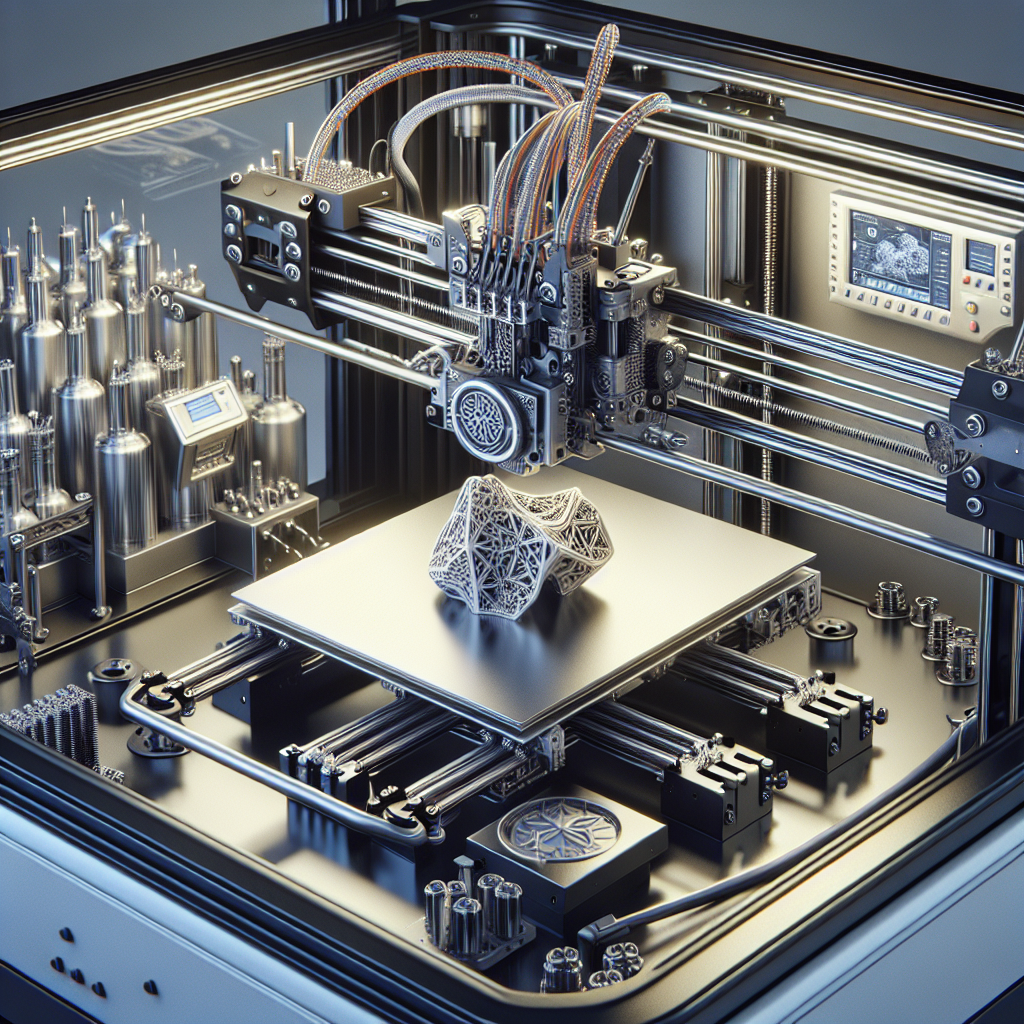
In the rapidly evolving field of Material Science in Engineering, additive manufacturing and 3D printing have emerged as revolutionary technologies. These methods have transformed traditional manufacturing processes, offering unprecedented flexibility, efficiency, and customization. Additive manufacturing, often synonymous with 3D printing, involves creating objects layer by layer from digital models. This approach contrasts sharply with subtractive manufacturing, where material is removed to achieve the desired shape. The importance of additive manufacturing and 3D printing in engineering cannot be overstated, as they enable the production of complex geometries, reduce material waste, and shorten the time from design to production.
Fundamentals
Basic Principles and Concepts
Additive manufacturing (AM) and 3D printing are based on the principle of adding material layer by layer to build an object. This process starts with a digital 3D model, which is sliced into thin horizontal layers. The 3D printer then deposits material, layer by layer, to create the physical object. Key terms in this field include:
- CAD (Computer-Aided Design): Software used to create detailed 3D models.
- Slicing: The process of dividing a 3D model into thin layers for printing.
- Extrusion: A common method where material is extruded through a nozzle to form layers.
- Binder Jetting: A technique where a liquid binder is selectively deposited to join powder materials.
- Stereolithography (SLA): A method using a laser to cure liquid resin into solid layers.
- Selective Laser Sintering (SLS): A process where a laser fuses powdered material into solid layers.
Theories and Key Terms
The fundamental theory behind additive manufacturing is based on the layer-by-layer construction of objects. This approach allows for the creation of complex geometries that would be difficult or impossible to achieve with traditional manufacturing methods. Key terms include:
- Layer Resolution: The thickness of each layer, which affects the surface finish and detail of the printed object.
- Build Volume: The maximum size of an object that a 3D printer can produce.
- Support Structures: Temporary structures printed to support overhanging features during the printing process.
- Infill: The internal structure of a printed object, which can be adjusted to balance strength and material usage.
Historical Development
The development of additive manufacturing and 3D printing can be traced back to the 1980s. Key milestones include:
- 1984: Charles Hull invents stereolithography (SLA), the first commercial 3D printing technology.
- 1988: Scott Crump develops fused deposition modeling (FDM), a widely used 3D printing method.
- 1992: The first SLS machine is developed by Carl Deckard and his team at the University of Texas.
- 2000s: The rise of open-source 3D printing projects, such as RepRap, democratizes access to 3D printing technology.
- 2010s: Advances in materials and printing techniques expand the applications of 3D printing in various industries.
Notable figures in the field include Charles Hull, Scott Crump, and Carl Deckard, whose contributions have laid the foundation for modern additive manufacturing technologies.
Applications
Additive manufacturing and 3D printing have found applications in a wide range of industries, including:
Aerospace
The aerospace industry leverages 3D printing to produce lightweight, complex components that reduce fuel consumption and improve performance. For example, GE Aviation uses additive manufacturing to produce fuel nozzles for jet engines, resulting in significant weight savings and improved efficiency.
Medical
In the medical field, 3D printing is used to create customized implants, prosthetics, and surgical guides. For instance, surgeons can use patient-specific 3D-printed models to plan complex surgeries, improving outcomes and reducing operation times.
Automotive
The automotive industry utilizes 3D printing for rapid prototyping, tooling, and producing end-use parts. Companies like Ford and BMW use additive manufacturing to create custom tools and fixtures, reducing production time and costs.
Consumer Goods
3D printing enables the production of customized consumer products, such as eyewear, footwear, and jewelry. Companies like Adidas use 3D printing to create custom-fit shoes, enhancing comfort and performance for athletes.
Construction
In the construction industry, 3D printing is used to build complex architectural structures and components. For example, companies like ICON are developing 3D-printed homes, offering affordable and sustainable housing solutions.
Advanced Topics
Recent Research and Innovations
Recent research in additive manufacturing focuses on improving material properties, printing speed, and multi-material printing. Innovations include:
- Metal 3D Printing: Advances in metal additive manufacturing, such as electron beam melting (EBM) and direct metal laser sintering (DMLS), enable the production of high-strength, complex metal parts.
- Bioprinting: The development of bioprinting techniques allows for the creation of tissue and organ structures, with potential applications in regenerative medicine and drug testing.
- 4D Printing: An emerging field where printed objects can change shape or properties over time in response to external stimuli, such as temperature or moisture.
Future Trends
The future of additive manufacturing and 3D printing is promising, with trends including:
- Increased Adoption: As technology advances and costs decrease, more industries will adopt 3D printing for production and prototyping.
- Material Development: Ongoing research will lead to the development of new materials with enhanced properties, expanding the range of applications.
- Integration with AI and IoT: The integration of artificial intelligence (AI) and the Internet of Things (IoT) will enable smarter, more efficient 3D printing processes.
Challenges and Considerations
Despite its many advantages, additive manufacturing faces several challenges and considerations:
Material Limitations
The range of materials available for 3D printing is still limited compared to traditional manufacturing methods. Developing new materials with improved properties is essential for expanding the applications of additive manufacturing.
Quality Control
Ensuring consistent quality and reliability of 3D-printed parts can be challenging. Advanced monitoring and inspection techniques are needed to detect defects and ensure high-quality production.
Cost
While the cost of 3D printing has decreased over the years, it can still be expensive for large-scale production. Reducing material and equipment costs is crucial for wider adoption.
Intellectual Property
The ease of replicating digital models raises concerns about intellectual property protection. Developing robust legal frameworks to protect designs and innovations is essential.
Environmental Impact
While 3D printing can reduce material waste, the environmental impact of certain materials and processes needs to be considered. Developing sustainable materials and recycling methods is important for minimizing the environmental footprint.
Conclusion
Additive manufacturing and 3D printing have revolutionized the field of Material Science in Engineering, offering new possibilities for design, production, and customization. From aerospace to medical applications, these technologies have demonstrated their potential to transform industries and improve efficiency. As research and innovation continue to advance, the future of additive manufacturing looks promising, with new materials, techniques, and applications on the horizon. However, addressing challenges such as material limitations, quality control, and cost is essential for realizing the full potential of these technologies. In conclusion, additive manufacturing and 3D printing are critical components of modern engineering, driving progress and innovation in Material Science.